Assistant



 Guaranteed provenanceDirect from the estates
 DeliveryFree Home delivery for orders exceeding €300
 Secure PaymentVisa, American Express, Mastercard...
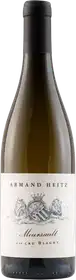
Armand Heitz : Meursault Village 2021
Only 2 available
In-Stock
Let's talk about this product!
A pairing in mind? A question about the vintage? Comparison with another product? Find the answers here...
Description
Tasting Notes and Serving Tips for Armand Heitz’s Meursault Village 2021
Tasting
Appearance
Bright and luminous, the wine shows a pale yellow hue with golden highlights and a faint silvery sheen, reflecting both its youth and the cool conditions of the vintage.
Nose
The nose reveals fine aromatic complexity with notes of white flowers, fresh citrus (lemon, lime) and white-fleshed fruits (peach, pear). With aeration, nuances of hazelnut and toasted almond emerge, accompanied by subtle mineral touches reminiscent of wet stone and flint.
Palate
The palate charms with its silky, creamy texture, offering a fine balance between roundness and vibrancy. Flavors of yellow apple, pear and apricot intertwine harmoniously with a refined, precise minerality. Bright, refreshing acidity provides structure, while discreet woody notes bring hints of vanilla and toast. The finish lingers elegantly, leaving persistent mineral and lemony impressions.
Food and Wine Pairings
This white wine from Burgundy pairs beautifully with oysters, grilled fish and shellfish, notably lobster with beurre blanc. It also complements herb-roasted poultry, creamy mushroom risottos, and soft-ripened cheeses such as Époisses or aged Comté.
Serving and Cellaring
This cuvée is best enjoyed at a temperature between 12 and 14°C. It can be enjoyed now, yet it also offers cellaring potential through at least 2029 under good storage conditions.
An elegant, mineral Meursault Village
The estate
Founded in 2012 when Armand Heitz took over the family estate whose history dates back to 1857, Domaine Armand Heitz now spans thirty hectares of vineyards in Burgundy, primarily in the Côte de Beaune. Armand Heitz, owner and winegrower, has transformed the property into a model of regenerative agriculture, deliberately rejecting organic and biodynamic certifications in favor of a philosophical approach that prioritizes living soils and minimal intervention. The estate produces wines from prestigious appellations—Meursault, Pommard, Volnay, Chassagne-Montrachet, up to the grands crus of the Côte de Nuits—vinified with whole clusters and indigenous yeasts. The operation also includes one hundred eighty hectares dedicated to livestock farming and permaculture market gardening, illustrating a comprehensive agricultural vision.
The vineyard
The grapes for this Meursault Village come from parcels in the Côte de Beaune, benefiting from soils composed of silt and marly limestone. These limestone terroirs, characteristic of the Meursault appellation, give the wine its distinctive minerality and freshness. The vines are cultivated according to regenerative agriculture principles, with soils kept permanently covered by diverse crops (alfalfa, vetch, peas, hemp, flax) that promote biological life and resilience in the face of climatic hazards. This holistic approach, integrating livestock farming and market gardening, creates a symbiosis between the vines and the estate’s other crops.
The vintage
The 2021 vintage in Burgundy was marked by particularly challenging weather conditions. Devastating frosts in April affected the mid-slope parcels, followed by episodes of poor fruit set and significant downy mildew pressure requiring multiple sulfur treatments. Despite these challenges, cool conditions throughout the growing season helped preserve remarkable acidity and exceptional mineral definition. Yields were significantly reduced, but the quality of the harvested grapes proved outstanding, producing wines of great freshness and an elegance reminiscent of the classic vintages of yesteryear.
Vinification and aging
This wine was vinified following a minimalist approach that favors the natural expression of terroir. The grapes were pressed as whole clusters, then the must fermented with indigenous yeasts without strict temperature control. Malolactic fermentation occurred naturally, bringing roundness and complexity to the wine. Aging took place on lees in oak barrels with a moderate proportion of new oak, allowing the wine to develop its silky texture while preserving the purity of the fruit and the mineral expression characteristic of the vintage.
Grape variety
100% Chardonnay.