Assistant



 Guaranteed provenanceDirect from the estates
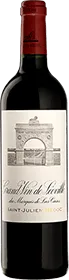
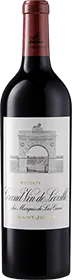
Château Léoville Las Cases 2025
En Primeur Wines – delivery in early 2028
Let's talk about this product!
A pairing in mind? A question about the vintage? Comparison with another product? Find the answers here...
Description
Characteristics and Tasting Notes of Château Léoville Las Cases 2025
Tasting
Appearance
This wine reveals a deep, dark purple colour of great intensity, with slightly lighter highlights on the rim of the glass.
Nose
The aromatic bouquet is remarkably complex and expressive. It releases intense notes of black fruits such as blackcurrant, blackberry and black cherry. Subtle floral hints of violet, rose and lavender intertwine with spicy touches of cedar and tobacco. The whole is enhanced by a strong mineral imprint reminiscent of graphite and crushed stone.
Palate
Exceptionally precise, the palate offers a concentrated, vibrant and deep texture. Despite the heat of the year, the balance is remarkable thanks to a beautiful freshness. The tannic structure, at once powerful and extremely refined, frames this wine with a classic profile. The finish lingers long on saline and mineral accents.
Food and wine pairings
This grand cru pairs wonderfully with bold red meats such as rib of beef, lamb or roast veal. It also accompanies game, duck and slow-cooked dishes in sauce very well. After a few years of cellaring, it will elevate dishes featuring mushrooms, truffles, or aged cheeses.
Serving and cellaring
To fully appreciate this wine, it is recommended to serve it at a temperature of around 15.5°C. In its youth, decanting for three to six hours is advised to release all its aromas. Built for a very long evolution, this exceptional vintage can be enjoyed until around 2075.
The Elegance and Power of an Exceptional Terroir in Saint-Julien
The estate
Located in the Bordeaux region, Château Léoville Las Cases was officially established in 1840 following the division of the former Domaine de Léoville. This prestigious vineyard now extends over nearly 98 hectares. Owned by the Delon family since the late 19th century, it is currently managed by Jean-Hubert Delon. Recognised as one of the greatest wines of the Left Bank, it stands as an essential name for connoisseurs. It produces wines of exceptional longevity, often compared to the First Growths.
The vineyard
The complex terroir of this Saint-Julien estate rests mainly on Quaternary gravels lying on gravelly-sandy and gravelly-clay subsoils, with denser clays in some areas. The proximity of the Gironde estuary plays a thermal regulating role, creating a microclimate that protects the vines from frost and encourages early ripening of the grapes. The vineyard is managed with an environmentally respectful approach, including organic practices and rigorous green work.
The vintage
The season was marked by a warm and sunny climate, the excesses of which were tempered by the natural influence of the river. Meticulous work in the vines, particularly higher trimming to provide more shade, helped preserve the freshness of the berries. The harvest, which took place from 5 to 20 September, was the earliest in the estate's history, delivering low yields of remarkable quality.
Winemaking and ageing
The grapes are vatted by plot in temperature-controlled wooden, concrete or stainless steel tanks. Extractions are carried out gently to favour the finesse of the tannins. Ageing then takes place over 18 to 20 months in French oak barrels, made up of 80–90% new wood. The wine is traditionally fined with egg white before bottling. Alcohol content: 13.65% vol.
Grape varieties
82% Cabernet Sauvignon, 12% Cabernet Franc and 6% Merlot.