Discover your 100% Free Loyalty Programme | Discover
TrustMark
4.46/5
Icône

Assistant

unchecked wish list
Château Tertre Roteboeuf 1988
  • producten
    Guaranteed provenanceDirect from the estates
    Right arrow icon
  • Delivery
    DeliveryFree Home delivery for orders exceeding €300
    Right arrow icon
  • Secure Payment
    Secure PaymentVisa, American Express, Mastercard...
    Right arrow icon

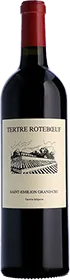
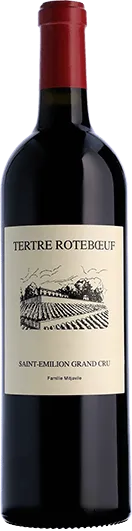
Château Tertre Roteboeuf 1988

Grand cru - - - Red - See details
Parker | 92
Wine Spectator | 93
R. Gabriel | 17
J. Suckling | 95
€800.00 Incl. VAT
(
€800.00 / Unit
)
Packaging : Bottle (75cl)
1 x 75CL
€800.00

Stock currently at the producing estate – Will ship after 1 May 2026

Let's talk about this product!

A pairing in mind? A question about the vintage? Comparison with another product? Find the answers here...

Marks and reviews

92

/100

Robert Parker

Robert M. Parker, Jr.

A sleeper vintage for proprietor Mitjavile’s beloved Tertre Roteboeuf, the 1988 has a deep plum/garnet color and a gorgeous nose of earth, underbrush, cherry cough syrup, licorice, and caramel. It is full-bodied, very pure, ripe, with loads of concentration, yet good definition and structure. No, it is not as dense as the 1989 nor as flamboyant and flashy as the 1990, but this is a classic Tertre Roteboeuf that should continue to drink well for at least another 10–15 years. Anticipated maturity: Now–2015. Last tasted, 12/02.

93

/100

Wine Spectator

One of the more balanced vintages for this pumped-up style. Complex aromas of berry, tobacco and chocolate, with a hint of spice. Full-bodied, with a rich, decadent palate and plenty of velvety tannins. Will improve with age but hard to resist now. — 1988 Bordeaux horizontal. Best after 2000.

95

/100

James Suckling

Château Le Tertre Rôteboeuf was a hot estate in the late 1980s and early 1990s but then lost some of its luster. I was lucky enough to find a bottle in Bordeaux at a small restaurant, from one of its first top vintages — 1988 — and it turned out to be a delicious bottle. It was still big and rich with lots of dried fruits and spice. Full-bodied and tannic. Shows that many 1988 Bordeaux are still beautiful and flavorful.

17

/20

Weinwisser

Deep garnet, concentrated at the core. Smoky bouquet, a hint of volatile acidity, then increasingly rich and dense, plenty of dried fruit, prunes, and licorice. On the palate, fleshy with a rich extract, classic Saint‑Émilion terroir aroma, finely sandy flow, lots of power and great length.

17

/20

René Gabriel

New arrival (16/20): ripe Amarena cherry nose, dark chocolate; spicy with hidden traces of volatile acidity. On the palate, noble bitterness, dark chocolate, cocoa with barely perceptible, firm-grained tannins. The similarly firm bitterness on the palate could also come from barrel wood not fully dried out. A double magnum 1995: powerful bouquet; almost like an ’82 (equally full-bodied), it shows drive yet remains closed. On the palate also dense, hard in the tannins, bourgeois; the tannins still seem too dry from the barrique “ordeal.” 98: deep garnet; richly filled in the middle. Smoky bouquet, a hint of volatile acidity, then becoming ever fatter and denser, lots of dried fruits, prunes and licorice. On the palate meaty, rich extract, classic St. Emilion terroir aroma, fine-sandy flow, plenty of power and great length (17/20). 01: still very dark color, yet with a fine orange rim. Dry nose reminiscent of a quite grand Tuscan; sun-dried tomatoes, prunes, a lovely fruit sweetness, tending a bit toward dryness. On the palate medium-weight, slightly firm-grained tannins that tie in with the active acidity, raspberry seeds; despite evolution, it still shows strict and sandy in texture. It will never develop charm, but it allows the claim that it will live for a long time. 17/20 drink – 2008

18

/20

André Kunz

Deep, complex, fruity bouquet with raisin cake and black, overripe berries. Fruity, balanced and elegant palate with good tannins. Long, full finish. 18/20

90

/100

Jean-Marc Quarin

Jean-Marc Quarin

Dark red color. Good intensity. Lively. Nose of medium intensity. Discreet. Fruity. Quite fresh. Hint of cedar. Soft attack on the palate, round and flavorful mid-palate. The wine develops with power and warmth once again, with a bit too much alcoholic strength, but overall it is long and well-proportioned. Drinkable.

Description

Characteristics and Tasting Advice for Château Tertre Roteboeuf 1988

Tasting

Appearance

The wine displays a deep garnet hue with slightly brick-red highlights.

Nose

The bouquet is complex and captivating, revealing earthy and forest-floor aromas alongside notes of black fruit and dried fruit. Hints of licorice, caramel and chocolate enrich the whole, while touches of tobacco and smoke add an extra dimension to this sophisticated aromatic palette.

Palate

On the palate, this wine offers a broad, concentrated structure with remarkable purity. The tannins, full and silky, elegantly wrap the palate. The rich texture unfolds flavors of raspberry and cherry, lifted by notes of herbs, spices and minerality. The finish stands out for its impressive length and its harmonious balance between power and refinement.

Food and Wine Pairing

This Château Tertre Roteboeuf 1988 pairs beautifully with roasted or grilled red meats, feathered game, braised lamb and duck. It also matches well with mushroom and truffle dishes, as well as aged cheeses.

Serving and Cellaring

To fully appreciate this Château Tertre Roteboeuf 1988, it is recommended to serve it at a temperature of 15.5 to 16°C. At this stage of maturity, light decanting is sufficient to separate any sediment.

An exceptional, opulent and balanced Saint-Émilion

The estate

Located in Saint-Laurent-des-Combes in the Saint-Émilion appellation, Château Tertre Roteboeuf spans 6 hectares of vineyards on south/southeast-facing clay-limestone hillsides. Taken over at the end of the 1970s by François Mitjavile, who now runs the estate with his wife Émilie, the domaine stands out for its artisanal viticulture: very low-trained vines, cover cropping, late hand-harvesting, fermentation without added yeasts and extended aging in new barrels, revealing the most accomplished expression of Bordeaux hillside wines.

The vineyard

The vineyard of Château Tertre Roteboeuf covers around 5.7 hectares located on the edge of the hillsides of Saint-Émilion, close to Château Pavie. The vines grow on a distinctive terroir made up of four types of clay over a limestone subsoil, creating cool, arid soils that harden under the effect of summer heat. This south-southeast exposure and the low training of the vines generate a microclimate conducive to optimal ripening. The vines, over 40 years old, are planted at a density of 5,555 vines per hectare and farmed according to sustainable viticulture principles, including permanent cover cropping.

Winemaking and aging

The grapes for Château Tertre Roteboeuf 1988 were hand-harvested. Vinification took place in concrete vats with high fermentation temperatures reaching around 35°C. Immediately after alcoholic fermentation, the press wine was blended with the free-run wine. Malolactic fermentation took place directly in French oak barrels. Aging lasted around 22 months with frequent rackings.

Grape varieties

Merlot (80%)
Cabernet franc (20%)

Château Tertre Roteboeuf 1988
2.0.0