Assistant



 Guaranteed provenanceDirect from the estates
 DeliveryFree Home delivery for orders exceeding €300
 Secure PaymentVisa, American Express, Mastercard...
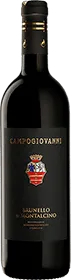
San Felice : Campogiovanni Il Quercione Riserva 2019
In-Stock
Let's talk about this product!
A pairing in mind? A question about the vintage? Comparison with another product? Find the answers here...
Description
Tasting notes and recommendations for Campogiovanni Il Quercione Riserva 2019 by San Felice
Tasting
Color
The wine displays a very deep ruby-red hue, reflecting its intensity and concentration.
Nose
The nose reveals remarkable aromatic complexity. Notes of red fruit and ripe wild berries intertwine with aromas of blackcurrant and black cherry. The bouquet is enhanced by floral nuances of violet and dried flowers, alongside touches of leather, sandalwood and dried fruits. Balsamic, toasty notes, cocoa powder and tobacco complete this sophisticated aromatic profile.
Palate
On the palate, the wine is opulent and remarkably well-structured. Ripe red fruits dominate the attack, supported by fine, mature tannins. A youthful acidity brings energy and freshness to the whole, preventing any heaviness despite the concentration and generous body. The finish is long and savory, standing out for its complexity and nuances that linger and evolve at length on the palate.
Food and wine pairings
This Brunello di Montalcino is an ideal match for grilled meats, especially lamb and rare-to-medium beef steaks. It also pairs perfectly with game dishes such as wild boar, venison or pheasant, particularly when roasted or braised with red-wine sauces. Mushroom dishes, truffle-based recipes, or plates served with aged cheeses such as pecorino also make excellent pairings.
Serving and cellaring
It is recommended to open Campogiovanni Il Quercione Riserva 2019 and decant it 20 to 30 minutes before serving in order to fully reveal its aromatic complexity. This wine has outstanding aging potential and can be cellared until around 2045.
A remarkably complex Brunello di Montalcino from Tuscany
The estate
Acquired by the Allianz Group in 1970, San Felice stands out as one of Tuscany’s most innovative estates. Located in Castelnuovo Berardenga in the Chianti Classico area, the estate spans more than 650 hectares. A pioneer as early as 1968 with the creation of Vigorello, the first Super Tuscan from Chianti Classico, San Felice is renowned for its commitment to viticultural research, notably through the Vitiarium project, which preserves more than 270 native Tuscan grape varieties. Under the direction of Carlo De Biasi, with Francesca Giuggioli as cellar master, the estate farms vineyards across three prestigious regions: Chianti Classico, Montalcino (Campogiovanni acquired in 1981) and Bolgheri (Bell'Aja since 2016).
The vineyard
Il Quercione’s vineyard covers 2.5 hectares within the Campogiovanni estate in Montalcino. Planted in 1980, it sits on a south to south-west-facing hillside at an altitude of 250 meters. The soils, composed mainly of silt and sand with some clay, rest on a bedrock of sandstone and calcareous marls. This distinctive composition gives the wine its characteristic minerality. The vines are trained in short-spurred cordon, promoting optimal canopy management and ideal grape exposure. Harvest takes place in early October, allowing Sangiovese Grosso to reach optimal phenolic ripeness characteristic of the terroir of Brunello di Montalcino.
The vintage
The winter of 2019 was marked by abundant rainfall and snowfall, effectively replenishing the soils’ water reserves. Spring brought mild average temperatures, encouraging early budbreak in early April and providing a long growing season. These conditions enabled the grapes to achieve full phenolic ripeness and optimal sugar accumulation, without excessive water stress. August slowed veraison before a mild September fine-tuned ripeness levels. Harvest took place in sunny weather, producing grapes of remarkable generosity and balance.
Vinification and aging
After harvest, the grapes for Campogiovanni Il Quercione Riserva 2019 undergo a twenty-five-day maceration in contact with the skins at a temperature maintained around 30°C. This stage allows optimal extraction of phenolic compounds and aromas. Malolactic fermentation then takes place in temperature-controlled stainless-steel vats. This Tuscan wine is then transferred into 500-liter French oak barrels for 24 months of aging, bringing a subtle oak influence. After this period, the wine continues to evolve in bottle for a further thirty-six months before release, totaling around five years between harvest and market launch.
Grape variety
100% Sangiovese (Brunello)