Assistant



 Guaranteed provenanceDirect from the estates
 DeliveryFree Home delivery for orders exceeding €300
 Secure PaymentVisa, American Express, Mastercard...
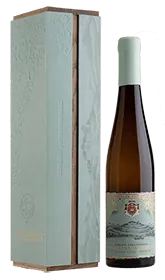
Schloss Johannisberg : Riesling Rosalack Auslese 2020
In-Stock
Let's talk about this product!
A pairing in mind? A question about the vintage? Comparison with another product? Find the answers here...
Description
Tasting characteristics and advice for the Riesling Rosalack Auslese 2020 from Schloss Johannisberg
Tasting
Appearance
The wine displays a pale yellow hue with golden highlights and a slight green tint.
Nose
The nose reveals a beautifully pure botrytized character, accompanied by subtle mineral and savory notes. Aromas of honey, wax, and peach mingle with delicate floral hints reminiscent of rose.
Palate
On the palate, this wine captivates with its remarkable balance between intense sweetness and vibrant acidity that brings freshness and energy. Flavors of peach and honey dominate, while the finish lingers on notes of tropical fruit—especially pineapple—showcasing the wine’s concentration and aromatic complexity.
Food and wine pairing
This Riesling Rosalack Auslese 2020 pairs perfectly with stone-fruit desserts such as mirabelle plum, greengage, or apricot tarts. It also matches well with honey- or citrus-based preparations. Blue cheeses such as Roquefort create a striking pairing thanks to the contrast between the cheese’s saltiness and the wine’s sweetness. More surprisingly, this wine goes beautifully with mildly spicy Indian or Asian dishes, where its sweetness softens the spices while its acidity refreshes the palate.
Serving and cellaring
The Riesling Rosalack Auslese 2020 is best enjoyed at a temperature between 8 and 10°C. This wine can be enjoyed now or cellared to develop further complexity over time.
A Rheingau Riesling with an exceptional botrytized character
The estate
Founded in 1720, Schloss Johannisberg is recognized as the first estate in the world dedicated exclusively to Riesling cultivation. Located in the Rheingau in Germany, this historic estate spans 35 hectares of vines planted on steep slopes overlooking the Rhine. Owned by the Oetker family since 1974 and integrated into Henkell Freixenet, the estate has been led since 2016 by Stefan Doktor. Schloss Johannisberg played a pioneering role in wine history by accidentally creating the spätlese category in 1775, followed by auslese in 1787. Ranked the second-best vineyard in the world and the best in Europe in 2025, the estate embodies the excellence of German Riesling while committing to sustainable viticulture certified Fair'N Green since 2023.
The vineyard
Schloss Johannisberg’s vineyard enjoys an exceptional location in the Rheingau, on steep, due south-facing slopes overlooking the Rhine. The vines are planted between 110 and 180 meters in altitude on Taunus quartzite soils covered with medium-to-deep clay loess. This mineral composition gives the wines their distinctive minerality. The unique microclimate, sheltered from northerly winds by the Taunus Mountains and benefiting from the river’s reflected warmth, allows for optimal ripening and encourages the development of noble rot. Eco-friendly viticultural practices include permanent grass cover, biological pest control, and the use of barrels made from oak sourced from the estate’s forests.
The vintage
The 2020 vintage in Germany was marked by cool conditions during harvest, in contrast to the generosity of the 2019 vintage. After a few initially sunny days, the weather turned noticeably cooler, preventing sugar levels from rising much above 90 Oechslé. These climatic conditions limited the development of noble rot in the region, resulting mainly in elegant dry and off-dry wines in the kabinett and spätlese categories. Botrytized auslesen are therefore rare in this vintage, making Schloss Johannisberg’s success in crafting this Rosalack Auslese particularly noteworthy.
Winemaking and aging
The Riesling Rosalack Auslese 2020 is made from hand-selected bunches showing exceptional ripeness and high sugar concentration thanks to the action of noble rot. After gentle pressing, fermentation is carefully managed to preserve delicate aromas and maintain a balance between sweetness and acidity. The wine is then aged on fine lees for five months, a technique that enhances texture and aromatic complexity while preserving the grape variety’s hallmark freshness. This aging approach reflects the estate’s philosophy of expressing fruit purity and the identity of the terroir.
Grape variety
100% Riesling