Assistant



 Guaranteed provenanceDirect from the estates
 DeliveryFree Home delivery for orders exceeding €300
 Secure PaymentVisa, American Express, Mastercard...

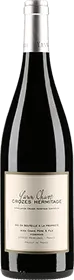
Yann Chave : Hermitage 2020
In-Stock
Let's talk about this product!
A pairing in mind? A question about the vintage? Comparison with another product? Find the answers here...
Description
Tasting Characteristics and Advice for Yann Chave’s 2020 Hermitage
Tasting
Color
The color reveals a deep garnet hue with bright ruby highlights, showing beautiful intensity and remarkable depth.
Nose
The bouquet requires generous aeration to fully reveal its complexity. Initially discreet, it gradually unfolds with aromas of blueberry jam, blackberry, and blackcurrant. Notes of licorice sticks emerge distinctly. Spices appear with elegance: black pepper and clove bring a complexity that balances the richness of the fruit. Toasted and mineral touches complete the aromatic palette.
Palate
The attack is direct and slender, marked by remarkable freshness. The mid-palate reveals generous breadth with complex aromas of red and black fruit, smoky nuances, spicy notes, and occasional hints of hazelnut. The tannins stand out for their density and exceptional finesse—both silky and velvety—elegantly coating the palate while providing an imposing, architectural structure. The finish lingers with elegance, supported by silky tannins and an aromatic complexity that persists for several minutes after tasting.
Food and Wine Pairing
This 2020 Hermitage pairs beautifully with seared duck breast cooked skin-side down with fig confit and Sarladaise potatoes, or a grilled rib steak served with a fine truffle mashed potato. It also harmonizes with oven-baked rock red mullet accompanied by chorizo dice and butternut purée. With cheeses, opt for Brillat-Savarin, Chaource, or Bleu d'Auvergne, whose creamy texture and intensity find an elegant balance with the wine’s tannins.
Serving and Cellaring
It is strongly recommended to decant this 2020 Hermitage one to two hours before serving to allow it to fully open up and soften its tannins. The ideal serving temperature is between 16 and 18 °C. This wine can be enjoyed from around 2025 and will reach its peak between approximately 2030 and 2040. It can be cellared until around 2045, or even beyond under optimal cellar conditions.
Other Characteristics
This wine is defined by a delicate balance between power and elegance, between concentration and freshness. Its complete tannic structure and preserved acidity give it exceptional aging potential over several decades.
A Rhône Valley Hermitage Marked by Power and Finesse
The estate
The story of the Yann Chave estate begins in 1970, when Nicole and Bernard Chave acquired four hectares of land in Mercurol. Yann Chave officially joined the family estate in 1996 after studying audit and management. He then made the strategic decision to abandon fruit growing to focus exclusively on winegrowing. A pioneer of organic farming in the region, the estate obtained its certification in 2007. Today, Yann Chave oversees a vineyard of around twenty hectares spread across three prestigious appellations in the northern Rhône Valley: Crozes-Hermitage, Saint-Joseph, and Hermitage. In 2024, his daughter Daphné joined him, bringing international experience gained in biodynamics and in leading vineyards around the world. The estate stands out for its early commitment to organic farming and a philosophy that favors elegance and refined tannins.
The vineyard
The estate owns around 1,200 to 1,500 square meters within the Hermitage appellation, specifically located in the Beaume and Péléat areas—two of the most renowned sectors of this legendary appellation. The plots benefit from an outstanding southwest exposure, ensuring remarkable sunlight accumulation throughout the growing cycle. Planted on a characteristic loess soil, these vines offer an ideal combination of the heat accumulation needed for full phenolic ripeness and the preserved freshness that defines the greatest expressions of Syrah in Hermitage. The vines are generally old, with some parcels over fifty years of age, providing exceptional root depth.
The vintage
The 2020 vintage in the northern Rhône Valley was marked by a particularly wet spring, with around 450 millimeters of rainfall between March and June, allowing the vines to build significant water reserves. Flowering took place around June 5 under ideal conditions. The summer proved hot and dry, marked by two heatwaves in late July and mid-August, naturally concentrating the berries. The estate adapted its work parcel by parcel, favoring the natural shading of the grape clusters. Harvest began on August 26 for the whites and ended on September 16 with Saint-Joseph and Hermitage, prioritizing phenolic ripeness over strict technological ripeness.
Vinification and aging
The 2020 Hermitage is harvested by hand. After complete destemming, vinification proceeds gently, with twice-daily pump-overs favored over harsh pressings. Fermentation temperatures are kept below twenty-eight degrees Celsius to preserve aromatic integrity. Maceration lasts four weeks, allowing for complete yet nuanced extraction. Fermentations are carried out mostly with indigenous yeasts. After pressing off, the wines are racked warm into new 600-liter demi-muids, where malolactic fermentation occurs naturally. Aging in these vessels lasts exactly twelve months, followed by an additional six months in tank to allow the wine to settle naturally before bottling.
Grape variety
100% Syrah