Assistant




 Guaranteed provenanceDirect from the estates
 DeliveryFree Home delivery for orders exceeding €300
- Secure PaymentVisa, American Express, Mastercard...
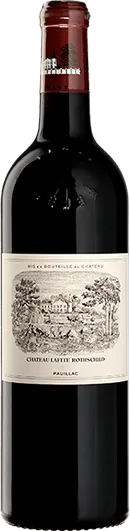
Château Lafite-Rothschild 1982
Only 1 available
In-Stock
Let's talk about this product!
A pairing in mind? A question about the vintage? Comparison with another product? Find the answers here...
94
/100
Wine Spectator
Dark ruby red. Mineral, berry and mint. Full-bodied, with silky tannins and a long finish. A silky, seductive wine. — Bordeaux retrospective. Drink now.
100
/100
Decanter
A demure yet confident beauty, the 1982 Lafite is in its prime and will delight anyone privy to an audience. Scents of tobacco, sandalwood and spice box waft with increasing intensity as this sits in the glass, then it floats across the palate leaving a persistent trail of stony minerals: flint and graphite along with preserved cherries are laced with sweet, smoky incense, and radiant acidity gives a perception of weightlessness while shedding light on the wine’s depths. So effortlessly and elegantly framed, and as exquisitely perfect as this is now, there is nothing to suggest it will fade any time soon.
18
/20
Jancis Robinson
Jancis Robinson
The left bank 1982 first growth deliberately chosen to be served first at this Room to Read dinner because it is generally the lightest of them. Mid blackish ruby with a pale rim. The first bottle was uncomfortably tart, the second one decidedly fruitier though still obviously fairly light bodied, very Lafite in its ethereal bouquet but on the palate it really grew into a sweet representative of the vintage. If this had been the climax of a well-planned meal (rather than being trumped in terms of body by its peers) I would have been delighted. On the nose there was definitely something stony and it just got more and more charming in the glass for up to an hour and then started to fade. (I thought of its fan the late Michael Broadbvent MW who would have laid his watch next to the glass.) But it’s a bit silly that this wine is so much more expensive than the other first growths – about £2,500 a bottle. Blame the Chinese. (JR)
97
/100
Jeff Leve
Leve Jeff
The best examples of this are simply great. Elegant, floral, refined, and packed with sweet, spicy red fruits. Cigar wrappers, currants, and cherries. There is length, energy, lift, freshness, and complexity. Drink from 2024–2040.
96
/100
Falstaff
Falstaff
Intense ruby with a good depth of colour, orange reflections, and a broad watery rim. A fine floral bouquet on the nose, with cherry, subtle orange zest, liquorice and blackberry, floral lily notes, a hint of cedar wood, porcini mushroom and chocolate. The palate is complex, juicy, and elegant, pronounced in fruit, with vivid tannins, some black tea, slightly astringent, with the robust core of all good ’82s, deep with dark chocolate, but also red fruit nuances on the lengthy finish. Has excellent potential for further ageing! Drink/store +40 years.
19
/20
Weinwisser
Bright garnet, medium-dark. Noble bouquet, somewhat restrained, showing sandalwood, Earl Grey notes, licorice, truffle, and a generous Cabernet warmth. On the palate, regal, fine, dancing, with plenty of perfume at its core; perhaps a somewhat defensive, not very talkative Grand Vin that would likely be marked down compared to other ’82 Premiers. Tasted on its own, it feels like a dreamy moment of leisure. Essentially, the ’82 is not wildly concentrated and is already mature, but that’s no flaw—it’s Lafite! My best score so far for this Pauillac I have often viewed critically.
20
/20
René Gabriel
I’m torn about this wine. Is its future one of brilliance, or will it develop as quickly as other Lafite wines from this decade? Over the next ten years, the score will be around 18/20 to 19/20. Barely accessible in 1988 (18/20): a closed nose with veiled sweetness. On the palate, rich in extract, dry and also closed, tannins that coat the tongue. In its overall quality, Lafite is not as overpowering as other Pauillacs. 1990, tasted shortly after the ’82 Duhart: certainly not keeping up with the best ’82s: expansive yet inwardly closed, restrained sweetness, dried fruit, Málaga, vanilla. On the palate, sweet tannins reminiscent of Sangiovese, still some barrique traces, tightly knit with very good reserves. A year later I thought this wine would get back at me and my “Lafite ignorance.” Poured blind at Walter Kaufmann’s, immediately recognized as a great ’82 – but which one? Very likely it never had a fruit phase. Still completely closed today. After an hour, a fine, plummy sweetness emerges, then dried fruits and a hint of cinnamon, but all only in trace elements – seen from the tip of the iceberg. The palate is compact, impenetrable, with masses of tannins. It will open when others are already finished. 1994, an overwhelming wine in a Lafite vertical: it shows more and more that it truly deserves its 19/20. Another tasting: so seductively sweet and multi‑layered, yet still seeming closed. While I, not knowing what it was, nearly flipped, my table neighbors emptied the ’82 Pichon‑Lalande. Errare humanum est! Sweet plum and sandalwood bouquet in 1998, an almost Rioja‑like sweetness, caramel note behind. Utterly elegant, soft and dancing on the palate, round, plush extract. Already beautiful to drink. ’99: not experienced quite so brilliantly: now becoming earthier and losing fruit, with medium concentration underneath. Not that I want to fault it, but I think I prefer the much less expensive 1989 Lafite, which will become greater. ’04: a magnum showing that this 1982 Lafite definitely has no chance against Mouton and Latour from the same vintage (18/20). ’05: direct comparison with Mouton 1982 and Mouton 1986 at an invitation by Helmut Dorsch in Kitzbühel. The series donor, however, was Hardy Rodenstock, who was also present. The wine may have been a bit too warm and perhaps, at 5 hours, also decanted a bit too long. The nose very ripe, showing raisiny tones and deerskin notes. On the palate, firm, fairly grainy, showing fine gaps between flesh and bone. Despite this gentle critique, a great Bordeaux, but not a truly great 1982. (18/20). ’07: Coburg tasting. Very deep, remarkable color for that Lafite era, first notes of maturity but still very dense in the middle. Profound bouquet, smoke, bacon notes, dark woods, wild Cabernet, lots of currants. Firm, youthful palate, tannins still massive, the wine still shows a demanding astringency, hugely concentrated within, not showing much finesse but an indomitable power that currently makes it appear more bourgeois than Mouton and even Lafite. It can still improve and seems not to have reached its effective drinking maturity. Strongly resembles its ’59. (19/20). ’08: that evening we tasted 24 vintages of Lynch Bages. Which was the best wine of the night? I must admit without envy – the 1982 Lafite. Bernd Petrat handed me a glass at the bar. I was intoxicated; such a delicate perfume, and it reminded me of the 1953 Lafite in its glory days. Simply a dream, and it would be unfair not to award the maximum score to this experience. The wine had been decanted for more than 3 hours. So that may be the secret. And thus this circumstance also offers a possible guarantee that the ’82 Lafite will remain in its brilliant drinking phase for a very long, long time. This bottle: 10/20. ’08: a few months later at the Best‑Bottle tasting in Sempach, almost the opposite. Brightening wine‑red, dark in the middle. Open, herb‑scented bouquet, dried thyme, light fine woods, a subtle sweetness running through, deerskin notes. On the palate quite delicate, not showing as much drive as other equally lauded ’82s, dancing, tea notes, black berries, pleasantly sweet finish, lovely to drink. But if you consider the current market price, then the pleasure should be rated higher than the value. Probably at its peak. (18/20). ’10: starts like an elderly Rioja with scorched, raisiny aromas of licorice and dried kitchen herbs, the nose becomes ever sweeter and gains a bit of complexity. On the palate, slightly mealy body, still muscular tannin remnants, overall somewhat drying. Longer decanting may help. (18/20). ’11: bright garnet, medium‑dark. Noble bouquet, somewhat reserved, you have to meet the wine halfway; sandalwood, Earl Grey notes, licorice, truffle and a broad, cozy Cabernet warmth. On the palate, regal, fine, dancing with lots of perfume at its core, perhaps a somewhat defensive, not very communicative Grand Vin that one would certainly penalize compared with other ’82 First Growths. Drunk on its own, it feels like a dreamy moment of leisure. Basically, this wine is not insanely concentrated and is currently mature, which is neither a penalty nor a shame. That’s just Lafite! My best score so far for this Pauillac I have often judged critically. (19/20). ’12: fairly dark wine‑red, only the slightest hints of maturity at the rim. Warm, wonderfully sweet bouquet, cold black tea, prunes, fine woods, spicy tobacco, showing complexity and great breadth; in the background, nutty pralines slowly rise. On the palate, pure elegance and harmony, everything is silky and every single tannin seems in the right place. The astringency is thus mild and regal. A dream Lafite, now at the beginning of what will likely be a decades‑long drinking plateau. (20/20). ’14: incredibly young, incredibly dense, still showing very demanding yet nobly rounded tannins. (20/20). ’17: from the cellar of Georges Kohlik at the Best‑Bottle in Lucerne. Quite dark wine‑red, relatively few signs of maturity. Brilliant bouquet, lots of malt, plummy sweetness, black Sichuan pepper, tar, herbal and minty notes. Unheard‑of intensity on the attack. Already on the nose, a Bordeaux giant. You can hardly smell enough of it. On the palate, firm, meaty, still royally astringent, absolutely complete and perfect. Power and finesse in one. It has steadily improved in recent years and today presents itself as one of the greatest and finest wines of this rising Lafite era. (20/20). ’22: still quite dark wine‑red, little sign of maturity, slightly lightening rim outside. Delicate, non‑intrusive bouquet. That is to say, you have to go towards the wine. Gradually it releases fragrant aromas. Below, tar nuances, summer truffle, then plummy fruit notes, damson, Earl Grey and Assam nuances. Overall absolutely noble and somehow also sublime in its greatness with simultaneous modesty. On the palate, velvety, elegant, delicately full and creamy. The tannins are perfectly ripe and the wine finishes with an almost dramatic nonchalance. A “Billitis” Lafite that one can/could enjoy for decades to come! (20/20).
98
/100
Jane Anson
Jane Anson
As is often the case with Lafite, this was the most reserved of the five 1855 First Growths on opening, showing rose petals and finely tuned red fruit. It then pulled off a sleight of hand in the glass, slowly but surely building in concentration and pleasure, layering tobacco, slate, smoked earth, sweet blackberry purée, pencil lead, oyster shell and mint leaf. I last tasted it two years ago, and it has barely budged since, suggesting many decades lie ahead. Effortlessly drinkable, a vintage that more than lives up to the legend. Estate director Jean Crété recorded that it was aged in “primarily new oak,” though without further detail (likely somewhere north of 70–80%). Yield 40 hl/ha, around 10% higher than average, with harvest beginning on September 16, the same date as in 1976. Owned by Baron Eric de Rothschild, and this was the last year with Emile Peynaud as consultant. Charles Chevallier would also join the following year, in 1983, as deputy technical director.
95
/100
Jean-Marc Quarin
Jean-Marc Quarin
Second part of the blind tasting in series of three wines (Mouton, Latour and Lafite) in the following vintages and order: 1975, 1985, 1983, 1978, 1982, 1970 and 1971. 5th series: 1982. Dark red colour. Medium to good intensity. Slight development. Nose of medium intensity. Fine. Fruity. Subtle and complex. With swirling, medium intensity. Ripe. Fruity and still fresh. Palate is smooth and soft from the attack; it becomes caressing and unctuous and, especially from mid-palate, the wine gains weave and concentration without becoming either rough or austere. It’s very good, powerful yet refined. That’s the paradox. Cedar persistence. Finally, a good bottle!