Assistant



 Guaranteed provenanceDirect from the estates
 DeliveryFree Home delivery for orders exceeding €300
- Secure PaymentVisa, American Express, Mastercard...
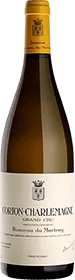
Domaine Bonneau du Martray : Corton-Charlemagne Grand cru 2011
Only 2 available
In-Stock
Let's talk about this product!
A pairing in mind? A question about the vintage? Comparison with another product? Find the answers here...
Description
Characteristics and tasting tips for the Corton-Charlemagne Grand Cru 2011 from Domaine Bonneau du Martray
Tasting
Appearance
The appearance unveils a pale gold color with subtle green highlights.
Nose
The nose reveals remarkable aromatic complexity with delicate notes of citrus (lemon, mandarin), accompanied by nuances of peach and white flowers. Upon aeration, aromas of toasted hazelnut and cinnamon gradually emerge, testifying to the wine's aging potential.
Palate
The attack on the palate is lively and mineral, supported by a beautiful lemony tension. The mid-palate develops a fine and elegant texture, revealing ripe white-fleshed fruit and a saline, almost iodized minerality. The finish persists at length with notes of hazelnut, almonds, and chalk, with perfectly integrated acidity that confers purity and elegance to the whole.
Food and wine pairings
This Corton-Charlemagne Grand Cru 2011 is the ideal accompaniment to grilled lobster or lobster in a creamy sauce, foie gras, poultry in cream sauce, or noble fish such as turbot with beurre blanc. It also pairs very well with ripened soft cheeses.
Service and cellaring
This Corton-Charlemagne Grand Cru 2011 is ideally served at a temperature of 12°C. Slight aeration for thirty to sixty minutes before serving allows the wine to fully express its complexity. This vintage can be enjoyed until approximately 2035.
An exceptional Burgundy Grand Cru with remarkable mineral expression
The estate
Domaine Bonneau du Martray boasts a history dating back to the eighth century, when Emperor Charlemagne bequeathed these vines to the monks of the Abbey of Saint-Andoche. Founded in 1835 through the marriage of Charles Bonneau du Martray and Eugénie Very, the estate today spans eleven hectares of Grands Crus on the Hill of Corton. Since January 2017, the property has belonged to American entrepreneur Stanley Kroenke, also the owner of the prestigious Californian estate Screaming Eagle. The estate stands out as the only Burgundy producer exclusively dedicated to Grands Crus, cultivated in certified biodynamics since 2016. Armand de Maigret oversees general management, while Thibault Jacquet directs daily operations, with Emmanuel Hautus serving as oenologist since 2011.
The vineyard
The Corton-Charlemagne Grand Cru from Domaine Bonneau du Martray extends over 9.5 hectares distributed across the Hill of Corton, between 280 and 330 meters in altitude. The vineyard benefits from a western exposure unique in the Côte d'Or, allowing for prolonged sunshine in the afternoon and evening. The soils present remarkable geological diversity with nine distinct facies: white limestone marls at altitude, clays rich in iron oxides mid-slope, and deeper soils at the bottom of the slope. This soil mosaic, combined with the forest cover of the Bois de Corton crowning the summit, creates exceptional microclimatic conditions. The vines, averaging fifty years of age, are cultivated according to biodynamic principles, without herbicides or synthetic fertilizers, with yields voluntarily limited to around 40 hectoliters per hectare.
The vintage
The 2011 vintage in Burgundy began with an unusually warm spring, advancing budburst and flowering. Spring frost episodes affected certain sectors, followed by a cool and wet summer, particularly in August, creating significant disease pressure. These conditions required rigorous canopy management and precise harvest timing. At Domaine Bonneau du Martray, the Chardonnay harvest took place from September 1st to 5th, yielding grapes of excellent maturity and composition despite the climatic challenges.
Winemaking and aging
The harvest of the Corton-Charlemagne Grand Cru 2011 was carried out manually by plot, depending on the optimal maturity of each sector. After light crushing, the grapes are gently pressed and the must undergoes settling before fermentation. Winemaking is carried out via spontaneous fermentation with indigenous yeasts, beginning in stainless steel tanks and then continuing in French oak barrels. Each plot is vinified separately. Aging lasts twelve months in barrels, with 25 to 30% new wood, allowing malolactic fermentation to occur naturally. After a first racking and blending of the different plots, the wine continues its aging on fine lees during a second winter. A final racking precedes a two-month period in stainless steel tanks for homogenization, before bottling carried out during a waning moon, according to biodynamic principles.
Grape variety
100% Chardonnay