Assistant



 Guaranteed provenanceDirect from the estates
 DeliveryFree Home delivery for orders exceeding €300
- Secure PaymentVisa, American Express, Mastercard...
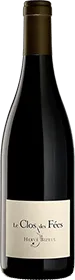
Domaine du Clos des Fées : Un Faune Avec Son Fifre 2020

Out of stock
Would you wish to know when this product is back in stock?
Let's talk about this product!
A pairing in mind? A question about the vintage? Comparison with another product? Find the answers here...
Description
Characteristics and tasting advice for Un Faune Avec Son Fifre 2020 red from Domaine du Clos des Fées
Tasting
Color
The color reveals a deep garnet hue, with beautiful visual intensity.
Nose
The nose reveals aromas of ripe red fruits, notably blackcurrant and plum. Delicate notes of roasted red peppers bring a refined vegetal dimension. With aeration, the bouquet evolves toward nuances of garrigue, dried herbs and subtle mineral touches, accompanied by discreet floral and aniseed notes.
Palate
On the palate, this wine charms with its silky texture and delicate, perfectly integrated tannins. The structure shows finesse and elegance, with a lively acidity that lends a remarkable saline freshness. The palate reveals a harmonious balance between aromatic depth and refinement, extending into a long, persistent finish with mineral accents characteristic of the limestone terroir.
Food and wine pairings
This wine pairs ideally with refined white meats such as veal tenderloin. It also matches perfectly with noble poultry such as pigeon or partridge, particularly when prepared with elaborate sauces. Lightly sauced red meats, such as grilled beef tenderloin or rib of beef, also make excellent pairings. Aged firm cheeses, notably goat cheeses and mature Comté, harmoniously round out this cuvée.
Serving and cellaring
Un Faune Avec Son Fifre 2020 is best enjoyed at a temperature of 17°C. It is recommended to open the bottle about one hour before serving to allow for optimal aeration. This wine can be enjoyed now and will continue to evolve until around 2029.
A Cabernet Franc from Roussillon of remarkable elegance on limestone terroir
The estate
Founded in 1998 by Hervé Bizeul, former sommelier crowned Best Young Sommelier in France and a recognized wine journalist, Domaine du Clos des Fées now spans around 56 to 65 hectares in Roussillon. Hervé Bizeul, who runs the estate alongside his wife Claudine, has built his reputation on a rigorous, intellectual approach to viticulture, rejecting conventional certifications in favor of demanding sustainable viticulture. The estate employs around one hundred people to maintain vineyard standards worthy of grand crus. Recognized by international critics with three stars in the Bettane et Desseauve guide, Domaine du Clos des Fées embodies the winemaking excellence of contemporary Roussillon.
The vineyard
Un Faune Avec Son Fifre comes from a 0.70-hectare plot planted with Cabernet Franc at a very high density of 6,800 vines per hectare, located on the northern foothills of the limestone cliff of Vingrau at around 200 meters above sea level. The vines are trained in gobelet on individual stakes, on clay-limestone soils with a high calcium carbonate content. This northern exposure, unusual for Roussillon, limits direct sunlight and promotes optimal phenolic ripening rather than excessive concentration of sugars. The Merlot completing the blend comes from the lieu-dit Clos des Fées, also cultivated in gobelet. IGP Pyrénées-Orientales frames this original production that defies regional conventions.
The vintage
The 2020 vintage was a particularly challenging year in Roussillon, marked by pronounced drought and intense heat during the growing season. These demanding climatic conditions forced the estate to be highly selective, with certain cuvées not being released that year. Cabernet Franc nevertheless managed to express sufficient aromatic and phenolic complexity to justify the production of Un Faune Avec Son Fifre 2020.
Winemaking and aging
The vinification of Un Faune Avec Son Fifre 2020 is carried out using the grains mêlés method, with fermentation of whole, unstemmed berries using indigenous yeasts. Fermentation takes place in temperature-controlled truncated-cone stainless-steel vats, with punch-downs and pump-overs twice daily during the active phase. Maceration continues for 20 to 25 days after the start of fermentation. Aging begins in new barrels, continues in second-wine barrels, then finishes in concrete vats for a total of 9 to 10 months before bottling, traditionally carried out in May or June.
Grape varieties
Cabernet franc (80 %)
Merlot (20 %)