Assistant


 Guaranteed provenanceDirect from the estates
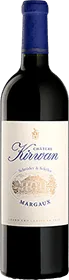
Château Kirwan 2025
En Primeur Wines – delivery in early 2028
Let's talk about this product!
A pairing in mind? A question about the vintage? Comparison with another product? Find the answers here...
Description
Tasting Notes and Recommendations for Château Kirwan 2025
Tasting
Appearance
The wine displays a deep, vibrant colour, with great clarity and remarkable visual appeal.
Nose
The aromatic bouquet reveals itself with striking purity and directness. It unfolds an intense fruity profile, dominated by black fruits, elegantly interwoven with delicate floral notes reminiscent of iris and violet.
Palate
The palate offers a rich, generous texture of great finesse. The whole is underpinned by a surprising freshness and a beautiful juiciness. The tannins, both precise and perfectly coated, give structure to this wine, which shines through its balance and elegance.
Food and wine pairing
This wine pairs ideally with characterful meats such as game, like venison or wild boar, as well as grilled cuts of beef. It will also enhance a duck breast or a platter of hard cheeses.
Serving and cellaring
To fully appreciate this vintage, it is recommended to serve it at a temperature between 17 and 18 °C.
The Elegance and Freshness of a Great Margaux by Château Kirwan
The estate
Located in the heart of the Bordeaux region, Château Kirwan traces its origins back to the 17th century but took its current name after 1751. Classified as a Third Growth in 1855, this 37-hectare estate is today led by Sophie Schÿler, representative of the family that has owned the property since 1925. Under the technical direction of Philippe Delfaut, the brand stands out for its authenticity and environmental commitment. This great name of the appellation distinguishes itself through a successful blend of respect for tradition, eco-responsible viticulture and innovative wine tourism.
The vineyard
Rising on the Cantenac plateau, within the Margaux appellation, the vineyard extends over deep Pyrenean gravels. Its great singularity lies in its high proportion of clay, providing excellent water regulation during dry summers. The vines, averaging thirty years old and planted at high density, are cultivated according to a certified eco-responsible approach. Soil work is mechanical, complemented by natural grass cover to encourage biodiversity.
The vintage
The year was marked by a dry, warm and early climate. After a mild winter, budburst came quickly. A rainy April stimulated growth, followed by warm, dry weather that favoured even flowering. The summer was shaped by a lasting water deficit and a strong heatwave in August, before welcome rains came at the end of August and beginning of September, allowing for concentrated berries.
Vinification and ageing
The harvest took place from 9 to 20 September under excellent conditions. Alcohol: 13.5% vol.
Grape varieties
Cabernet Sauvignon (63%), Merlot (25%), Cabernet Franc (7%), Petit Verdot (4%), Carménère (1%).