Assistant



 Guaranteed provenanceDirect from the estates
 DeliveryFree Home delivery for orders exceeding €300
 Secure PaymentVisa, American Express, Mastercard...
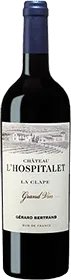
Gérard Bertrand : Le Viala 2011
Stock currently at the producing estate – Will ship after October 14, 2026
Let's talk about this product!
A pairing in mind? A question about the vintage? Comparison with another product? Find the answers here...
Description
Characteristics and Tasting Advice for the Viala 2011 by Gérard Bertrand
Tasting
Appearance
The wine displays a beautiful deep garnet color, reflecting the fruit’s ripeness and the wine’s concentration.
Nose
Powerful, the nose reveals notes of ripe fruit and violet. The bouquet also unveils aromas of black cherry, plum, blackcurrant, baking spices, and crushed black pepper.
Palate
The attack is very appealing, with silky tannins and woody notes. The palate is generous and rich, offering fine balance and seemingly endless length. Notes of roasted black cherries emerge, along with a subtle touch of toffee and a velvety texture. The characteristic minerality of the limestone soils is expressed through delicate graphite notes.
Food and Wine Pairings
This wine pairs perfectly with grilled red meats, game, or aged cheeses. It is an ideal match for a rack of lamb in an herb crust, whose rich flavors harmonize beautifully with the wine’s spicy and floral notes. The recommended serving temperature is 18°C.
Serving and Cellaring
It is recommended to decant Le Viala 2011 before serving to allow its aromas to fully express themselves. This wine can be enjoyed now, but it also offers attractive aging potential.
A powerful, well-balanced red from the Languedoc by Gérard Bertrand
The Estate
Founded in 1992 by Gérard Bertrand, a former professional rugby player turned winemaker, the namesake estate has established itself as one of the leading players in the Languedoc. Today, the group brings together seventeen châteaux and wine estates, representing around 980 hectares of vineyards in the south of France. Gérard Bertrand, who still runs the company, has made biodynamic farming the hallmark of his House, with a commitment to fully convert the entire vineyard. A pioneer in promoting Languedoc wines on the international stage, he has transformed perceptions of this wine region and demonstrated its potential for excellence. The company employs around 450 people and exports more than half of its production to 160 countries.
The Vineyard
Le Viala 2011 comes from Château Laville Bertrou, an estate acquired by Gérard Bertrand in 1997, located in the Minervois La Livinière appellation. This outstanding terroir lies on the heights of La Livinière, at around 120 meters above sea level. The vineyard benefits from a semi-arid Mediterranean climate—one of the sunniest and warmest in France—combined with a limestone subsoil containing significant water reserves. The soils are made up of a mosaic of bare marls alongside chalky limestone and compact limestone dating back to the Eocene period. This composition naturally limits yields, while enabling the root system to develop exceptional resistance to water stress. The estate covers 75 hectares of vineyards divided into plots separated by characteristic stone walls built using the clavage technique.
The Vintage
The year 2011 was marked by higher rainfall than in previous years, finally restoring normal volumes after three years of low yields. While these rains created challenges in terms of rot pressure in certain areas, growers who managed these conditions successfully produced very well-balanced, successful red wines. The 2011 vintage is thus defined by its balance and freshness.
Winemaking and Aging
The production of Viala 2011 is based on meticulous attention to every detail. Harvesting begins after very precise monitoring of ripeness and daily tastings of the grapes. The harvest is carried out by hand, and the grapes are carefully sorted upon arrival at the winery. The grape varieties are vinified separately to preserve their individual characteristics. Syrah and Carignan are placed entirely in tanks and undergo carbonic maceration, while Grenache is destemmed and undergoes traditional maceration with strict temperature control. After racking and malolactic fermentation, the different varieties are blended and then transferred to oak barrels for twelve months of aging. The wine is neither fined nor filtered before bottling, then it is kept in the cellar for a further twelve months before release.
Grape varieties
Syrah, Grenache, Carignan