Assistant


 Guaranteed provenanceDirect from the estates
 DeliveryFree Home delivery for orders exceeding €300
 Secure PaymentVisa, American Express, Mastercard...
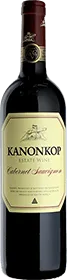
Kanonkop Wine Estate : Cabernet Sauvignon 2018
Only 1 available
In-Stock
Let's talk about this product!
A pairing in mind? A question about the vintage? Comparison with another product? Find the answers here...
Description
Tasting characteristics and advice for the Cabernet Sauvignon 2018 from Kanonkop Wine Estate
Tasting
Color
The color reveals a deep red hue with ruby highlights.
Nose
The nose opens on a complex bouquet dominated by black berries and blackcurrant, complemented by notes of tobacco, cedar and oak spice. With aeration, more subtle aromas emerge, evoking fresh blackcurrant leaves and crushed violet petals, with delicate hints of white pepper and capsicum.
Palate
On the palate, the wine displays a supple, rich structure, delivering a full, rounded mouthfeel. Concentrated black fruit is supported by oak spice, toasted nuts and a delicate touch of fresh fynbos. Firm tannins are well integrated, showing fine cohesion between all elements. Acidity maintains balance without harshness, while the finish lingers elegantly with classically dry notes.
Food and wine pairings
This Cabernet Sauvignon 2018 pairs perfectly with all cooked beef dishes, notably a variety of steaks. It also enhances game, particularly slowly cooked venison, braised beef short ribs and herb-crusted lamb shanks with aromatic herbs such as rosemary. On the cheese side, it matches beautifully with aged hard cheeses, whose intensity of flavor elegantly complements the wine’s aromatic profile.
Serving and cellaring
The Cabernet Sauvignon 2018 can be enjoyed now but will continue to evolve through around 2033.
A South African cabernet sauvignon combining concentration and elegance
The estate
Founded in 1910 by the Sauer family, the family estate of Kanonkop Wine Estate takes its name from a famous hill (kop) on Simonsberg Mountain, from which, during the 17th and 18th centuries, a cannon shot (Kanon) was fired to announce the approach of sailing ships in Table Bay so that local farmers could then travel to the port, located 50 kilometers away, to sell their fruit and vegetable production.
The estate’s first wines were made as early as 1973 under the impetus of Paul Sauer, a politician who served in the South African parliament for 41 years, driven by the ambition to craft great South African wines.
In the hands of brothers Johann and Paul Krige, the 4th generation continues to produce wines recognized beyond national borders for their pure, refined expression of the identity of Stellenbosch, an emblematic appellation of the Western Cape region.
The vineyard
The Cabernet Sauvignon 2018 comes from three distinct blocks located on the lower slopes of Simonsberg Mountain, between 180 and 365 meters above sea level in the Stellenbosch region. The vines, averaging 29 years of age, thrive on ancient decomposed granite soils as well as on the Hutton and Clovelly soil types, characterized by a high iron oxide content. These blocks were selected for their particularly high pyrazine levels, contributing to the wine’s herbaceous and peppery character. The vineyard benefits from the moderating influence of False Bay, located around 30 kilometers away, whose South Atlantic breezes provide a cooling effect of up to 7°C. Yields are deliberately limited to 4 tons per hectare, favoring fruit concentration over quantity.
The vintage
The 2018 vintage stands out for its contrasting weather conditions. Winter 2017 saw significantly higher rainfall than the previous two years, breaking a five-year drought. Irregular temperatures from winter through flowering, along with generally cool growth, reduced water stress in the vines during ripening. However, the harvest was marked by regular showers and abnormally cold temperatures, creating considerable variability in ripeness. This complexity required meticulous grape selection, with the selected fruit showing relatively large berries and a concentration different from the previous vintage.
Vinification and aging
The Cabernet Sauvignon 2018 grapes are hand-harvested when sugar levels reach 23° to 25° Balling. In the cellar, the process begins with destemming whole clusters, followed by three sorting stages including a computer-controlled optical sorting system. The crushed grapes are pumped into open concrete fermenters with a capacity of 10 tons each, then inoculated with a selected yeast. Fermentation lasts five days with temperatures controlled at 29°C. During this phase, the floating cap is punched down by hand every two hours to ensure optimal yet gentle extraction. After fermentation, malolactic fermentation lasts two to three months, followed by sterile filtration. The wine then remains for 24 months in 225-liter French Nevers oak barrels, split between 50% new barrels and 50% second-fill barrels.
Grape varieties
This South African wine is a blend of cabernet sauvignon (95%), complemented by merlot and cabernet franc (5%).