Assistant



 Guaranteed provenanceDirect from the estates
 DeliveryFree Home delivery for orders exceeding €300
 Secure PaymentVisa, American Express, Mastercard...
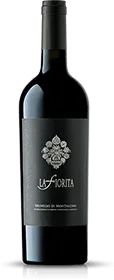
La Fiorita : Brunello di Montalcino Fiore di No 2019
In-Stock
Let's talk about this product!
A pairing in mind? A question about the vintage? Comparison with another product? Find the answers here...
Description
Characteristics and tasting tips for the Brunello di Montalcino "Fiore di No" 2019 from La Fiorita
Tasting
Appearance
The color displays a medium to deep ruby red hue, enhanced by subtle garnet highlights.
Nose
The nose reveals a complex, multidimensional bouquet. Rich aromas of stewed plums, cherry sauce and cocoa mingle with notes of toasted herbs. With aeration, subtler nuances emerge, including hints of red berries, almond paste, coconut and wafts of black truffle. Floral notes of dried violet complete this aromatic palette.
Palate
On the palate, the wine unfolds with a velvety, silky texture, balanced by vibrant acidity and a distinctive mineral streak. Flavors of red and black fruit express themselves generously, with red cherries of an almost liqueur-like sweetness, fleshy raspberries and crushed wild berries. The tannins are finely structured, supple and polymerized. Hints of freshly ground black pepper, dried tobacco, cinnamon and clove add further layers of spice. The finish is remarkably long and persistent, with lingering notes of dark chocolate, bitter cocoa and minerality.
Food and wine pairings
This Brunello di Montalcino "Fiore di No" 2019 pairs ideally with red meats served with rich, complex sauces. It elevates a long-simmered wild boar stew, a veal roast braised in red wine, or a grilled lamb chop with Mediterranean herbs. Traditional Tuscan pasta dishes, such as pappardelle with wild boar ragù, also make a remarkable match. For cheeses, opt for aged varieties such as barrel-aged Pecorino di Pienza or very old Parmigiano Reggiano.
Serving and storage
The Brunello di Montalcino "Fiore di No" 2019 will benefit from decanting for at least one hour before serving. The ideal serving temperature is between 16 and 18°C. This wine can be enjoyed through around 2044.
An exceptional Brunello di Montalcino, La Fiorita’s signature in Tuscany
The estate
Founded in 1992 by Roberto Cipresso, the La Fiorita estate now spans nine hectares of vineyards in the Montalcino area of Tuscany. Since 2014, the property has been led by Natalie Oliveros, an American businesswoman of Calabrian origin, who transformed the estate by obtaining organic certification in 2019 and building a new gravity-fed winery. Together with winemaker Vincenzo Pirrone and manager Luigi Peroni, she embodies a vision of excellence combining respect for terroir with innovation. La Fiorita has established itself among the leading producers of Brunello di Montalcino thanks to authentic wines of outstanding quality.
The vineyard
The Brunello di Montalcino "Fiore di No" 2019 comes from three vineyards selected from La Fiorita’s four estate properties, located in the southeast sector of the production area. Pian Bossolino, east-facing at 360 meters above sea level on schist soils, provides around 55% of the grapes. Giardinello, south-facing between 280 and 360 meters above sea level on sandy clay soils, contributes 28%. Collosorbo, to the southwest at 220 meters above sea level on calcareous clay soils, provides the remaining 17%. This diversity of terroirs, exposures and altitudes allows Sangiovese to express itself in different ways depending on its specific site. The vineyards have been farmed under certified organic practices since 2019, with a planting density of 7,000 vines per hectare.
The vintage
2019 proved to be an exceptional vintage for Brunello di Montalcino, with near-perfect weather conditions for growing Sangiovese. The vintage benefited from a cool season with regular rainfall distribution throughout the growing year. While September began with moderate rainfall, the month quickly cleared up, allowing the grapes to ripen gradually and achieve a highly concentrated, well-balanced profile.
Winemaking and aging
The Brunello di Montalcino "Fiore di No" 2019 comes from hand-harvested grapes picked in stages according to the optimal ripeness of each plot: Collosorbo on September 28, Pian Bossolino on October 6, and Giardinello on October 14. Fermentation took place with indigenous yeasts in concrete tanks within the new gravity-fed winery, with extended maceration of around 18 to 30 days at a maximum temperature of 24°C. The wine then matured for 36 months in French oak casks of varying sizes, primarily previously used wood to preserve the expression of fruit and terroir. After this maturation, the wine spent an additional four months in concrete tanks before several months of bottle aging.
Grape variety
100% Sangiovese