Assistant



 Guaranteed provenanceDirect from the estates
 DeliveryFree Home delivery for orders exceeding €300
 Secure PaymentVisa, American Express, Mastercard...
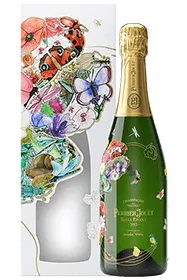
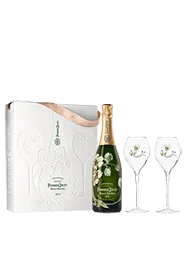
Perrier-Jouët : Belle Epoque 2011
In-Stock
Let's talk about this product!
A pairing in mind? A question about the vintage? Comparison with another product? Find the answers here...
Description
Characteristics and tasting advice for Perrier-Jouët "Belle Époque" 2011
Tasting
Appearance
A pale golden hue with greenish highlights dresses this champagne. The effervescence stands out for its remarkable finesse, with delicate, persistent bubbles that create an elegant mousse.
Nose
On the first nose, the champagne reveals delicate floral notes of acacia and linden blossom, alongside aromas of fresh white fruits such as peach and pear, as well as hints of candied citrus. With aeration, the bouquet gains intensity and unveils nuances of honey, dried fruits, blanched almond and pastry notes. Hints of green pepper and ginger emerge, while a subtle mineral salinity adds complexity.
Palate
The attack is round and generous, evolving into a creamy, rich texture. The palate expresses a mineral freshness that supports the delicate fruity notes throughout the tasting. The fine, elegant structure rests on a characteristic chalky minerality. The finish is lively and refreshing, with a satisfying length that highlights the balance between floral aromas, fruity character and subtle minerality.
Food and wine pairings
The "Belle Époque" 2011 cuvée pairs perfectly with delicate fish prepared with refined sauces, such as sea bass with hollandaise sauce enhanced with citrus zest. It also elevates shellfish such as langoustines or scallops. For a cheese pairing, opt for aged cheeses such as Parmesan or long-aged Comté. This champagne also lends itself wonderfully to serving as an aperitif to celebrate special occasions.
Serving and cellaring
This champagne is ideally enjoyed at a temperature between 8 and 10°C.
A champagne with a distinctive floral character by Perrier-Jouët
The estate
Founded in 1811 by Pierre-Nicolas Perrier and Rose Adélaide Jouët, the Perrier-Jouët House distinguished itself from the outset through its passion for nature and its visionary choice of chardonnay, then little known in Champagne. The House owns around 107 hectares of vines, more than half of which are concentrated in the Grands Crus of Cramant and Avize, with an average Grand Cru rating of 99.2%. Owned by Pernod Ricard since 2005, Perrier-Jouët is now led by Séverine Frerson, the House’s first female Cellar Master since 2020. The iconic "Belle Époque" bottle, adorned with white Japanese anemones created by Émile Gallé in 1902, symbolizes the alliance between art, nature and wine that defines the estate’s philosophy. Since 2020, Perrier-Jouët has been committed to regenerative viticulture, with the aim of converting its entire vineyard by 2030.
The vineyard
The "Belle Époque" 2011 cuvée comes from the most prestigious terroirs of Champagne, mainly located on the Côte des Blancs and the Montagne de Reims. The parcels in Cramant and Avize, renowned for their exceptional expression of chardonnay, bring the signature floral finesse, while the vines from Aÿ and Mailly contribute the structure of pinot noir. The limestone and chalk soils of these classified terroirs give the wine its distinctive minerality and its ability to express the floral elegance that defines the style of the House.
The vintage
The year 2011 in Champagne proved complex and demanding. After a particularly cold winter, an exceptionally warm spring triggered early flowering, two to three weeks ahead of the ten-year average. Harvesting began as early as August 19-23. However, the summer was marked by notable climatic instability, alternating warm and cool periods with rainfall and storms. These conditions required rigorous sorting when the grapes arrived. Despite these challenges, the vintage developed an unusual floral character that convinced Hervé Deschamps, then Cellar Master, to produce a "Belle Époque" cuvée, making Perrier-Jouët one of the first Houses to recognize the qualitative potential of this vintage.
Vinification and aging
This champagne was vinified in tanks to preserve the aromatic purity and the vintage’s delicate floral character. After blending, the champagne benefited from six years of aging in the historic cellars before being disgorged with a moderate dosage of 9 grams per liter.
Grape varieties
Chardonnay (50%)
Pinot noir (45%)
Pinot meunier (5%)