Assistant



 Guaranteed provenanceDirect from the estates
 DeliveryFree Home delivery for orders exceeding €300
- Secure PaymentVisa, American Express, Mastercard...
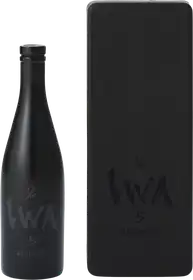
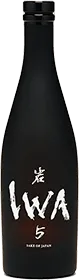
IWA 5 Assemblage 6
In-Stock
Let's talk about this product!
A pairing in mind? A question about the vintage? Comparison with another product? Find the answers here...
Description
Characteristics and tasting notes for IWA 5 Assemblage 6
Tasting
Nose
The nose has a deeply coherent and complex presence. It opens with primary aromas of ripe pear and plum, complemented by a vegetal hint of green foliage and an undertone of toasted rice. Surprising marine notes of nori seaweed and a delicate touch of cocoa enrich this bouquet, alongside nuances of lychee, gardenia, white flowers, mace and white pepper.
Palate
The palate reveals an elegant, linear and precise structure, and is slightly drier than Assemblage 5. The fruity, floral and marine elements are remarkably well integrated, striking a perfect balance between silkiness and structure. With aeration, an indulgent note of buttery brioche emerges. The finish is long, tactile and resonant, prolonging the pleasure with absolute clarity.
Pairings and serving occasions
This sake shows extraordinary gastronomic versatility. Served well chilled (1 to 2°C), it elevates sashimi and delicate seafood. At body temperature (35 to 37°C), it is a wonderful match for poultry or grilled fish, while at higher temperatures (45 to 55°C), it stands up to red meat and rich dishes. It also pairs perfectly with Prunier caviar, aged cheeses or vegetarian mushroom dishes. For serving, choose a white Burgundy glass, a tulip glass or a traditional choko. It stays fresh for up to 10 days after opening.
Mixology
A truly exceptional and highly complex creation, this sake is best enjoyed neat, without any embellishment, to fully appreciate all its subtleties.
Other characteristics
Category: Junmai Daiginjo.
Rice polishing ratio (Seimaibuai): 35%.
Alcohol content: 15.0%.
Made without added alcohol, pasteurised only once and aged in bottle for a minimum of 15 months.
An avant-garde Japanese sake by IWA
The Shiraiwa brewery: the birthplace of IWA Sake
Founded by Richard Geoffroy, the illustrious fifth Chef de Cave of Dom Pérignon for 28 years, the IWA brand was born in 2019. Its current owner chose to establish the brewery, named Shiraiwa (meaning "white rock"), in Tateyama, in Toyama Prefecture. This region offers privileged access to water of exceptional purity, drawn from the snowmelt of the Hida Mountains. Designed by the internationally renowned architect Kengo Kuma, the building takes its inspiration from traditional Japanese longhouses, embodying the values of inclusivity and community. It is in this remarkable setting that Richard Geoffroy orchestrates an unprecedented dialogue between the ancestral craft of Japanese sake and his Champagne expertise, making IWA a true benchmark.
The winemaking secrets behind IWA 5 Assemblage 6
IWA 5 Assemblage 6 is a Junmai Daiginjo sake that pushes the boundaries of tradition by applying, for the very first time, the Champagne philosophy of blending. This exceptional cuvée is the result of a meticulous orchestration of more than twenty different sakes.
Its foundation is a rigorous selection of three rice varieties from four distinct origins: Yamada Nishiki (Hyogo and Toyama) for finesse, Omachi (Okayama) for opulent texture, and Gohyakumangoku (Toyama), which seals the blend. Each grain is polished to an extreme 35% (seimaibuai), removing impurities to retain only the pure starch core.
Fermentation is just as complex, using five different yeast strains, including some experimental strains drawn from the world of wine. The process relies mainly on the ancestral Kimoto method, a natural lactic fermentation that brings unrivalled depth and structure. Finally, the inclusion of reserve sakes aged between two and seven years gives IWA 5 Assemblage 6 a rare complexity. Bottled after a single pasteurisation, it undergoes extended bottle ageing of around twenty months, preparing it to evolve gracefully for ten to fifteen years.