Assistant



 Guaranteed provenanceDirect from the estates
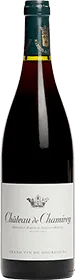
Château de Chamirey : Mercurey Village "Clos de la Maladière" 2025
En Primeur Wines – delivery in early 2028
Let's talk about this product!
A pairing in mind? A question about the vintage? Comparison with another product? Find the answers here...
Description
Characteristics and tasting tips for the Mercurey Village « Clos de la Maladière » 2025 from Château de Chamirey
Food and wine pairing
Mercurey Village « Clos de la Maladière » traditionally pairs with red meats in sauce, such as beef bourguignon or fondue bourguignonne, as well as with duck breast, game dishes and recipes featuring wild mushrooms. It is also a fine companion to a chocolate dessert.
A single-plot cuvée from Château de Chamirey in the Côte Chalonnaise
The estate
Château de Chamirey, located in Mercurey in Burgundy, saw its winemaking identity take shape in 1934, when the Marquis de Jouennes decided to bottle his wines directly at the estate. The property is now owned by the Devillard family, represented by Amaury and Aurore Devillard, the fifth generation at the helm of a 37-hectare vineyard, 15 hectares of which are classified as premiers crus. The estate stands out for its sustainable viticulture with high planting density and for its showcasing of single-plot terroirs such as the Clos de la Maladière.
The vineyard
Mercurey Village « Clos de la Maladière » comes from a 1.36-hectare clos located in the Mercurey appellation, made up of three plots planted between 1959 and 1979. Its clay-limestone terroir, predominantly clay, gently sloping and scattered with small pebbles, benefits from a south-to-north exposure. This configuration, combined with sustainable viticulture and a high planting density typical of Burgundy, promotes even ripening of Pinot Noir on this clos entirely dedicated to the grape variety.
Vinification and ageing
Currently ageing, the Mercurey Village « Clos de la Maladière » 2025 follows the usual protocol applied to this cuvée: hand harvesting, rigorous sorting and complete destemming before a cold pre-fermentation maceration. Alcoholic fermentation, carried out with indigenous yeasts, is accompanied by regular pigeages, after which the free-run and press wines are separated before ageing in 400-litre oak barrels, followed by a period in stainless steel tanks.
Grape variety
100% Pinot Noir.