Assistant



 Guaranteed provenanceDirect from the estates
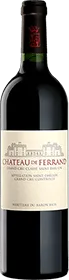
Château de Ferrand 2025
En Primeur Wines – delivery in early 2028
Let's talk about this product!
A pairing in mind? A question about the vintage? Comparison with another product? Find the answers here...
Description
Tasting Notes and Characteristics of Château de Ferrand 2025
Tasting
Appearance
With a beautiful garnet hue, this wine reflects a measured extraction and a perfect balance between the richness of Merlot and the freshness of Cabernet Franc.
Nose
The aromatic bouquet is intense and complex, offering notes of fully ripe fruit interwoven with delicate spicy touches.
Palate
The attack is clean and remarkably smooth. The mid-palate unfolds fruity aromas supported by silky tannins that structure the whole through to a persistent and elegant finish.
Food and wine pairings
Thanks to its freshness and elegance, this wine pairs beautifully with poultry dishes, particularly delicate chicken preparations. Its minerality and roundness also allow it to accompany white meats served with creamy sauces, vegetables, or butter-enriched dishes.
The excellence of a Grand Cru Classé from Saint-Emilion crafted by Château de Ferrand
The estate
Founded in 1702, Château de Ferrand is a historic property in the Bordeaux region. This 42-hectare estate is now managed by Pauline and Philippe Chandon-Moët, alongside General Manager Gonzague de Lambert. Elevated to Grand Cru Classé status in 2012, the estate stands as a prestigious name blending heritage and modernity. Driven by a strong environmental commitment, it obtained organic farming certification in 2024, marking a major turning point in its history.
The vineyard
Located in the commune of Saint-Hippolyte, the vineyard rises to approximately 100 metres in altitude, making it one of the highest in the Saint-Émilion appellation. This privileged position, overlooking the Dordogne Valley, provides excellent natural ventilation that promotes the healthy condition of the grapes. The vines, with an average age of 35 years, thrive on clay-limestone slopes. The estate practises sustainable, certified organic viticulture, notably using sexual confusion to protect the vines without synthetic chemicals.
The vintage
A mild, dry winter encouraged early and even budburst. Substantial spring rainfall replenished the water reserves of the clay-limestone soils. Flowering was early thanks to favourable weather. While summer began under hot, dry conditions, a significant drought followed, causing only limited water stress for the vineyard, thanks to the water reserves and the cooling effect of the clay-limestone terroir. A welcome rainy spell in late August allowed the berries to refine their ripeness before an early harvest.
Vinification and ageing
For the crafting of this vintage, the hand-harvested grapes underwent rigorous sorting to retain only those berries that had reached optimal ripeness. The vinification process benefits from state-of-the-art facilities, with the vat room and cellars having been entirely renovated and modernised in 2010 while preserving the traditional architecture of the site. Alcohol: 14.5%.
Grape varieties
71% Merlot and 29% Cabernet Franc.