Assistant



 Guaranteed provenanceDirect from the estates
 DeliveryFree Home delivery for orders exceeding €300
 Secure PaymentVisa, American Express, Mastercard...
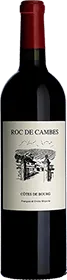
Roc de Cambes 1999
Stock currently at the producing estate – Will ship after October 14, 2026
Let's talk about this product!
A pairing in mind? A question about the vintage? Comparison with another product? Find the answers here...
Description
Tasting characteristics and advice for Roc de Cambes 1999
Tasting
Appearance
The color shows a fairly deep red hue.
Nose
The nose reveals a complex, seductive aromatic profile, with notes of dark fruits such as blueberry and blackberry, alongside hints of spice. A hedonistic dimension emerges, with aromas of dark chocolate and ripe dark fruits gradually unfolding.
Palate
On the palate, the wine is fresh, clear and composed, revealing fine concentration with beautifully ripe fruit and a solid framework. The mid-palate displays remarkable balance between richness and freshness, without either pole overly dominating the other. The tannic structure is present yet harmonious, supported by good acidity that maintains balance. The finish offers good length with lingering fruity and spicy notes.
Food and wine pairings
This Roc de Cambes 1999 pairs perfectly with chateaubriand with béarnaise sauce, seven-hour leg of lamb, or duck confit. It also elegantly accompanies all types of classic meats such as veal, pork, beef, lamb, game, roast chicken, as well as braised and grilled preparations.
Serving and cellaring
Roc de Cambes 1999 is ideally served at a temperature of 16°C. Minimal decanting may be considered solely to remove any sediment that may have accumulated over the years, without excessively aerating the wine.
An outstanding wine from Côtes de Bourg, shaped by the Mitjavile vision
The estate
Acquired in 1988 by François Mitjavile, Château Roc de Cambes established itself in just a few years as the benchmark of the Côtes de Bourg appellation, capable of rivaling many Saint-Émilion growths. Located in the commune of Saint-Laurent des Combes on the right bank of the Gironde estuary, the estate spans 12 hectares of vineyards. Now run by Nina Mitjavile, François’s daughter, for more than ten years, the estate upholds a winemaking philosophy based on very ripe grapes, non-intervention and absolute respect for the terroir. Recognized as one of the greatest wines on Bordeaux’s Right Bank, Roc de Cambes embodies the excellence of a satellite appellation transformed by an innovative vision.
The vineyard
Roc de Cambes’ vineyard benefits from a remarkable geographic position within the Côtes de Bourg appellation. Planted on the first ridge of hills known as Les Croûtes, regarded as having the region’s finest terroir, it enjoys a due south to south-west exposure in a natural amphitheater. The soils are composed mainly of semi-permeable clay on the surface over a limestone base, a structure identical to that of Tertre Roteboeuf in Saint-Émilion. Proximity to the Gironde estuary plays a decisive regulating role, softening winter cold and tempering summer heat. The vines—many of which are approaching or exceed 45 to 50 years of age—are farmed according to integrated viticulture principles, with permanent cover crops and Cordon de Royat pruning. Yields are deliberately limited to between 35 and 40 hectoliters per hectare, and hand-harvesting allows rigorous selection of grapes at high ripeness.
The vintage
The 1999 vintage in Bordeaux is considered a high-quality vintage. Roc de Cambes 1999 stands out for its hedonistic character, a trait that transcends the expected typicity of this vintage to produce a memorable, well-balanced wine.
Winemaking and aging
The winemaking of Roc de Cambes 1999 stands out for its non-intervention philosophy. After rigorous selection in the winery, the berries are placed in reinforced concrete or stainless-steel fermentation vats, where alcoholic and malolactic fermentations occur naturally. The wine is then aged in French oak barrels from the Radoux cooperage for 15 to 18 months. Around 50% of these barrels are new, while the remaining 50% are barrels that previously held another wine, allowing the oak to integrate gradually without excessive dominance. This minimalist approach allows the fruit to dictate its own expression while preserving the purity of the terroir.
Grape varieties
Merlot (85%)
Cabernet Sauvignon (15%)