Assistant



 Guaranteed provenanceDirect from the estates
 DeliveryFree Home delivery for orders exceeding €300
 Secure PaymentVisa, American Express, Mastercard...
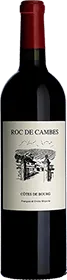
Roc de Cambes 2000
Stock currently at the producing estate – Will ship after October 14, 2026
Let's talk about this product!
A pairing in mind? A question about the vintage? Comparison with another product? Find the answers here...
Description
Tasting notes and serving tips for Roc de Cambes 2000
Tasting
Color
The color displays a ruby hue typical of a mature Bordeaux wine.
Nose
The nose reveals fine aromatic complexity, with notes of black fruits (blackberry, blackcurrant) alongside nuances of anise and spice. Mineral touches reminiscent of graphite add an extra dimension. With aeration, the bouquet develops toward tertiary aromas of forest floor, bay leaf, tobacco and cocoa, reflecting the wine’s evolution.
Palate
On the palate, Roc de Cambes 2000 is harmonious and silky, with a rounded texture revealing concentrated flavors of ripe cherry, plum and blackcurrant. The palate also shows notes of chocolate, tobacco and spices that enhance the tasting. The mineral structure brings definition, while the well-present acidity balances the wine’s richness. The tannins, perfectly integrated, reflect ideal phenolic ripeness. The finish, elegant and spicy, lingers on notes of cherry and tobacco.
Food and wine pairings
This Bordeaux wine pairs perfectly with roasted or grilled red meats, lamb with Mediterranean herbs, as well as game such as venison, wild boar or duck. It also matches very well with dishes featuring wild mushrooms, notably cèpes à la bordelaise, or marrow-based dishes. Enthusiasts can also enjoy it with aged cheeses.
Serving and cellaring
Roc de Cambes 2000 is ideally enjoyed at a serving temperature of around 15.5°C. Light decanting may be considered only to separate the wine from any sediment, while avoiding overly prolonged aeration. This vintage, now at full maturity, is best enjoyed over the coming years to fully appreciate its aromatic complexity.
A ripe, powerful Bordeaux wine from Côtes de Bourg
The estate
Acquired in 1988 by François Mitjavile, already owner of the famous Château Tertre Roteboeuf in Saint-Émilion, Château Roc de Cambes spans 12 hectares in the Côtes de Bourg appellation. Located on the edge of the Gironde estuary, the estate benefits from a prime setting on a south-facing hillside. François Mitjavile, a visionary winemaker with no formal oenological training at the outset, elevated this property to one of Bordeaux’s finest expressions thanks to a winemaking philosophy that respects terroir and vintage character. Today, the estate remains in the hands of the Mitjavile family, who continue this exacting approach.
The vineyard
The Roc de Cambes vineyard occupies an exceptional position on the slopes overlooking the Gironde estuary. The 12 hectares of vines enjoy ideal southern exposure in a natural amphitheater. The clay-limestone soils, with clay on the surface and limestone at depth, offer conditions similar to those of Saint-Émilion. This geological structure enables natural regulation of the vine’s water supply. Proximity to the estuary moderates temperatures and promotes gradual, even ripening of the grapes. The vineyard is managed according to sustainable farming principles with permanent cover crops.
The vintage
The year 2000 is considered a legendary vintage in Bordeaux. After a difficult start to the season marked by a cool, wet spring that led to mildew pressure, weather conditions improved considerably. From late July through September, warm, dry, sunny weather settled over the region. This period of natural drought, with less than 50 mm of rain compared to the usual average of 75 mm, allowed for optimal concentration in the grapes and thicker skins. Beneficial rain on September 19 brought the necessary moisture before harvest began on September 20 under ideal conditions. This outstanding vintage produced wines with remarkable tannins and exceptional concentration.
Winemaking and aging
True to his philosophy of late harvesting in pursuit of optimal phenolic ripeness, François Mitjavile picked the grapes for Roc de Cambes 2000 at full maturity. Hand harvesting was followed by rigorous berry selection. Plot-by-plot vinification was carried out with indigenous yeasts in temperature-controlled vats. Aging took place in oak barrels, allowing the wine to develop aromatic complexity while preserving the freshness and elegance characteristic of the Mitjavile style.
Grape varieties
Merlot, Cabernet Sauvignon, Malbec