René Gabriel
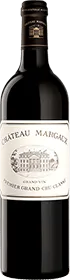
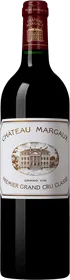
87: Barrel tasting (19/20): fruity, classic nose that barely rises above the surface. Full tannin that will take years to soften. On the level of Lafite and Mouton. In 1991 I drank it at a California/Bordeaux blind tasting with Robert Mondavi. In such a dreadful rough phase that it came last among six wines tasted: herbal nose and very eruptive. In 1995, still not much going on and thus a case for oenological fortune-tellers: still an inaccessible, impetuous wine that is increasingly developing into an absolute Cabernet classic. Blind, you’d easily mistake it for a Heitz Martha’s Vineyard – from a truly great year – of course. 98: Radiating a massive, reductive potential; even after an hour the bouquet was still completely closed, iodine, rubber aromas (tyre), only then slowly becoming slightly sweeter, always on the terroir side. On the palate, massive tannins, Heitz, Cabernet aromas. Anyone who opens it now will rate this wine as barely drinkable, although a potential slumbers behind it that will only unfold in a few decades. 01: Quo Vadis – my dear Margaux 1986. You pampered one, highly praised by all tasters and, despite your arrogant closedness, still rated with top marks!? Rarely have I noted so many question marks on one page for a wine that is great in itself, almost legendary: the profound, almost truffly nose shows oxidative notes, soy sauce and hints of Madeira and Malaga? On the nose there is volatile acidity, which gives it a fruit-vinegar note? On the palate, one misses the noble, fine tannins of a Premier Grand Cru Classé and, with a single sip, gets a brutal, sandy tannin load? The acidity, instead of being ripe and integrated, is loose, trailing alongside the extract and showing metallic contours? If one seeks harmony in a great wine, one finds here a massive power-wine puzzle whose pieces simply refuse to fit together. And today, sixteen years after it should have begun to show its first greatness, the wine costs a small fortune. You can still buy it, that’s certain. But enjoy it? I wrote these lines after just finishing the 1985 Margaux. After the happy emotions of the predecessor came these sobering questionings of a wine that will either one day become brilliant or, like many once highly lauded ’75s, will freeze in its own ageing potential without ever having conveyed a truly credible pleasure potential? Those who have it in the cellar can, based on this text, hope or sell. Those who don’t should stick to cheaper and unquestionably greater Margaux (such as 1985 and 1988)! It would be unfair, due to such an uncertain future, to keep it on the winners’ podium and therefore I am clearly pulling my rating back. 02: At the semester tasting in a series with Margaux 1990 and 1983: it was simply “crappy,” woody/foresty, with unripe, eruptive tannins and an overall aroma that never fits a truly great Bordeaux. Those who have it should slowly think about selling. Those who don’t, about not buying! 03: To give it another chance, I opened a half bottle and followed it for four hours. Instead of opening up, it began to oxidize stealthily and became increasingly tinny. Tasted again after 12 hours, again the next day, and to be quite sure, again after two days. It seems more and more like an oversized steak with more muscle than flesh. And a week later, by chance, at a magnum tasting in a flight of four. Its rivals: 1982 Gruaud-Larose (19/20), 1982 Léoville-Las Cases (20/20) and 1986 Latour (19/20). The Margaux still pleased on the nose, but on the palate there were deductions for three negative elements. First: an acidity dominating the extract. Second: metallic notes in the extract. Third: raw, unpolished, almost angular tannins. The wine lacks enough fat to balance all this with further bottle age. I remain pessimistic: 16/20. 06: Dark purple, ruby but also orange rim. Herbal, cellar-like bouquet, shows dry, behind that pink pepper and redcurrants, displaying a certain Zinfandel affinity because gentle jammy nuances also join the red berries. Textural palate, still a pronounced acidity that dominates the whole body, muscular, slightly capsular on the finish. Still lots of potential, but whether it will ever really become a truly beautiful, classic Margaux is questionable. A bit of masochism is definitely involved. Anyone who buys this wine at the current market price will be very disappointed. 07: Dense, dark purple with orange and brownish reflections. Meaty bouquet, dried porcini, prunes, bay leaf, tar but also oxidative notes beneath. On the palate with massive, unfinished tannins that lend the wine an overly dominant hardness, still extremely high acidity and tannin, comes across as brutal. After so many years of bottle age, this highly traded wine should finally show that it can also be fun behind its arrogant grandeur. I belong to the pessimists! 10: Dear Margaux 1986, you’ve lost my favor for years. Despite high Parker points. I only open it if it somehow fits a tasting theme. The nose smells like Brunello, just as spicy as bone-dry. And on the palate it’s a polarizing rugby match of brutal acidity, metallic components and stubborn, angular tannins that literally scratch the tongue like a Denise Bielmann pirouette down on the ice rink (16/20, done). The most pleasure to be had here is by selling it at auction. 11: I got it blind at Lucien’s and Kaspar had pulled it from the cellar. It smelled like an old Brunello, the herbs in it were nice. On the palate, unyielding, lots of acidity and tannin. Still seems blocked and reminiscent of a few ’28s and ’45s that never ripen. A small glass in the cellar with Bärti. Smells like a freshly opened sack of black trumpets and like aceto balsamico. Strict, sandy on the palate, with a capsular-metallic residual astringency. Hope dies last, as is well known. But now this Margaux 1986 is unfortunately out of the picture. (14/20). 16: Still very dark. The nose lies between “difficult to fascinating.” Iodine, brackish-water traces, a touch of oxidation and then again showing fresh herbs. On the palate still rough-and-tumble with murderous astringency from its thrashing, baroque tannins. The potential is huge, the fun restrained. Polarizing wine. 18/20 ??? 16: Magnum. Extremely dark, still showing many purple reflections in the middle. The bouquet is somehow schizophrenic. Balancing tones that recall an Amarone, then nuances of an old-wine note reminiscent of Malaga. Then a stewed four-fruit jam rises onto the nasal scene and everything is filled out with an almost buttery, lactic-leaning tone. On the second approach; minerality in the form of iodic-peaty contours. On the palate like a large unfinished concrete building without walls. The tannins are unfinished, brutal, and the wine has not developed at all over the years. So after 30 years the question arises whether there is any future at all for this questionable Margaux? I have long been critical of this wine and have experienced halves and standard bottles that showed just as much undigested tannin, but were already on the oxidation trip. The potential is 20/20. The pleasure stays within very low bounds. Has it already gone? Or will it never come??? 17/20? drink? 17: Dense, dark garnet, still with a purple shimmer at the rim. The nose appears fresh, shows lots of just-chopped berries, wax notes, pine nuances and wild rosemary, appears deep and concentrated, but also somewhat restrained. On the second nose, malt notes, coconut, conveying an incredible array of herbs, truffle underneath and dark fine woods. After 10 minutes menthol shimmer and camphor. Like many of the great 1986s, it seems unbelievably much younger than the 30 years it has on its back. On the palate extremely meaty, a bundled Médoc package that still feels hard, the tannins are brutally gripping and fight masochistically on the tongue. There are far more tannins than it can offset with any finesse. Fairly, I must also admit that earlier, as a tannin boulder, it was simultaneously distinctly oxidative and that is – at least with this bottle – not the case today. The potential is for the day after the day after tomorrow. Even as a seasoned wine soothsayer you can’t make sense of it. Even after three decades it is still impossible to assess. Do I now award points for potential? Then I’m at 20/20. For the rest I find it very difficult. My criticism goes in the direction of a drying tendency. Will it suffocate on its own tannins? (18/20). 18: Hugo Mathis brought this wine to lunch. When we had it in the glass for the first time, it had been decanted for three hours. The aromas on the nose are great. Without a doubt. On the palate it is actually even greater. In terms of tannins, it doesn’t belong in a decanter, but in the Guinness Book of Records! Still far from any possible drinking maturity.





 Guaranteed provenanceDirect from the estates
 DeliveryFree Home delivery for orders exceeding €300
 Secure PaymentVisa, American Express, Mastercard...