Assistant



 Guaranteed provenanceDirect from the estates
 DeliveryFree Home delivery for orders exceeding €300
 Secure PaymentVisa, American Express, Mastercard...
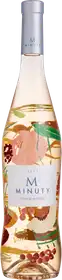
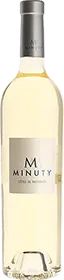
Minuty : M 2025
In-Stock
Let's talk about this product!
A pairing in mind? A question about the vintage? Comparison with another product? Find the answers here...
Description
Characteristics and Tasting Notes of Minuty's "M" 2025
Tasting
Colour
Remarkably clear, this wine reveals a pale pink hue with delicate rose petal nuances, along with a brilliance characteristic of the finest Provençal rosés.
Nose
The nose reveals an explosion of fruit, marked by finesse and purity of aromas. Notes of strawberry, raspberry and redcurrant dominate the bouquet, accompanied by touches of white peach and citrus that bring complexity and freshness.
Palate
Lively and mouth-watering, the palate offers a lovely sense of freshness with a supple, well-balanced texture. Clean flavours of red fruit and white-fleshed fruit unfold progressively, supported by a lovely structure and pleasant roundness. The finish is light, refreshing and persistent, with a notable minerality that tempers the fruit's succulence.
Food and wine pairing
The "M" 2025 is an ideal companion for aperitifs, pairing perfectly with olives, Mediterranean tapas and fish tartare. It also pairs beautifully with summer salads such as salade niçoise or caprese, seafood and shellfish, as well as grilled fish with Provençal herbs. This rosé also complements light Asian cuisine, sushi and lemongrass-based dishes, as well as fresh goat cheeses.
Serving and storage
This wine should be served between 8 and 10°C for optimal expression. It is recommended to open the bottle about thirty minutes before drinking. Ready to drink, it is best enjoyed within two to three years of harvest to fully appreciate its characteristic fruity vivacity.
An iconic Provence rosé combining freshness and elegance
The estate
Château Minuty was founded in 1936 when Gabriel Farnet, an experienced wine merchant, acquired a historic estate on the Saint-Tropez peninsula comprising seventeen hectares of vines. In 1955, the estate received the prestigious Cru Classé des Côtes de Provence designation. Since 2023, Minuty has been majority-owned by Moët Hennessy (LVMH group), while the Matton family retains operational management, upholding the estate's heritage and traditions. The estate now spans approximately two hundred hectares of vineyards spread across Gassin, Ramatuelle, Le-Cannet-des-Maures and Vidauban. An environmental pioneer, the estate has used no herbicides since 1936 and has held Level 4 High Environmental Value certification since February 2025.
The vineyard
The "M" 2025 comes from a selection of diverse vineyards within the Côtes de Provence appellation, stretching from the Mediterranean coastline to the foothills of the Var's inland terroirs. Soils vary from plot to plot, combining limestone and schist on the Gassin hillsides, lending the wines minerality and acidic tension. The Mediterranean maritime influence moderates seasonal extremes and preserves the freshness essential to producing outstanding rosés. The estate practises sustainable farming with exclusively organic amendments and favours legume and grass cover crops to enhance biodiversity. The harvest is carried out entirely by hand, ensuring the integrity of the berries and optimal grape selection.
Winemaking and aging
Winemaking focuses on preserving freshness and aromatic purity. After hand-harvesting, the grapes undergo gentle direct pressing to extract a very pure juice while minimising the extraction of colouring matter. The juice is naturally settled overnight under nitrogen protection. Fermentation takes place in temperature-controlled stainless steel tanks at low temperatures (between 14 and 16°C) over ten to twelve days, allowing for optimal aromatic extraction. Aging on fine lees lends a silky texture and gentle roundness without compromising the wine's characteristic vivacity. No malolactic fermentation is carried out, in order to preserve the wine's lively, fruity character.
Grape varieties
Grenache (60%), Syrah (20%), Cinsault (15%), Tibouren (5%)