Assistant



 Guaranteed provenanceDirect from the estates
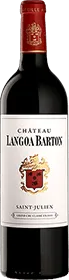
Château Langoa Barton 2025
En Primeur Wines – delivery in early 2028
Let's talk about this product!
A pairing in mind? A question about the vintage? Comparison with another product? Find the answers here...
Description
Characteristics and tasting notes of Château Langoa Barton 2025
Tasting
Appearance
A deep garnet hue, enhanced by delicate violet reflections.
Nose
The aromatic bouquet reveals beautiful complexity, blending scents of blackcurrant, cedar and cigar box, heightened by hints of peppery spices and subtle herbaceous notes.
Palate
At once firm, round and juicy, the palate offers a creamy texture. It unfolds savoury notes of ripe blackberries and blackcurrant, supported by refined and well-integrated tannins. The long, lingering finish stretches out on aromas of black fruits, spices and a characteristic minerality.
Food and wine pairings
This wine pairs wonderfully with rich meats such as beef, lamb or game. It will also enhance a roast duck, white meats served with a mushroom sauce, or grilled tuna and aged hard cheeses.
Serving and cellaring
To fully appreciate Château Langoa Barton 2025 in its youth, it is advisable to decant it for 2 to 4 hours and to serve it at a temperature of around 15.5 °C. Endowed with exceptional ageing potential, this vintage may be enjoyed until around 2060.
The elegance and structure of a Saint-Julien wine
The estate
Acquired in 1821 by Hugh Barton, Château Langoa Barton is an illustrious estate in the Bordeaux region, recognised as a 3rd Grand Cru Classé in 1855. Located within the prestigious Saint-Julien appellation, this historic property extends over a 20-hectare vineyard. A rare occurrence in the Bordeaux landscape, the estate has remained in the hands of the same family since its creation. Today, it is Lilian Barton Sartorius, supported by her children Mélanie and Damien, who runs the property, passionately perpetuating the legacy and excellence of this great name in wine.
The vineyard
The exceptional terroir of Saint-Julien on which the vineyard rests is composed of deep gravel over a clay subsoil. The vines, with an average age of 35 years, are planted at a high density of 9,100 plants per hectare, thereby promoting grape concentration. The estate is certified High Environmental Value (HVE 3) and favours sustainable practices, with soil work carried out through traditional ploughing and a total absence of herbicides.
The vintage
The year began with a mild and dry winter, followed by a warm and humid spring that stimulated the vine's growth. The summer season was then marked by spells of intense heat, fortunately tempered by welcome rains. These contrasting climatic conditions allowed for optimal concentration in the berries. The harvest unfolded under the best auspices, from 4 to 18 September.
Winemaking and ageing
Careful ageing in French oak barrels, including 60% new wood. Alcohol content: 13.5% vol.
Grape varieties
45% Merlot, 40% Cabernet Sauvignon and 15% Cabernet Franc.