René Gabriel
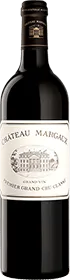
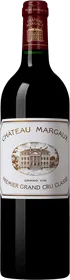
A hundred years ago there was no Merlot at Château Margaux... Philippe Bascaules, Director Château Margaux: <div style="font-style:italic;color:#990033">The Merlots pose a problem for the 2001 vintage. It’s not necessarily the rain during harvest that’s to blame; the issue had already emerged earlier. During veraison it was simply too cold, which slowed everything down and shifted the growing cycle. At the Merlot harvest we were still satisfied: low yield and a promising alcohol level. In most plots the yield was under 30 hl. But when we wanted to blend these Merlot cuvées, we found that the wine didn’t gain volume as usual, and that beyond a certain proportion the quality was negatively affected. Together with our team, we decided to focus more on Cabernet again in the future. On our terroir, there’s a good chance of producing a great Cabernet Sauvignon that still remains elegant and refined. Cabernet Franc might be an additional alternative between Merlot and Cabernet Sauvignon. We planted a trial plot five years ago, but the results aren’t entirely satisfactory. We suspect they aren’t the right clones. Merlot is actually a recent fashion trend in the Médoc, made to produce fairly good wines even on moderate terroir. In the 19th century on the left bank of the Gironde there was only Cabernet Sauvignon, Cabernet Franc and a bit of Petit Verdot. The old memorable Margaux vintages were all made without Merlot. What distinguishes us compared to the other Premiers Crus is the relatively large proportion of Petit Verdot. This variety thrives best in Margaux among all appellations. The 2001 Petit Verdot was even better than the 2000 Petit Verdot, which helped us noticeably improve quality in the blend.</div> Paul Pontallier: <div style="font-style:italic;color:#990033">A year with a lot of fear and uncertainty. Experience shows that in a wine’s life, a lot is still undecided by September 1st. September effectively brought the decision. At the beginning of October we started harvesting. In that final month, quite a few things turned from bad to good. Somehow we had a similar situation in the 1996 vintage. The Merlot was essentially already done, whereas Cabernet Sauvignon is a late starter and can therefore handle a very warm end of season well, even correct itself. It is indeed the Cabernet that forms the basis of quality in 2002, with a great share of Petit Verdot as well. This year the blend consists of 86% Cabernet Sauvignon, 7% Merlot (only a single good cuvée – the rest was downgraded) as well as 2% Cabernet Franc and 5% Petit Verdot. The 2002 corresponds to what I understand as a classic Margaux: intensity and finesse at the same time. I find it better than the 2001 (12% smaller crop) – almost a truly great vintage. The starting quality of the Cabernet was so good that we will ultimately produce almost as much Château Margaux, namely 42% Grand Vin, 45% second wine, 13% third wine.</div> 03: Barrel sample: dark ruby-garnet, purple rim. Compact bouquet between red berries, grenadine and rose scent, light fine woods, Dominican tobacco, hints of dried fruit, bananas, extremely dense and profound, classic Margaux nose profile. Already homogeneous on the palate, lovely sweetness in the extract, plenty of substance with a fine Morello cherry touch in the gently tangy extract, still a fine, firm note on the finish, balanced astringency. A feminine variant of the 1996 with a little less drive. Can still gain a point (18/20). René Schmidlin opened a few 2002s in August at Castello Granadella in Javea. The Margaux was intoxicating, lots of sweet fine woods, showing a Burgundian richness and smelling of freshly baked dark bread. Already gives a lot of pleasure. Will it close down again or keep its explosive fruit? (18/20). 12: Clearly lightening garnet-ruby. Open bouquet, lingonberry relish, redcurrant notes, rose scent, perfumed, buoyant nose profile. Slim, fine palate, dancing body, focused on elegance and ending Burgundian (Richebourg-light) with lots of raspberries and redcurrants, plus delicate, fitting vanillin. In a blind tasting it will probably have little chance of reaching the top ranks. So never compare. (18/20). 13: Very elegant, with a dreamy, perfumed red-berry fruit. The tannins fit very well with the vintage template. (18/20). 16: Drunk with René Schmidlin as a nightcap on the terrace of Castillo Granadella in Javea. There were only two of us (as far as this Margaux 2002 is concerned). So the glass was in use several times. It is a surprisingly great wine for this difficult vintage. The fruit is fading and thus the wine seems a bit dry. At least for half an hour. With air it became more supple and more Burgundian. For a great Margaux, it may ultimately lack sweetness and aromatic pressure. But for the moment, there is a lot of pleasure in it. 16: At the Metzgete at the Old Swiss House this rather light Margaux didn’t quite match the hearty dishes. 16: At the Decadance Day in Feusisberg, a nicely drinkable wine, but not fitting into the grand casket. It is already close to 17/20.</div>





 Guaranteed provenanceDirect from the estates
 DeliveryFree standard delivery for orders exceeding 2,250 kr.
 Secure PaymentVisa, American Express, Mastercard...