Assistant



 Guaranteed provenanceDirect from the estates
 DeliveryFree standard delivery for orders exceeding 2,250 kr.
 Secure PaymentVisa, American Express, Mastercard...
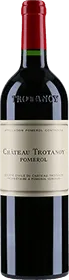
Château Trotanoy 2018
In-Stock
Let's talk about this product!
A pairing in mind? A question about the vintage? Comparison with another product? Find the answers here...
Description
Tasting characteristics and advice for Château Trotanoy 2018
Tasting
Color
The wine displays a garnet-purple hue of medium to deep intensity.
Nose
The nose reveals remarkable aromatic complexity, with notes of dark fruits (blackcurrant, blackberry, black raspberry), kirsch and Black Forest cake. With aeration, the bouquet evolves toward aromas of violet, myrrh, sandalwood, lavender and chocolate, enhanced by smoky nuances and Chinese spices. Mineral and tertiary touches of tobacco and cured meat complete this sophisticated aromatic palette.
Palate
The palate is powerful and concentrated, with an explosive opening of exotic spices and minerality. It unveils a dense core of candied black and red fruits, supported by firm, ultra-fine, beautifully polished tannins. The texture charms with its roundness and velvety character, while the tannic structure ensures perfect balance despite an alcohol level of 15%. The mid-palate reveals notes of chocolate, cedar, licorice and dark spices. The finish impresses with exceptional length and purity, lingering on iron-like notes characteristic of the terroir.
Food and wine pairings
This wine pairs perfectly with roasted or braised red and white meats such as veal, pork, beef, lamb, duck and feathered game. It also elegantly accompanies truffle-roasted poultry, dishes featuring wild forest mushrooms, truffled risotto or pasta with meat-based sauces. Asian dishes with umami flavors and certain noble fish such as tuna in a dark sauce also make harmonious pairings.
Serving and cellaring
Château Trotanoy 2018 is ideally served at around 59°F. Decanting for two to three hours is recommended to allow the wine to fully express its aromatic complexity. This wine can be enjoyed from around 2027 and will continue to evolve until around 2060, or even beyond.
An outstanding Pomerol combining power and mineral elegance
The estate
Acquired in 1953 by Jean-Pierre Moueix, Château Trotanoy remains today under the direction of the Moueix family, with Christian Moueix as President since 1991 and his son Édouard, representing the third generation, involved in management since 2003. Located in Pomerol on Bordeaux’s Right Bank, this historic estate—whose first vines were planted in 1761 by the Giraud family—covers 7.2 hectares. Recognized as a Premier Grand Cru of Pomerol, the château takes its name from the expression “trop ennui,” a reference to soils that are particularly difficult to work.
The vineyard
The Château Trotanoy vineyard occupies a privileged position on the western part of the Pomerol plateau, at an altitude of thirty-six to forty meters. The soils have a complex composition combining gravel and clay on the surface, with a distinctive subsoil of red gravel resting on an impermeable layer of iron-rich “crasse de fer.” This unique geological structure gives the wine its mineral dimension and savory depth. The vines, averaging thirty-five years of age with some plots over sixty years old, are planted at a density of 6,200 vines per hectare. The estate practices deep plowing to encourage deep root development.
The vintage
The 2018 vintage in Bordeaux is part of a run of four consecutive years of outstanding quality. Winter and spring were marked by abundant rainfall, replenishing the soils’ water reserves. Late budbreak in early April helped avoid spring frosts. Flowering took place under favorable conditions between May 23 and 30. From mid-June to late October, sunny and warm weather prevailed, with a particularly bright September and temperatures two to four degrees above historical averages. These ideal conditions enabled optimal ripening of the Merlot, with a remarkable balance between concentration, tannic structure and freshness. Harvest took place from September 14 to October 3 under perfect conditions.
Winemaking and aging
Château Trotanoy 2018 is vinified in small, temperature-controlled concrete vats. The grapes are completely destemmed before fermentation. Following alcoholic and malolactic fermentations, the wine is aged in French oak barrels for sixteen to twenty months depending on the characteristics of the vintage, with 40 to 50% new oak. This measured approach to aging preserves the expression of the terroir while adding structure and aromatic complexity.
Grape varieties
Merlot and Cabernet Franc.