

 Guaranteed provenanceDirect from the estates
 DeliveryFree standard delivery for orders exceeding 2,250 kr.
 Secure PaymentVisa, American Express, Mastercard...
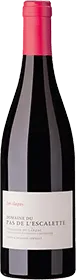
Domaine du Pas de l'Escalette : Les Clapas 2022
Only 1 available
In-Stock
Let's talk about this product!
A pairing in mind? A question about the vintage? Comparison with another product? Find the answers here...
Description
Characteristics and tasting advice for Les Clapas 2022 from Domaine du Pas de l'Escalette
Tasting
Color
The color displays a bright ruby hue.
Nose
The bouquet reveals a lovely expression of red and black fruits, underscored by hallmark notes of garrigue. Hints of blackberry, redcurrant and blueberry also come through, lifted by subtle smoky and compote-like nuances.
Palate
The attack stands out for its remarkable freshness and its delightfully generous character. The structure is supple and finely chiseled, with fine mineral tension and a silky texture. The whole delivers an invigorating sensation, punctuated by a delicate salinity that brings finesse and elegance to the finish.
Serving and cellaring
Les Clapas 2022 can be cellared until at least 2031.
A fresh, mineral red from Terrasses du Larzac
The estate
Founded in 2003 by Julien Zernott and Delphine Rousseau, Domaine du Pas de l'Escalette spans twenty hectares across around fifty terraced plots, at the foot of the Larzac plateau in Languedoc. Certified organic and biodynamic, the estate grows southern grape varieties and harvests by hand. Low-intervention vinification in truncated-cone vats produces fresh, mineral wines—authentic expressions of this high-altitude terroir.
The vineyard
The vines for this cuvée are planted on the foothills of the Larzac plateau, in the valleys of Pégairolles de l'Escalette and Lauroux, at 350 meters above sea level. The terroir is made up of limestone scree and deep, well-draining clay-limestone soils. The vineyard combines old vines over fifty years of age, trained in gobelet, with new massal selections. These terraced plots are bordered by dry-stone walls known as “clapas”, which give the cuvée its name. The estate lies within the Parc naturel des Grands Causses, listed as a UNESCO World Heritage Site, in the Terrasses du Larzac appellation.
Vinification and aging
The grapes are harvested by hand. Syrah is vinified as whole clusters, while Carignan and Grenache are co-fermented. Alcoholic fermentation takes place in 50-hectoliter wooden vats with indigenous yeasts, followed by malolactic fermentation, also in wood. Maceration lasts 21 days. Aging is split evenly between truncated-cone vats and concrete tanks for ten months. This traditional, low-intervention approach preserves the sappy character brought by Syrah whole clusters.
Grape varieties
This Languedoc wine is a blend of Syrah (50%), Carignan (30%) and Grenache (20%).