René Gabriel
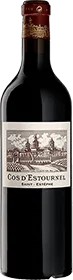
Cos d’Estournel: wait and sip coffee The famous Deuxième Cru from St. Estèphe looks the same on the outside. The facade has been renovated, but outwardly everything seems unchanged. However, anyone who gets the chance to visit the new cellars is left speechless. Everything gleams with expensive stainless steel. Many tronconic vats give the team the ability to vinify each parcel separately. The entire production runs on gravity. Not an easy task for such a large estate. For many producers, the possibility of using gravity ends at the “foulage,” and pumping becomes necessary. Not at Cos. The still-fermenting wine is gently allowed to flow into an empty stainless-steel tank located in a lift beneath the vat room. Then the lift (there are four of them at Cos!) is taken to the top floor, and the young wine trickles back through the upper vat opening onto the cap. It’s that simple. If it weren’t for the massive investments that the owner, Michel Reybier, would like to amortize over the coming years. In recent years, after the change of ownership, Cos reached a dangerously high price level, and many buyers behaved rather cautiously. “And if now the Premiers have to correct their exaggerated prices sharply downward, then everyone will think that Cos should also cost only half. We are forced by the law of the outdated classification to be much cheaper than the Premiers – yet Cos can usually match them with ease in quality. The far more expensive Crus usually declassify two-thirds of the harvest to select the Grand Vin from the rest. At first glance, this seems like a major sacrifice. But the fact is that the Premiers are increasingly buying smaller, less good terroirs within the appellation to make more Deuxième Vin. That’s where a considerable part of the business is done today. The terroir of Cos d’Estournel is very homogeneous, and if properly tended, selecting up to 80% as Grand Vin at a very high level is possible. Who said that? Jean-Guillaume Prats. He said it – and took another sip of his small mocha. 78% Grand Vin. 85% Cabernet Sauvignon, 13% Merlot, 2% Cabernet Franc. Deep, dense garnet with lilac and violet reflections. Complex bouquet, delicately lactic, notes of rock candy, vanilla pod, blackberry jelly, black currant and dark fine woods, with subtle smoky hints underneath. On the palate, lots of silkiness up front, then a rich, concentrated extract, remaining blueberry-toned and showing cassis, blackberry and a hint of Dominican tobacco on the finish, tapering off with fine, elegant drive. Certain parallels with the ’88 are present. As with quite a few other Médocs. 11: tasted twice at the estate within three weeks. A very powerful, black-fruited Cos with plenty of Arabica coffee, power and quite a bit of classicism, which in recent years, and especially in the following vintage 2009, wasn’t always the case. Lots of tannins, but elegant; not a monster, but with plenty of drive. 20: brightening wine-red, relatively little depth in the center. Open bouquet, floral tones, damsons, some blue fruit. Presents itself as accessible without being complex or complicated. On the palate, juicy, food-friendly, elegant, with good balance. Documenting a simple greatness. Small vintage – rather large wine. Should you buy this Cos? You can impress label drinkers without them having to bite into granite tannins. Those seeking truly great Bordeaux should leave it be. I like it much less than in its youth. Rounded: (18/20).





 Guaranteed provenanceDirect from the estates
 DeliveryFree Home delivery for orders exceeding €300
 Secure PaymentVisa, American Express, Mastercard...