Assistant


 Guaranteed provenanceDirect from the estates
 DeliveryFree Home delivery for orders exceeding €300
 Secure PaymentVisa, American Express, Mastercard...
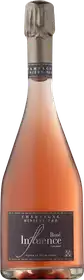
Minière F&R : Influence Brut
In-Stock
Let's talk about this product!
A pairing in mind? A question about the vintage? Comparison with another product? Find the answers here...
Description
Characteristics and Tasting Tips for the Influence Brut Non-Vintage Minière F&R
Tasting
Color
The color displays a bright golden hue with deep highlights. The effervescence stands out for its finesse and elegance, with evenly sized bubbles rising at a measured pace.
Nose
Powerful and complex, the nose reveals a pronounced minerality characteristic of the Hermonville terroir. Aromas of fresh citrus, particularly lemon and grapefruit, are accompanied by subtle notes of chocolate and cocoa imparted by barrel aging. Deeper nuances reminiscent of gunflint reinforce the mineral impression.
Palate
The attack is frank and direct. The structure appears well-defined, with a harmonious balance between acidity, tannic structure, and alcohol. Yellow fruit dominates the fruity expression, with notes of apricot, peach, and subtle hints of pineapple, gradually evolving toward citrus flavors on the finish. This particularly highlights lemon and grapefruit, accompanied by perfectly integrated toasted and woody notes. The wine's tension remains beautifully balanced, without excessive austerity or heaviness. The finish lingers with elegance and persistence.
Food and Wine Pairing
This Champagne pairs beautifully with seafood and shellfish, particularly oysters, whose natural minerality it enhances. It also pairs wonderfully with shrimp, langoustines, clams, and mussels in simple preparations. Well-aged, characterful cheeses make another excellent pairing. The wine can also be enjoyed as an aperitif, though it deserves particular attention to fully reveal its complexity.
Serving and Aging
The Influence Brut Non-Vintage is best enjoyed at a temperature between 8 and 10°C.
Other Characteristics
Dosage: 2.5 g/l (brut)
A Champagne from the Montagne de Reims with a Rich and Complex Character
The Estate
Founded in 1919 by Alfred Minière in Hermonville, the Champagne Minière F&R estate today represents four generations of winegrowers. Brothers Frédéric and Rodolphe Minière took over the family estate in 2005, after completing their winemaking training. They launched their first release under their own name in 2014. The vineyard covers eight hectares, of which only two are reserved for premium cuvées. The estate is distinguished by its commitment to sustainable viticulture and its systematic use of oak barrels for vinification, an approach inspired by Frédéric's formative experience with Anselme Selosse.
The Vineyard
The vineyard for the Influence Brut Non-Vintage is located in Hermonville, in the Massif de Saint-Thierry, at the gateway to the Montagne de Reims in Champagne. The plots benefit from an ideal south to southeast exposure on well-situated slopes. The grapes come from three distinct lieux-dits: Les Couturelles for pinot meunier, Les Fosselles for pinot noir and chardonnay, and Les Fontenelles for chardonnay. The soils have a complex composition of silt, sand, and clay resting on a lacustrine limestone substrate, different from the chalk typical of Champagne. The vines, with an average age of fifty years, are cultivated according to sustainable viticulture principles, with organic amendments and natural cover crops. The estate practices mass selection to preserve genetic diversity and uses layering to replace vines. Some plots contain ungrafted, self-rooted vines, remarkable witnesses to an exceptional pre-phylloxera heritage.
The Blend
The Influence Brut Non-Vintage is composed of 85% wines from the 2022 vintage and 15% wines from the 2021 vintage.
Winemaking and Aging
The Influence Brut Non-Vintage is entirely vinified in oak barrels. Fermentation occurs naturally through indigenous yeasts. The wines then rest for eight months on fine lees, with bâtonnage adapted to each vintage. The barrel proportion includes 30% new or recent barrels (less than four years old) and 70% older barrels (five years and older). Malolactic fermentation takes place naturally according to each year's conditions. The wines undergo no mechanical filtration. After blending, the Champagne undergoes its second fermentation in the bottle and ages for three years on laths before disgorgement. A minimum rest period of six months after disgorgement precedes release. The bottles are sealed with a premium natural cork.
Grape Varieties
Pinot Meunier (58%)
Chardonnay (22%)
Pinot Noir (20%)