Assistant



 Guaranteed provenanceDirect from the estates
 DeliveryFree Home delivery for orders exceeding €300
- Secure PaymentVisa, American Express, Mastercard...

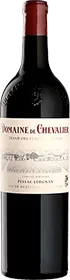
Domaine de Chevalier 1988
Only 2 available
Stock currently at the producing estate – Will ship after October 14, 2026
Let's talk about this product!
A pairing in mind? A question about the vintage? Comparison with another product? Find the answers here...
Description
Characteristics and tasting tips for Domaine de Chevalier 1988
Tasting
Color
The color reveals a dark, brilliant and luminous ruby red hue, testifying to excellent preservation after more than three decades.
Nose
The bouquet reveals itself as generous and still youthful, expressing smoky wood aromas resulting from aging in new barrels, accompanied by intense notes of blackcurrant. Floral touches enrich this aromatic palette, bringing complexity and refinement characteristic of the estate's elegant style.
Palate
On the palate, the wine is fleshy and well-endowed, offering a remarkable balance between power and elegance. The silky and refined tannins provide a velvety texture, without any astringency. The whole reveals finesse and sophistication, extending onto a long and persistent finish where fruity complexity and minerality characteristic of the Graves terroir mingle.
Food and wine pairings
This Domaine de Chevalier 1988 pairs perfectly with game meats, particularly venison. It also brilliantly accompanies refined beef dishes, such as beef with Mornay sauce and asparagus or poached beef ("bœuf à la ficelle"). Meat dishes with Mediterranean aromatic herbs (thyme, rosemary) also create beautiful harmonies. Aged hard cheeses are a choice pairing to enhance this mature wine.
Service and storage
Domaine de Chevalier 1988 has reached full maturity and can be enjoyed now to fully appreciate its aromatic complexity and evolution. Although the wine retains sufficient structure for further aging, it is currently in its optimal drinking window.
An elegant and complex Pessac-Léognan red wine
The estate
Domaine de Chevalier, established in 1865 by the Ricard brothers, is among the most prestigious properties in Bordeaux. Classified as a Grand Cru for its red and white wines in 1953, this Pessac-Léognan estate today spans approximately seventy hectares of vines. Since 1983, the Bernard family has managed the property with Olivier Bernard at the helm, who has considerably modernized the facilities while preserving the estate's identity. Surrounded by forty hectares of forest creating a unique microclimate, the estate has practiced certified biodynamics since 2024 and produces wines recognized worldwide for their elegance, finesse, and remarkable aging capacity.
The vineyard
The Domaine de Chevalier vineyard benefits from an exceptional location in the Pessac-Léognan appellation, fifteen kilometers south of Bordeaux. The vines rest on soils of black sand and fine white gravel, characteristic of the appellation, covering clay-gravel and hardpan subsoils. Surrounded by forests on three sides, the vineyard enjoys a specific microclimate that accelerates ripening in summer while favoring biodiversity. The vines, planted at a remarkable density of ten thousand vines per hectare, boast an average age of thirty-five years, allowing the roots to explore these complex terroirs in depth and fully express the minerality characteristic of the property's wines.
The vintage
The 1988 vintage in Bordeaux proved generally successful despite contrasting weather conditions. After a period of atmospheric instability, ripening conditions finally proved favorable, allowing the most rigorous producers to craft elegant and structured wines. This year particularly suited the meticulous approach of Domaine de Chevalier, whose selection protocols and sophisticated winemaking techniques were able to transform the vintage's challenges into qualitative assets, producing wines demonstrating beautiful longevity and exceptional development potential.
Winemaking and aging
Domaine de Chevalier 1988 was elaborated using methods prioritizing fruit quality. Manual harvesting in small crates was followed by a rigorous triple sorting to select only perfectly ripe berries. After careful destemming, the grapes were transferred by gravity into temperature-controlled vats. Alcoholic fermentation was accompanied by pump-overs and manual punch-downs, with a maceration of fifteen to twenty-five days. After malolactic fermentation, the wine benefited from aging for eighteen to twenty-four months in French oak barrels, of which 40 to 60% were new, conferring upon the wine its structure and characteristic woody aromas.
Blend
Cabernet Sauvignon (63%), Merlot (30%), Petit Verdot (5%), Cabernet Franc (2%)