Assistant



 Guaranteed provenanceDirect from the estates
 DeliveryFree standard delivery for orders exceeding 2,250 kr.
 Secure PaymentVisa, American Express, Mastercard...
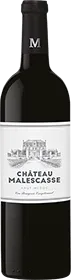
Château Malescasse 2018
In-Stock
Let's talk about this product!
A pairing in mind? A question about the vintage? Comparison with another product? Find the answers here...
Description
Tasting characteristics and advice for Château Malescasse 2018
Tasting
Appearance
The wine displays a deep, intense ruby-red color with vivid garnet highlights.
Nose
Complex and elegant, the nose reveals intense aromas of black fruits (blackcurrant, blackberry, blueberry) complemented by notes of fresh red fruits (cherry, wild strawberry, raspberry). Hints of menthol, licorice and cedar add further sophistication, while a refined minerality highlights the typicity of the gravelly terroir. The oaky, toasted and spicy notes remain delicate and perfectly integrated.
Palate
The attack is full and generous, revealing a silky, velvety texture. The palate offers fine density and a well-defined structure, carried by fine, tight and refined tannins. The balance between delicacy and volume defines this wine, which delivers excellent tension and beautiful precision. The long, persistent finish lingers on juicy, fresh fruit aromas, with brightness beautifully preserved.
Food and wine pairings
Château Malescasse 2018 is an ideal match for grilled or roasted red meats, notably entrecôte à la bordelaise. It also pairs perfectly with roast leg of lamb, meats in sauce, game (feathered or furred), as well as duck breast. Characterful aged cheeses, such as well-aged Comté, matured Cantal or dry goat cheeses, also make excellent pairings. This wine also harmonizes beautifully with chocolate or coffee desserts.
Serving and cellaring
Château Malescasse 2018 is best enjoyed at a temperature of 17 to 18°C. This wine can be enjoyed now but will continue to develop until around 2032, or even beyond for those who enjoy more mature wines.
An elegant, structured Haut-Médoc
The estate
Built in 1824, Château Malescasse is a benchmark in Haut-Médoc, in Lamarque, between Margaux and Saint-Julien, on beautiful gravelly rises emblematic of Bordeaux. The estate has belonged to Vignobles Austruy since 2012. Its current owner, Philippe Austruy, renovated the winery and restructured the vineyard, with the ambition of working to the standards of a classified growth. The estate stands out for its Cru Bourgeois Exceptionnel designation, its Vignoble & Découverte label and its wines in AOC Haut-Médoc.
The vineyard
The Château Malescasse vineyard covers 40 hectares located at the highest point of the commune of Lamarque, in the Haut-Médoc. The vines grow on an exceptional terroir of white gravels over a clay-limestone subsoil, providing optimal drainage and natural regulation of water supply. This privileged location benefits from the moderating influence of the Gironde estuary. The estate is certified Haute Valeur Environnementale level 3 and practices sustainable viticulture without herbicides.
The vintage
The 2018 vintage is among the greatest recent successes in Bordeaux history. After a rainy spring in May and June, the summer proved exceptionally dry, followed by an ideal September with moderate temperatures three degrees above average and excellent sunshine. August rainfall prevented any water stress, while September, dry and without excessive heat, enabled perfect, simultaneous ripening of all grape varieties. Harvesting began on September 14 and took place over three weeks in optimal conditions, achieving outstanding phenolic maturity.
Winemaking and aging
The 2018 Château Malescasse harvest is carried out by hand in small 4-kilogram crates, followed by rigorous sorting on a vibrating table. After vertical destemming, the grapes are transferred by gravity into small temperature-controlled vats of 60 to 110 hectoliters. Alcoholic fermentation takes place at a controlled temperature between 26 and 28°C for about four weeks, with short, carefully measured punch-downs and pump-overs for gentle, selective tannin extraction. Malolactic fermentation takes place partly in barrels. Aging lasts 12 to 14 months in 225- and 300-liter French oak barrels, divided into one-third new barrels, one-third once-used barrels and one-third twice-used barrels.
Grape varieties
Merlot (50%)
Cabernet sauvignon (28%)
Petit verdot (22%)