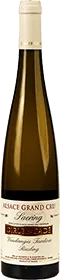


Dirler-Cadé : Riesling Grand cru "Saering" Élément Eau 2018
Stock currently at the producing estate – Will ship after 22 May 2026
 DeliveryFree standard delivery for orders exceeding 2,250 kr.
Description
Characteristics and tasting advice for the Riesling Grand cru "Saering" Élément Eau 2018 from Dirler-Cadé
Tasting
Appearance
With a lemon-yellow hue and bright green highlights, this wine shows medium intensity, clear and transparent.
Nose
The bouquet reveals beautiful aromatic complexity with notes of citrus (lemon, blood orange, mandarin), accompanied by fragrances of white flowers reminiscent of mimosa and orange blossom. With aeration, mineral nuances of hydrocarbons and spicy hints of white pepper and ginger gradually emerge.
Palate
Dense and full from the attack, the palate expresses an elegant salinity. The mid-palate is marked by a vibrant, vertical, and saline liveliness. The aromas perceived on the nose persist with intensity: citrus, white flowers, minerality, and spices. The finish, remarkably long, maintains a lively acidity and a noble, flavorful bitterness.
Food and wine pairings
This riesling pairs perfectly with fresh sardines marinated in olive oil and lemon, grilled red mullet with Provençal-style potatoes, or fresh fish carpaccio. It also matches well with aged goat cheeses and Asian dishes featuring citrus and ginger.
Serving and cellaring
This grand cru is best served between 50 and 55°F. It can be enjoyed now after decanting and has aging potential until around 2038.
A mineral and saline Alsace riesling, a pure expression of the Grand Cru Saering
The estate
Founded in 1871 by Jean Dirler in Bergholtz, the Domaine Dirler-Cadé now covers 18 hectares of vineyards. Passed down through five generations, the estate adopted its current name in 2000 following the union of Jean Dirler and Ludivine Cadé. Converted to biodynamics in 1998 and certified by Ecocert and Biodyvin, it is now managed by Jean and Ludivine Dirler-Cadé. The estate was awarded the prestigious three-star distinction in the 2025 Guide des Meilleurs Vins de France by La Revue du Vin de France, recognizing the excellence of its wines from four Alsace grands crus.
The vineyard
The Grand Cru Saering covers 27 hectares between 260 and 300 meters in altitude, with a southeast exposure. Mentioned as early as 1250, its name means "sea ring," referring to its marine geological origins. The marl-sandy soils rest on an Oligocene substrate composed of sandstone conglomerates and marls, covered with limestone. This isolated limestone hill within a granitic and sandstone environment gives the terroir a unique identity. Riesling, the flagship grape variety of Saering, accounts for 84% of plantings. The estate’s vines are cultivated biodynamically, with partial plowing in autumn and complete plowing in spring, natural grass cover in summer, and the use of biodynamic preparations. Harvesting is carried out entirely by hand with rigorous selection.
The vintage
The 2018 vintage in Alsace benefited from favorable conditions allowing excellent phenolic ripeness of the riesling. The estate carried out meticulous parcel-by-parcel monitoring throughout August and September, with berry tastings and potential alcohol measurements before determining the optimal harvest dates for each plot. This approach made it possible to obtain grapes with a remarkable balance between ripeness and freshness.
Winemaking and aging
This wine is crafted using a minimalist approach aimed at preserving the expression of the terroir. Interventions in the cellar are kept to a minimum to allow the geological characteristics of Saering to be fully expressed in the wine. The mineral structure and marked acidity result directly from the limestone terroir rather than from winemaking techniques.
Grape variety
100% riesling.