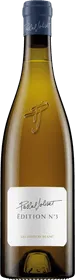
Sancerre, Pouilly-Fumé, Coteaux du Giennois: for nearly four decades, Maison Pascal Jolivet has patiently built a range of rare coherence, where every cuvée speaks precisely of its place of origin. Indigenous yeasts, slow fermentations, organic farming pursued with rigour: so many deliberate choices that make every bottle a faithful expression of a terroir.
Precision and purity, the soul of these Loire expressions
Sancerre: the gateway to the House's universe
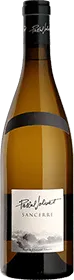
A blend of limestone, clay-limestone and flint sourced from four villages — Bué, Verdigny, Saint-Satur and Sainte-Gemme — each parcel is fermented separately with 100% indigenous yeasts before a highly precise blending. The result is a clean, taut wine of frank minerality: the signature of the House.
The Sancerre single-vineyards: four soils, four expressions
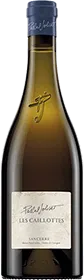
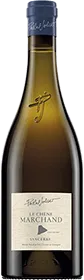
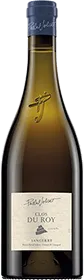
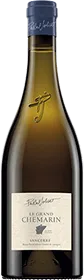
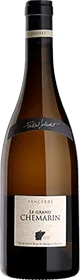
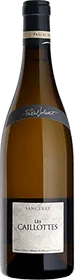
Les Caillottes, Le Chêne Marchand, Clos du Roy, Le Grand Chemarin: four parcels, four distinct readings of the Sancerre limestone. Vinified separately with indigenous yeasts and aged on fine lees, they share the same rigour but each speaks with its own singularity. From the saline edge of Le Grand Chemarin to the structured nobility of Clos du Roy, Pascal Jolivet's single-vineyard range stands as a geological reading of the appellation. A typicity that each vintage defines a little further.
Pouilly-Fumé: from Boisgibault to the flint slopes of Tracy
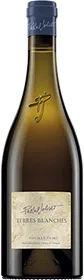
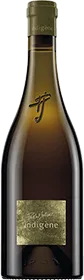
From Boisgibault to Tracy-sur-Loire, Les Terres Blanches and Indigène form the Pouilly-Fumé side of the range, two complementary expressions of the same Loire terroir. Les Terres Blanches, from clay-limestone soils, unfolds an assertive aromatic richness and a long, elegant finish; Indigène, born on the flint slopes, pushes the expression towards the ample and the saline, with nine months of ageing on fine lees.
Sauvage and Exception: the two pinnacles of the range
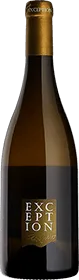
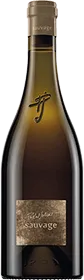
Rarity and precision define Sauvage and Exception, the two pinnacles of Pascal Jolivet's philosophy. Sauvage, born on the Kimmeridgian clays and soils of Champtin and Crézancy, reveals an extraordinary texture and a persistent salinity that give it a rare presence on the palate. Exception takes the approach even further: grapes hand-harvested at sunrise, natural fermentation in truncated-cone vats, one year of ageing on fine lees. Cuvées for cellaring, precious and rare, born of absolute patience and uncompromising standards.
Maison Pascal Jolivet, the purity of terroir as a philosophy
Four generations along the Loire
Even before the founding of the Jolivet et Fils trading house in 1926, Louis and Lucien Jolivet were already crafting Sancerre wines as cellar masters at Château de Tracy. In 1987, Pascal Jolivet created his own brand and built a cellar devoted to natural vinification with indigenous yeasts, laying the foundations of a style that was to become a benchmark. Clément, his son, joined the production leadership after several years in South Africa, ensuring the continuity of a vision passed down from generation to generation.
From the flint of Pouilly to the limestone slopes of Sancerre
Fifty-four hectares spread across the finest terroirs of Sancerre and Pouilly-Fumé: a vineyard assembled parcel by parcel, since the emblematic acquisition of Le Chêne Marchand in 1993. Here the soils tell several geological stories: Kimmeridgian limestone in Bué, clay-limestone in Champtin, sharp flint in Tracy-sur-Loire and Saint-Satur.
This wealth of textures and depths reinforces the coherence of the range while giving it remarkable expressive breadth. The Sancerre vines have been farmed organically since 2022, and those of Pouilly-Fumé since 2025.
Organic approach, indigenous yeasts, slow fermentations: a method at the service of place
100% indigenous yeasts, slow fermentations, very little sulphur, ageing on fine lees: every technical choice aims to soften the human imprint and let the Loire soil speak.