

 Guaranteed provenanceDirect from the estates
 DeliveryFree for purchases over 3,315 SEK
- Secure PaymentVisa, American Express, Mastercard...
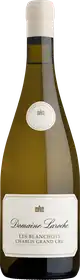
Domaine Laroche : Chablis Grand cru "Les Blanchots" 2009
Stock currently at the producing estate – Will ship after 16 July 2026
Description
Tasting notes and advice for the Chablis Grand Cru "Les Blanchots" 2009 from Domaine Laroche
Tasting
Appearance
The wine displays a bright golden-yellow hue, reflecting the vintage’s maturity.
Nose
The nose reveals lovely aromatic complexity with notes of ripe white fruit and delicate floral nuances. Subtle mineral touches characteristic of the Blanchots terroir emerge, alongside light citrus notes and a spicy dimension that develops with aeration.
Palate
On the palate, this Grand Cru charms with its richness while retaining the tension and texture typical of great Chablis. The palate unfolds with a fine concentration of white fruit, supported by a mineral freshness that brings balance and precision. The finish lingers elegantly, leaving an impression of crystalline purity typical of the climat Les Blanchots.
Food and wine pairings
This Chablis Grand Cru "Les Blanchots" 2009 pairs perfectly with Brittany oysters, grilled fish, or fish with hollandaise sauce. It also goes beautifully with a lobster salad or aged goat cheeses.
Serving and cellaring
It is recommended to serve this Chablis Grand Cru "Les Blanchots" 2009 at a temperature between 12 and 14°C. This wine can be enjoyed through around 2034, during which time it will continue to express the full richness of its terroir with notes of acacia honey and sweet spices, while maintaining its signature freshness.
A Chablis Grand Cru from Burgundy combining richness and minerality from Domaine Laroche
The estate
Domaine Laroche traces its origins back to 1850, when Jean-Victor Laroche acquired his first vineyard parcels. Under the leadership of Michel Laroche in the twentieth century, the estate expanded considerably, reaching 90 hectares of vineyards across the most prestigious Chablis appellations in Burgundy. In 2010, the estate was acquired by AdVini, a group founded by the Jeanjean family. Now led by Jean-Baptiste Mouton since 2023, Domaine Laroche carries on a millennium-old heritage, as its headquarters, the Obédiencerie, was gifted in 867 by King Charles the Bald to the canons of Saint-Martin de Tours. The estate stands out for its environmental commitment, with an HVE 3A certification obtained as early as 2016 and a 54% reduction in fungicide use between 2011 and 2023.
The vineyard
The Chablis Grand Cru Les Blanchots spans 12.7 hectares on the steepest slopes on the right bank of the Serein Valley. The climat takes its name from the particularly prevalent white clays that cover this southeast-facing hillside. Beneath this layer of white clay lies the Kimmeridgian limestone subsoil, rich in ammonite fossils that can reach 70 centimeters in diameter and in small fossilized oysters. This combination of deep clay soils and limestone enables slow ripening of the grapes while preserving their aromatic character. Domaine Laroche owns 4.56 hectares within this climat, or around a third of the total surface area, making it one of the leading owners of this exceptional parcel.
The vintage
The winter of 2008-2009 in Burgundy was particularly cold, with temperatures well below seasonal norms in January and February. Spring was relatively mild, with budbreak occurring in line with historical averages. Flowering took place under good conditions despite a few windy episodes in late May and early June. July saw significant rainfall, with more than 100 millimeters of rain in mid-July, requiring careful vineyard management. August delivered ideal conditions, with a prolonged heat wave in mid-August and exceptional sunshine. Harvest took place in good sanitary conditions during the second and third weeks of September, allowing grapes of excellent quality to be picked.
Vinification and aging
The Chablis Grand Cru "Les Blanchots" 2009 grapes were harvested by hand to select the best fruit. Vinification is carried out parcel by parcel in small temperature-controlled stainless-steel tanks of 15 to 40 hectoliters, preserving the specific expression of each terroir. The estate favors fermentations with indigenous yeasts naturally present on the grapes and in the cellar. Aging takes place with around 30% new oak barrels, the remainder in stainless-steel tanks, on fine lees for several months. This approach brings subtle structure to the wine without masking the mineral precision characteristic of the climat Les Blanchots.
Grape variety
Chardonnay