Which Bollinger champagne should you choose?
To discover the House
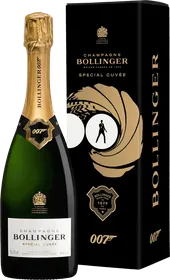
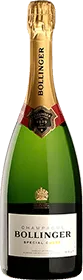
The Special Cuvée is the natural entry point into the range. A non-vintage Brut dominated by Pinot Noir, it carries the House's signature: fine bubbles, notes of pear and fresh walnut, a spicy touch on the finish. It is also the most versatile cuvée. It can be enjoyed at any time, and even at the table alongside shellfish, fish, or even white meats.
To pair with food
The extra-bruts and La Grande Année were designed to accompany a meal. Long ageing and barrel vinification give them the body, depth and length needed to stand up to a dish. Lower dosages also allow for better harmony at the table.
For Pinot Noir lovers (and terroir enthusiasts)
The PN collection showcases the grape variety cru by cru, offering a plot-by-plot reading that is rare in Champagne. Each edition highlights a dominant terroir. Tasted as a series, they reveal the differences between Aÿ, Tauxières and Verzenay.
For the cellar and ageing
The RD Récemment Dégorgé and the La Côte aux Enfants cuvées make up the rare part of the range, prized for their ageing potential and limited availability. Precious bottles indeed!
To give as a gift
All Bollinger cuvées make beautiful gifts that will delight any enthusiast. In general, Special Cuvée is a safe bet when it comes to gifting a champagne. Available in a wide range of formats, from single bottles to very large formats, Special Cuvée is also a cuvée often featured in limited editions, particularly for the end-of-year festive season.
Bollinger's cuvées explained
Special Cuvée
Non-vintage Brut and the heart of the House's range. Its ageing on lees far exceeds the appellation's minimum requirements, and its reserve wines are kept in magnums. These two choices give rise to an unusual depth for a non-vintage champagne and a consistency that few entry-level bruts achieve.
Brut Rosé
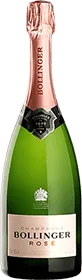
The Brut Rosé is a blend of Pinot Noir, Chardonnay and Meunier, complemented by the House's red wine. A colour with amber-golden hues, redcurrant and wild strawberry, extended by the House's characteristic spicy touch. This wine-forward, gastronomic rosé, rather than a light one, is representative of Bollinger's expertise in rosé champagnes, the pinnacle of which is represented by La Grande Année Rosé.
La Grande Année
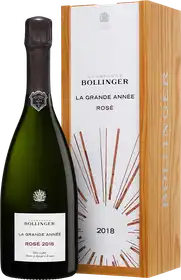
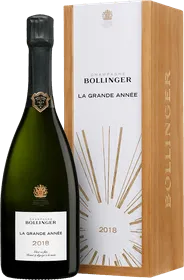
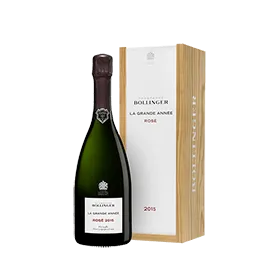
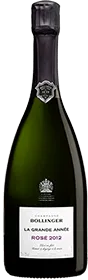
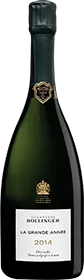
A cuvée created by Lily Bollinger, it expresses exceptional vintages. Vinified entirely in old barrels, La Grande Année spends eight years on lees, which promotes an autolytic aromatic profile that gives the wine its patina, its notes of dried fruit and its recognisable texture. Still riddled and disgorged by hand today, Bollinger's La Grande Année is one of Champagne's great landmarks and also exists in a rosé version.
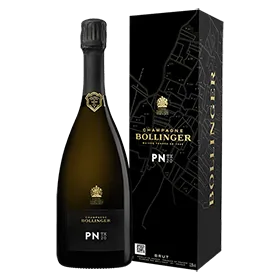
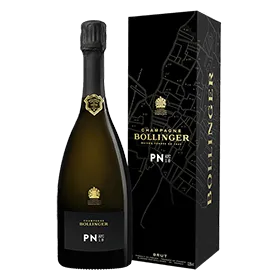
PN, the Blancs de Noirs
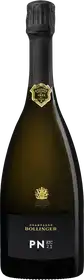
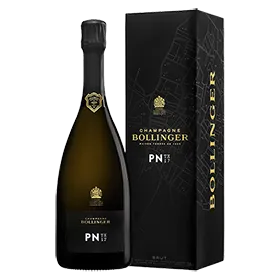
Pinot Noir is Bollinger's signature grape variety! The PN cuvées are Blanc de Noirs that embody the ambition to explore every facet of it. Each edition starts with a blank page. The House blind-selects the cru most representative of the year, then blends it with other crus and other vintages to enhance it, ensuring the main cru always remains dominant. No edition ever replicates the previous one.
How to read a PN cuvée's name: It is a non-vintage Brut. The letters indicate the dominant cru: AYC for Aÿ, TX for Tauxières, VZ for Verzenay. The number indicates the base year of the blend, not a vintage.
Bollinger B, the limited editions
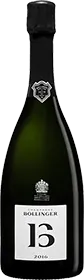
The By Bollinger series follows a logic opposite to that of La Grande Année. Where the latter answers to a strict framework, the B cuvées are freed from any terroir constraint. They have only been produced on rare occasions, making them the most exclusive bottles in the range. A Grande Année and a B cuvée never coexist in the same vintage.
Example with B16: The 2016 vintage did not bring together fruit from Aÿ or Verzenay in the required proportions, and only about ten crus reached the expected quality level. Rather than producing a diminished Grande Année, the House tightened the blend and explored more unusual terroirs: 73% Pinot Noir and 27% Chardonnay from the latest-ripening sectors of the Montagne de Reims, mainly Verzy, Verzenay, Tauxières and a touch of Bouzy, with Chardonnay sourced from Trépail rather than the Côte des Blancs. Remarkably, the blend contains no fruit from Aÿ at all, which would be unthinkable for La Grande Année.
RD for Récemment Dégorgé
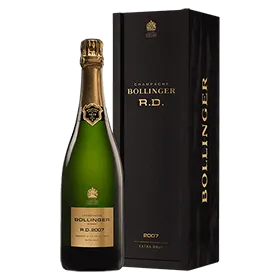
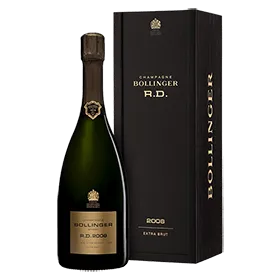
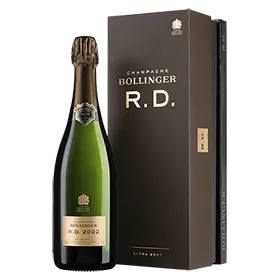
A La Grande Année of the same vintage, left on lees for far longer before a late disgorgement. After fourteen or fifteen years, the dosage is determined blind, generally below 5 g/l, with the complexity gained providing the balance. The aromatic evolution shifts from an autolytic profile to a more oxidative one. The House does not systematically release its vintages as RD: only those it believes will benefit from further ageing are selected.
La Côte aux Enfants
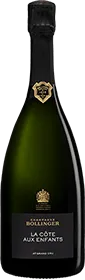
La Côte aux Enfants is a historic plot owned and farmed by the House in Aÿ. It produces a Blanc de Noirs classified as grand cru and, in certain years only, one of the rare still red wines of Champagne, under the Coteaux Champenois appellation.
What defines the style of Bollinger champagnes
Pinot Noir as the signature grape variety
Since its founding, the House has built its identity around Pinot Noir. It dominates nearly all of the blends and gives the wines their body, wine-like structure and length on the palate.
Barrel vinification, but never in new oak
While most Houses have adopted stainless steel, which is easier to manage bacteriologically and thermally, Bollinger has kept wood since 1829. Only barrels that have already seen several years of use are employed, as new oak would mask the delicate aromas of these champagnes. The time spent in barrel lasts six to eight months, and it is from this very slow micro-oxygenation that the House's signature creamy effervescence is born.
Reserve wines aged in magnum
A significant portion of the reserve wines age in magnum, in wood, for between seven and fifteen years. Blended into a young cuvée, they bring immediate patina, notes of dried and candied fruit, and a complexity the wine would not have achieved on its own. This practice is rare in Champagne, given the amount of stock it ties up.
The pursuit of fruit maturity
The House of Bollinger assesses fruit ripeness on a scale ranging from Granny Smith apple to overripe apple, and aims for the upper end of the spectrum without ever reaching it: white fruits, stone fruits, sometimes hints of tropical fruit. Neither green nor overripe.
Dosage decided blind
Blends and dosages are determined through blind tasting, seeking the best organoleptic balance specific to each cuvée.
Riddling and disgorgement by hand
A team of riddlers and disgorgers works the bottles by hand, a practice that has become rare among the great Houses. It allows each wine to be smelled just before recorking and for the absence of any bottle defect to be checked, bottle by bottle.
A cellar ageing time two and a half times the minimum
The wines rest in the cellar far longer than the appellation requires. It is this extended time that explains the texture, aromatic patina and ageing potential of the cuvées.
The crus of the Bollinger vineyard
The House farms six historic crus, five in Pinot Noir and one in Chardonnay. The Chardonnay comes from Cuis, at the very north of the Côte des Blancs. The Pinot Noirs are spread around the Montagne de Reims: Verzenay to the north, then Louvois, Avenay, Tauxières and Aÿ.
Verzenay and Bollinger's salinity
Verzenay holds a special place. The House owns around thirty hectares there, exclusively grand cru, which bring drinkability and, above all, the salinity considered to be Bollinger's true signature. This salinity is found from one cuvée to another and forms the common thread of the House's style.
Aÿ, the cradle of the House
Aÿ has been home to the House since 1829, as well as to the La Côte aux Enfants plot. This cru is among the required conditions for a vintage to qualify as La Grande Année.
The House of Bollinger
A family-owned House since 1829
Founded in Aÿ, Bollinger has never been sold and still belongs to its founding family, a case that has become extremely rare among the great Houses of Champagne. This continuity explains the consistency of the style and the House's ability to think in the long term, particularly in its cellar ageing times and its reserve stocks.
Lily Bollinger and the legacy of La Grande Année
At the head of the House from 1941 to 1971, Lily Bollinger built its international reputation and created the La Grande Année cuvée, which remains the House's benchmark vintage expression.
Frequently asked questions about Bollinger champagnes
Which Bollinger champagne format should you choose?
The format has a direct influence on ageing. The larger the volume, the lower the ratio between the wine and the oxygen present in the neck, and the slower and more even the evolution.
The magnum is the benchmark format for ageing, something Bollinger's use of reserve wines confirms in its own way. Larger formats, from Jeroboam to Nebuchadnezzar, are more suited to sharing and the table than to the cellar.
Under what conditions does Bollinger produce a Grande Année?
The blend must include fruit from Aÿ, fruit from Verzenay, and bring together at least fifteen crus. If not, the House does not produce a Grande Année that year, which explains the missing vintages in the series.
What is the difference between a B cuvée and a Grande Année?
La Grande Année follows a strict framework. The B cuvées are freed from it, and are born in atypical years where the House detects real potential without the criteria for La Grande Année being met. The two never coexist in the same vintage.
What do the letters and numbers of the PN cuvées mean?
The letters indicate the dominant cru of the blend: AYC for Aÿ, TX for Tauxières, VZ for Verzenay. The number indicates the base year, not a vintage, as PN is a non-vintage Brut.
What is the difference between La Grande Année and the RD?
The RD is a La Grande Année of the same vintage, left on lees for far longer before a late disgorgement. The wine shifts from an autolytic profile to a more oxidative one, while retaining a remarkable freshness for its age.
Why does Bollinger never use new oak barrels?
New oak would mask the delicate, elegant aromas of these champagnes. Only barrels that have already seen several years of use are used, for a period of six to eight months.
Which Bollinger champagne ages best?
The RD Récemment Dégorgé and the La Grande Année vintages are the cuvées best suited to ageing, thanks to their barrel vinification and their very long time on lees. The magnum format further enhances this ability.
Does Bollinger produce a red wine?
Yes, La Côte aux Enfants in Coteaux Champenois, from the eponymous plot in Aÿ, is produced only in favourable years.