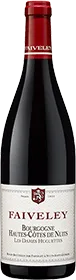
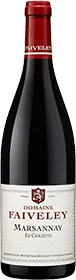
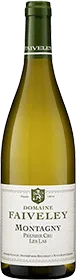
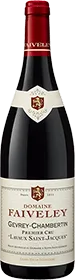
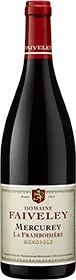
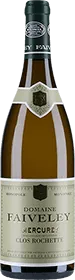
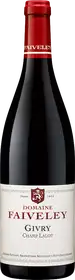
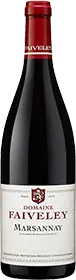
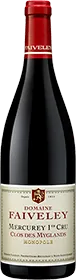
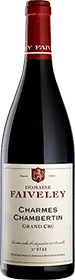
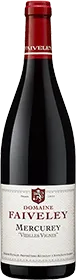
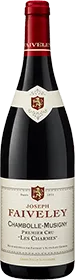
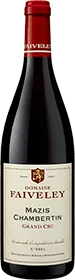
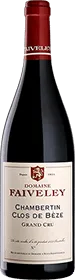
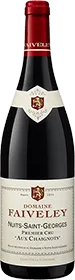
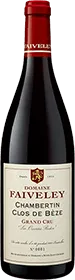
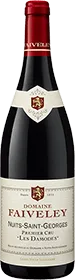
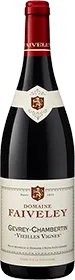
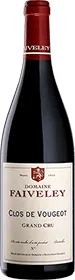
With over 120 hectares of vines spread across approximately 300 plots, Domaine Faiveley is one of the largest family-owned estates in Burgundy. It is from this extensive selection (a rare wealth in Burgundy) and after tasting the entire range, that we have put together this collection.
It showcases both wines to enjoy in their youth, through village appellations, and collector's wines, through premier crus, grand crus and monopoles of great rarity. A way to accompany you on any occasion, whether it's a meal among friends, a gift to give, or simply to enrich your cellar.
A unique signature for a plurality of appellations
By offering regional, village, premier cru and grand cru appellations simultaneously, Domaine Faiveley provides a true map of the Burgundian hierarchy within a single stylistic signature, allowing direct comparison of the expression of the same terroir or grape variety at different levels of precision and concentration. This breadth appeals to every type of wine lover, from the curious newcomer to the seasoned connoisseur seeking the quintessence of a specific Climat, with each finding a suitable entry point.
It also multiplies the occasions for tasting, from an everyday meal paired with a regional Bourgogne to celebrations where a grand cru is the natural choice. In terms of food and wine pairing, this diversity allows for a much wider range.
Finally, the educational value is immense: tasting several hierarchical levels of the same estate side by side is one of the best ways to concretely understand what the concept of terroir means in Burgundy.
A range both accessible and exceptional for every occasion
Which appellations should you choose for greater price accessibility?
The estate's selection paves the way with elegance, never compromising on quality. Montagny, Mercurey, Givry, Rully, Marsannay and other village appellations offer a fair and genuine first encounter with the Domaine Faiveley signature.
Which wines should you choose if you're looking for collector's bottles?
Old vintages, wines built to age, exceptional premier and grand crus, monopoles… If you're looking for exceptional bottles, turn to prestigious appellations such as Corton "Clos des Cortons Faiveley" Monopole, Charmes-Chambertin, Mazis-Chambertin, Clos de Vougeot, Nuits-Saint-Georges or Gevrey-Chambertin…
Wines accessible in their youth or worth keeping
How to choose wines to enjoy in their youth?
Some of Domaine Faiveley's cuvées reveal themselves generously right from their early youth, offering immediate pleasure without losing any of their finesse. Mercurey Village "Vieilles Vignes", Rully "Les Villeranges" or Bourgogne Pinot Noir "Joseph Faiveley" display vibrant fruit and a supple texture, perfect for a good meal shared with others.
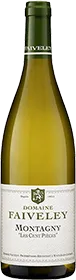
The white wines from the Côte Chalonnaise follow the same logic of early-drinking pleasure. Montagny Village "Les Cent Pièces", a white of great freshness, charms with its minerality from its very first years. Nuits-Saint-Georges Village "Les Montroziers", a velvety Pinot Noir born from two complementary terroirs, also belongs to this family of wines that can be opened without waiting, to capture all the spontaneity of the Faiveley style.
Which wines should you favour for cellaring?
At the other end of the spectrum, some wines need time to reveal their full measure. Corton "Clos des Cortons Faiveley" Monopole, built for ageing, can evolve over several decades depending on the vintage, as demonstrated by great past years. The white grand crus Corton-Charlemagne and Bienvenues-Bâtard-Montrachet share this same ability to gain in complexity and breadth over the years.
The premier crus of the Côte de Nuits are excellent candidates for the cellar. Gevrey-Chambertin 1er cru "Les Cazetiers" readily keeps for fifteen to twenty years, Nuits-Saint-Georges 1er cru "Aux Chaignots" or "Les Porêts Saint-Georges" benefits from patience, while Gevrey-Chambertin 1er cru "Clos des Issarts" Monopole offers an ageing potential of seven to twelve years.
Domaine Faiveley, a reputation spanning over 200 years
Founded in 1825 by Pierre Faiveley, the house celebrates two centuries of existence, an anniversary few Burgundian estates can claim. Born as a négociant house in Nuits-Saint-Georges, it very early on turned towards acquiring its own vineyards, laying the foundations of an estate under direct ownership.
In 1874, the family acquired the Corton grand cru that would soon bear its name, "Clos des Cortons Faiveley" Monopole: a decisive move whose echo still resonates today. Since then, each generation has added its own contribution: from Georges Faiveley, co-founder in 1934 of the Confrérie des Chevaliers du Tastevin, to Erwan and Eve Faiveley, who have run the estate since 2005.
What sets Faiveley apart in the Burgundian landscape?
One of the largest family-owned estates in Burgundy
Burgundy is a mosaic of small plots, where each winegrower often cultivates only a few hectares spread across a handful of Climats. This fragmentation is what makes the region so rich, but it also makes a large-scale estate all the more exceptional. With over 120 hectares of vines spread across approximately 300 plots, Domaine Faiveley is one of the largest family-owned estates in Burgundy, quite possibly the largest under direct ownership in the Côte d'Or.
This size reflects two centuries of patient acquisitions, focused on the finest Climats: twelve grand crus and twenty-two premier crus are part of the house's holdings, a rarely dense collection.
Exceptional geographical coverage: three great Burgundian terroirs
The scale of the estate creates a remarkable geographical singularity. From its home base in Nuits-Saint-Georges, Domaine Faiveley extends its vineyards along the entire length of Burgundy, from north to south. First, the Côte de Nuits, with its great reds from Gevrey-Chambertin, Chambolle-Musigny and Nuits-Saint-Georges. Then the Côte de Beaune, around the hill of Corton and its legendary white-wine Climats. Finally, the Côte Chalonnaise, with Mercurey at its beating heart.
From regional Bourgogne to grand cru monopole, by way of villages and premier crus, Domaine Faiveley offers an almost cartographic reading of the vineyard. This diversity of terroirs, from the limestone of Corton to the marl of the Côte Chalonnaise, can be read in the wines like so many nuances of the same age-old expertise.
Monopole clos of great rarity
Faiveley, monopoles of great rarity
Why is holding monopoles such a rare occurrence? In Burgundy, ownership is shared. A single Climat often has around ten owners, sometimes more, the result of centuries of inheritance and land division. Holding a monopole, meaning the entirety of an appellation, is therefore the exception to end all exceptions. Domaine Faiveley cultivates several of these exclusive Climats, a distinction few houses can claim with such concentration.
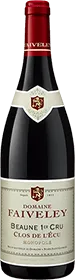
The house's portfolio of monopoles is impressive in its diversity. In the Côte de Nuits, Gevrey-Chambertin 1er cru "Clos des Issarts", the smallest monopole in Burgundy. In the Côte de Beaune, Beaune 1er cru "Clos de l'Écu". In the Côte Chalonnaise, a remarkable set in Mercurey: the 1er cru "Clos des Myglands", "La Framboisière" and, in white, "Clos Rochette".
Would you like to learn more about the subtleties of monopoles? Discover our article "Monopoles in Burgundy: what are we talking about?".
Why does Clos des Cortons Faiveley rank among the most prestigious crus?
At the pinnacle of this rarity sits an exception within the exception. The Corton grand cru "Clos des Cortons Faiveley" is one of only two grand crus in Burgundy to bear its owner's name, the other being Romanée-Conti. Held by the family since 1874, this 2.77-hectare monopole is the jewel of Domaine Faiveley.
The cru's prestige owes as much to its history as to its terroir. On soils of limestone, marl and clay dotted with ferruginous oolite, Pinot Noir here finds an expression of uncommon density, combining power, a silky texture and a vibrant mineral finish: Clos des Cortons Faiveley remains the purest culmination of the house's philosophy.