

 Guaranteed provenanceDirect from the estates
 DeliveryFree for purchases over 3,315 SEK
- Secure PaymentVisa, American Express, Mastercard...

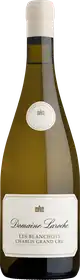
Domaine Laroche : Chablis Grand cru "Les Blanchots" 2016
Stock currently at the producing estate – Will ship after 14 October 2026
Description
Tasting notes and serving tips for the Chablis Grand Cru "Les Blanchots" 2016 from Domaine Laroche
Tasting
Appearance
The color shows a pale yellow hue with golden highlights, characteristic of a Chablis that has reached maturity.
Nose
The nose opens with restraint, offering aromas of buttery green apples and lemon oil. With aeration, the bouquet gradually reveals floral notes of spring white blossoms, accompanied by chalky and mineral nuances typical of the terroir.
Palate
The palate is full and concentrated, with a silky, delicate texture. Bright, racy acidity structures the whole, bringing freshness and energy. Citrus and lemon flavors mingle with a saline, stony minerality that lingers long on the finish. Despite its delicacy, the wine has enough substance to sustain its vibrancy on the palate.
Food and wine pairings
This Chablis Grand Cru is an ideal match for white meats such as chicken or veal in a cream sauce. It also pairs beautifully with grilled shellfish such as lobster and langoustine, as well as oysters and other seafood. Aged hard cheeses and truffle-based dishes also make excellent pairings.
Serving and cellaring
It is recommended to serve the Chablis Grand Cru "Les Blanchots" 2016 at a temperature between 11 and 13°C. According to the producer, this wine expresses its charm after five years in bottle and reaches its peak after ten to twelve years. It can be enjoyed through around 2028.
A Chablis Grand Cru from Burgundy with crystalline minerality
The estate
Founded in 1850 by Jean Victor Laroche, the Domaine Laroche embodies nearly two centuries of winemaking tradition in Chablis. Under the leadership of Michel Laroche from 1967, the estate grew to become one of the region’s leading producers, managing around 90 hectares of vineyards. Since 2010, the property has been part of the AdVini group and is technically overseen by Grégory Viennois. The estate stands out for its pioneering commitment to sustainable viticulture and its minimal-intervention winemaking philosophy. It also plays a central role within the Union des Grands Crus de Chablis, founded in 2000 by Michel Laroche.
The vineyard
The Chablis Grand Cru "Les Blanchots" comes from an exceptional climat located on steep south-east-facing slopes. Domaine Laroche owns around 4.56 hectares here, nearly a third of this Grand Cru’s total surface area. The terroir is characterized by white clays on the surface, beneath which lie green and blue clays as well as Kimmeridgian limestone that outcrops in places. This 180-million-year-old soil contains oyster and ammonite fossils that can reach 70 centimeters in diameter. Morning sun exposure and the vineyard’s sheltered position encourage slow ripening of the grapes, preserving their floral aromatic character and mineral finesse. The vines, around 50 years old at the time of the 2016 harvest, are farmed according to sustainable viticulture principles, with HVE 3A certification obtained as early as 2016.
The vintage
The 2016 vintage in Chablis was marked by an unprecedented succession of climatic incidents. Spring brought frosts in April, followed by devastating hail at the end of May that affected certain plots in localized fashion. Exceptional downy mildew pressure in July forced winegrowers to increase treatments. Fortunately, a favorable summer from mid-June allowed the vines to recover, with temperatures regularly reaching 30°C. Timely rains in early September, accompanied by cooler temperatures, created ideal conditions to complete ripening. Despite these challenges, the vintage produced fine-quality wines expressing freshness and finesse, with yields reduced to 63% of the authorized potential.
Vinification and aging
The grapes for the Chablis Grand Cru "Les Blanchots" 2016 are hand-harvested and carefully sorted upon arrival at the winery. Pressing is carried out at low pressure using pneumatic equipment, selecting only the heart of the press to preserve aromatic finesse. Fermentation takes place 75 to 85% in temperature-controlled stainless-steel tanks and 25 to 35% in three- to five-year-old French oak barrels, with only 14% new oak in the overall inventory. The estate uses Champagne yeasts, which bring higher acidity and require fewer nitrogen additions. Malolactic fermentation occurs naturally, without being forced. The wine is then aged on fine lees for ten to twelve months, with regular bâtonnage to develop complexity and texture. Since 2001, Domaine Laroche was the first Burgundy producer to adopt a low-sulfur approach across its entire range.
Grape variety
This white wine from Bourgogne is 100% chardonnay.