

 Guaranteed provenanceDirect from the estates
 DeliveryFree for purchases over 3,315 SEK
- Secure PaymentVisa, American Express, Mastercard...

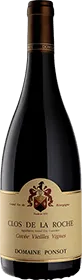
Domaine Ponsot : Clos de la Roche Grand cru "Cuvée Vieilles Vignes" 2016
In-Stock
Description
Tasting characteristics and advice for the Clos de la Roche Grand Cru "Cuvée Vieilles Vignes" 2016 from Domaine Ponsot
Tasting
Color
The color reveals a deep ruby red with garnet and violet highlights, remarkably intense while retaining beautiful transparency.
Nose
The nose unveils a captivating aromatic complexity dominated by juicy red fruits, notably cherry and raspberry, alongside floral notes of peony and violet. With aeration, the bouquet evolves toward aromas of blood orange, licorice, raw cocoa and espresso, enhanced by earthy, mineral and subtly gamey nuances reminiscent of truffle.
Palate
On the palate, this Grand Cru shows breadth, depth and succulence, with remarkable concentration and layered flavors that speak to the expression of the terroir. The silky, refined tannins bring a velvety texture, while vibrant acidity lends energy and freshness to the whole. The long, persistent finish stands out for its mineral character, peppery and spicy notes, and a subtle salinity that reflects the limestone soils.
Food and wine pairings
This Clos de la Roche Grand Cru "Cuvée Vieilles Vignes" 2016 pairs beautifully with fine red meats, feathered game, poultry in a mushroom sauce, as well as aged soft-ripened cheeses.
Serving and cellaring
The Clos de la Roche Grand Cru "Cuvée Vieilles Vignes" 2016 benefits from decanting before serving to fully reveal its aromatic complexity. It is recommended to serve it at a temperature between 16 and 18°C. This wine has exceptional aging potential and may evolve harmoniously through 2041 or beyond, with an optimal drinking window in around fifteen to twenty years.
The elegance and structure of a Burgundy Grand Cru
The estate
Founded in 1872 by William Ponsot in Morey-Saint-Denis, Domaine Ponsot has established itself as one of Burgundy’s most prestigious and distinctive producers. Now led by Rose-Marie Ponsot, assisted by winemaker Alexandre Abel, the estate manages around 3.5 hectares in Clos de la Roche Grand Cru, making it the largest owner in this appellation. For nearly one hundred and fifty years, five generations have followed one another, maintaining a philosophy firmly focused on expressing the terroir, natural viticulture without chemical inputs, and minimalist winemaking. The domaine also stands out for its pioneering commitment against counterfeiting and its adoption of innovative authentication technologies.
The vineyard
Clos de la Roche is the largest Grand Cru in Morey-Saint-Denis, covering around 16.73 hectares. The vineyard’s name directly refers to the rocky, limestone composition of the soil, characterized in many areas by a very shallow depth of only about thirty centimeters. These hard-to-work soils, dotted with large limestone blocks emerging at the surface, rest on an impermeable limestone base that forces the roots to draw their nourishment from fissures in the rock. This demanding geology gives the wines a distinctive minerality and a remarkable terroir-driven expression. The estate’s vines are located on east- to southeast-facing slopes at around 250 meters above sea level, benefiting from morning exposure while being protected from excessive afternoon heat.
The vintage
The 2016 vintage in Burgundy proved to be contrasting, with spring frosts affecting certain areas while Domaine Ponsot’s vineyards in Morey-Saint-Denis were spared. The ripening period benefited from favorable conditions, with consistent sunshine and suitable humidity allowing for long, gradual maturation. The harvest, carried out late on October 7 in line with the estate’s philosophy of prioritizing full phenolic ripeness, produced grapes of exceptional quality. Yield was 38 hectoliters per hectare.
Vinification and aging
The vinification of the Clos de la Roche Grand Cru "Cuvée Vieilles Vignes" 2016 follows the estate’s principles of minimal intervention. The grapes, hand-harvested and rigorously sorted in the vineyard, are transported in small wicker baskets. Fermentation takes place in open, truncated-cone wooden vats with indigenous yeasts, without inoculation. Destemming is adapted according to the characteristics of the vintage. Maceration lasts between ten and twenty days, with one or two gentle punch-downs to extract color and tannins without harshness. Aging is carried out exclusively in older oak barrels, at least five years old, some dating from the 1980s, in order to preserve the expression of fruit and terroir without the contribution of new oak notes. Malolactic fermentation occurs naturally without bacterial inoculation.
Grape variety
100% Pinot Noir