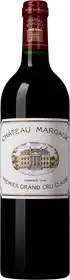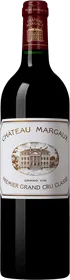


Château Margaux 1998

Out of stock
Would you wish to know when this product is back in stock?
 DeliveryFree for purchases over 3,315 SEK
 Guaranteed provenanceWines sourced directly from the producing estates
91
/100
Robert Parker
Robert M. Parker, Jr.
The 1998 Margaux's color is a dense ruby/purple. The wine is tannic and austere, but elegant, with notes of asphalt, blackberries, acacia flowers, and sweet, toasty oak. Subtle, rich, nicely textured, and medium-bodied, it is built for the long haul. Anticipated maturity: 2006-2030.
95
/100
Decanter
The slightly lighter colour and developing aromas show that this is beginning to mature. Still, the abundant blackcurrant fruit aromas are touched with mint and just a suggestion of cedar, gunflint and earth. The texture is still firm, but the tannins are smooth and supple, and the bright, fresh acidity leads to an impressively long finish. The wine is more about finesse, yet it remains surprisingly youthful and should have a long life ahead of it.
93
/100
Jeff Leve
Leve Jeff
Medium to full-bodied, firm, tannic, masculine, in a structured Margaux style. The bouquet, with its floral, tobacco and black cherry aromas, is more enticing at this stage. The wine requires at least another 5–8 years in the cellar. With luck, it will soften as it evolves.
19
/20
Weinwisser
Very dark color, still young, deep, dense purple with violet highlights. Spicy, deep bouquet, ripe black plums, cassis and damson, licorice, hints of truffle, showing great depth. On the palate still massive, with demanding astringency, a mix of power and flesh, black berries; easy to underestimate at first, it will develop into a truly great Margaux. Compared with other great Margaux, the 1998 is still relatively affordable.
19
/20
René Gabriel
99: Barrel sample (18/20): 15% of the harvest was downgraded as a third wine. 75% Cabernet Sauvignon, 17% Merlot, 5% Petit Verdot, 3% Cabernet Franc: medium ruby-purple. Sweet, slender mulberry bouquet, delicate tobacco note, fine woods, warm fruit bed. On the palate, lots of substance, wild raspberries, ample extract; only on the finish does a firm framework with intense astringency come to the fore. The plentiful tannins meld harmoniously with the structure, lending it a deceptive lightness. In fact, this Margaux is a very long-lived wine that will remain fairly closed for quite a while as the fruit phase ends. And if it capitalizes on all these positives during barrel maturation and later bottle development, it could grow into a 19/20-point wine. At this stage, however, Latour shows more grandeur – at the same score. 00: Bright, deep garnet-ruby. Delicate berry bouquet, almost perfumed, supported by sweet oak, expansive, lots of wild raspberries. For a barrel sample, surprisingly easy-drinking, soft and silky in texture, a long, Burgundian premier cru full of finesse. 01: Tasted in July at the estate from an already bottled wine: I have rarely encountered a young Margaux showing such coarse grain (almost harsh tannins). Is this an indicator of a very long life, or was a bit too much press wine added at the end to give more structure? In contrast with a rather light body, it currently seems a bit unevenly balanced. If I had to decide, I would currently prefer, and over the next ten years, the intoxicating Rauzan-Ségla. In any case, this 98 Margaux will take longer to reach its first drinking window, until it digests these tannins (18/20). 01: Tasted blind with Lenz Moser in a larger tasting against Mondavi Reserve of the same vintage: Margaux had no trouble, but neither did Mondavi’s Cabernet Sauvignon Reserve. Which means: both wines were great! 02: The same series also included Mouton and Lafite of the same vintage. Margaux was clearly the best wine: delicate fig tones, coffee and gingerbread. On the palate, substantial, perhaps not quite as fine, but that also points to a perhaps underestimated potential; again coffee and warm berry aromas in a finish that is surprisingly forceful for a Margaux. Needs a lot more time! Could even move up to 19/20. 03: Strongly toasty bouquet, elderberry, lilac, rosewood notes. Silky, very fine palate, a dance between red and blue berries, plenty of cassis in the gently smoky licorice finish; only on the aftertaste does the finely sandy tannin note assert itself, attesting to quite a large potential. Not a truly great Margaux, but a great Bordeaux! 04: Dark, very dense garnet with bluish reflections. Powerful bouquet scented of wild berries, mixed with cassis and blackberries, very profound. On the palate, currently a real fruit bomb, showing, thanks to extract ripeness, a touch of Amarena and coffee, mahogany note, packed with muscle and flesh, persistent. It is just a nuance short of a truly great Margaux. Even if it fares significantly better in other ratings, time certainly works in its favor. (18/20). The color is very dark, still young, showing a saturated, dense purple with violet shimmer. Spicy, deep bouquet, ripe black plums, cassis and Damassine, licorice, traces of truffle, showing great depth. On the palate, still massive, demanding astringency through a mix of power and flesh, black berries. A wine that may have been somewhat underestimated at the beginning and is developing toward a truly great Margaux. Compared with other great Margaux, its market value is still relatively affordable. So perhaps a good buy at the next auction! 08: Tasted blind in Munich: 1998 Château Margaux, Margaux: medium-dark garnet-ruby, appearing somewhat matte. Open, beautifully fruity-spicy bouquet, blackberries, cedar, a hint of mocha, showing many Bordeaux-typical layers of terroir. Velvety palate, fine yet very meaty tannins, spreading a wonderful aromatics throughout the entire mouth and throat, just before a first possible maturity; those who wait another 5 years will surely experience the best moment. A grand, majestic wine with lots of finesse. (19/20). 11: Fairly full purple, lightening rim. Fine waxy bouquet, hints of raspberry, red currant, perfumed and still somewhat reticent. Finest substance on the palate, still extremely much primary fruit, superbly concentrated extract, certainly already offering first enjoyment but still surprisingly little evolved. Type: 1985+! 15: Tasted twice in one week. The fruit is now slowly fading. The terroir has not yet begun. The tannins seem a bit grainy. I would still wait. To be on the safe side. (19/20). 16: Dark garnet with first, clean maturity tones at the very edge. Waxy bouquet of mulberries, still showing delicate toasty notes from the barriques, then a floral shimmer, blossom tones, morello cherries and dark rose petals. The nose is reassuringly classic. Juicy palate shows harmonious, quite fine tannins. Considering what (too) young Château Margaux cost today, this version, now at first maturity, would not be an “unwise” but an attractive purchase. (19/20). 17: Dark, deep garnet still showing purple reflections in the middle. The bouquet is absolutely fascinating, tending toward blueberries and cassis, gently accompanied by subtly peppery spice, which fits the base configuration perfectly. It glides velvety over the tongue and convinces with a wonderful balance. The finish: precise, long, fine and sublime. I love such 1998s. They are similar to, and even better than, the best 1985s. One never grows tired of enjoying them. (19/20). 20: Very dark garnet-purple, no maturity tones. The nose begins “cool.” That is, you sense the barely ripe Cabernet in a discreet leafy form; it thus first appears floral before it can show forest fruit. Overall, it still presents as quite reserved. On the palate, full, fleshy and still astringent. It is developing relatively slowly and long decanting would not be a bad idea. In about ten years, this will become a true classic somewhere between the former and today’s way of vinification. (19/20). 21: Medium purple with scarlet reflections. From the outset, a fairly powerful bouquet: pomegranate seeds, raspberries, wild cherries, light woods and stag leather. Spicy and peppery on the nose. On the palate, a lively acidity that connects with fine muscles. That makes it subtly ascetic, the texture slightly roughening, the astringency surprisingly present. Somehow it still seems a bit unfinished and seeks either more harmony or further bottle age. In any case, after swallowing, firm substances remain in the mouth. Seen this way, the potential is greater than the current fun. Although rated the same, I currently give the edge to Palmer. Three hours of decanting. (19/20).
96
/100
Jane Anson
Jane Anson
Owner Corinne Menzelopoulos said of the 1998: 'We came very close to making a great vintage', because the excellent weather was just thrown off course by rain at the beginning of harvest. It might not have the perfection of the 2009 vintage (one of my six 100-point wines given in 2022 tastings), but it's hard to argue with the supple, balanced and effortless pleasure offered by this bottle. Expect white truffle, soy, undergrowth, raspberry leaf, saffron, cassis, turmeric, brambled autumnal fruit and a kick of orange peel giving focus and grip on the finish. 50% of crop in 1st wine. Paul Pontallier technical director, 100% new oak.
94
/100
Jean-Marc Quarin
Jean-Marc Quarin
Logo on the cork: inverted T (Trescases) Dark colour, with normal intensity and slightly evolved. Delicate on the attack, finely textured, very fruity, then flavourful and complex, even if the body isn’t at its optimum. The wine stretches out on the finish, sappy, long and delicious.
Description
Chateau Margaux 1998: a 1998 wine with great ageing potential
Chateau Margaux is a First Classified Growth of 1855 produced in the Margaux appellation. It comes from a terroir consisting of an outcrop of gravel. At Chateau Margaux, the 1998 wine is a blend of Cabernet Sauvignon, Merlot, Cabernet Franc and Petit Verdot.
Chateau Margaux 1998 has fresh scents of red fruit mixed with notes of vanilla and toast on the nose. On the palate, this 1998 wine is powerful, which reveals tannins of great freshness and firm. A classic from the property.