

 Guaranteed provenanceDirect from the estates
 DeliveryFree for purchases over 3,315 SEK
- Secure PaymentVisa, American Express, Mastercard...
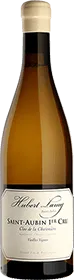
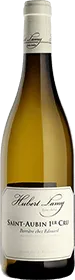
Domaine Hubert Lamy : Saint-Aubin 1er cru "Clos de la Chatenière" 2018
In-Stock
Description
Characteristics and tasting advice for the Saint-Aubin 1er cru "Clos de la Chatenière" 2018 from Domaine Hubert Lamy
Tasting
Appearance
The color shows a pale yellow to golden hue with subtle green highlights, reflecting the wine’s purity and clarity.
Nose
The nose reveals remarkable aromatic complexity, with notes of waxed citrus, yellow-fleshed fruit (pears, yellow apples) and light honey. Toasted nuances join in, along with white flowers (acacia, orange blossom), fresh quince and dried fruits (almonds, pecans). The mineral dimension expresses itself intensely through aromas of flint, rock and earth.
Palate
On the palate, this white wine offers a medium to full body, round and textured, elegantly coating the palate. Concentration is striking without heaviness, carried by a lively, razor-sharp acidity that gives structure to the whole. Flavors of ripe white fruit evolve toward mineral sensations mid-palate, extending into an exceptionally long, saline finish. The tension between richness and mineral freshness defines this wine of great architectural precision.
Food and wine pairings
This Saint-Aubin 1er cru "Clos de la Chatenière" 2018 pairs perfectly with delicate fish, seafood, poultry in creamy mushroom sauce, and aged cheeses.
Serving and cellaring
It is recommended to serve this wine at a temperature between 10 and 12°C. According to critics, this wine can be enjoyed until around 2040, or even around 2050 according to certain assessments.
An exceptional Saint-Aubin 1er cru, a precise mineral expression of Burgundy
The estate
Founded in 1973 by Hubert Lamy, Domaine Hubert Lamy has established itself as one of Burgundy’s essential benchmark estates. Since 1995, Olivier Lamy has run the estate alongside his wife Karine, carrying on his father’s work with an approach that is decidedly modern and environmentally respectful. Today the estate spans 18.5 hectares, mainly within the Saint-Aubin appellation, with parcels also in Puligny-Montrachet, Chassagne-Montrachet and Santenay. Thanks to meticulous viticulture and low-intervention winemaking, Olivier Lamy has elevated Saint-Aubin to the rank of Burgundy’s most respected appellations, producing white wines of exceptional purity and minerality.
The vineyard
Clos de la Chatenière is one of the estate’s flagship parcels, effectively a near-monopoly of 1.25 hectares. This premier cru of Saint-Aubin occupies a remarkable position on a steep hillside with a slope of about 40%, situated between Saint-Aubin and Puligny-Montrachet. The Chardonnay vines, planted in 1964, grow on very shallow clay-limestone soils (20 to 40 centimeters) that are particularly stony, lying directly on a base of hard limestone. A south to southeast exposure ensures optimal sunlight, while the pronounced gradient guarantees excellent natural drainage. These conditions create a unique terroir that gives the wines their distinctly mineral character.
The vintage
The 2018 vintage stands out as one of the best of the decade in Burgundy for white wines. After a mild winter and a spring without damaging frost, the summer proved particularly hot and dry, especially in August and September. These conditions enabled complete phenolic ripeness while concentrating aromas and sugars in the berries. Harvest began early on August 22, reflecting advanced maturity. This vintage produced white wines of exceptional aromatic richness, perfectly balanced between roundness and liveliness, with excellent aging potential.
Winemaking and aging
The grapes for the Saint-Aubin 1er cru "Clos de la Chatenière" 2018 are harvested by hand, with rigorous sorting carried out in the vineyard and then in the cellar. After gentle pneumatic pressing and overnight settling, the must is transferred to 600-liter demi-muids and 300-liter barrels. Alcoholic fermentation takes place with indigenous yeasts over an extended period that can last up to 90 days. Aging continues for 12 to 18 months in these same vessels, with a very limited proportion of new oak (0 to 15%), favoring barrels between one and five years old. The wine then spends six months in stainless steel tank before bottling, allowing for natural clarification and final harmonization.
Grape variety
100% Chardonnay