Assistant


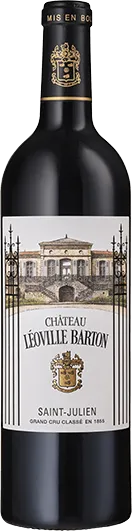

Château Léoville Barton 2006
In-Stock
Let's talk about this product!
A pairing in mind? A question about the vintage? Comparison with another product? Find the answers here...
Description
Characteristics and tasting notes of Château Léoville Barton 2006
Tasting notes
Colour
The colour reveals a deep, dense purple-ruby hue, reflecting fine concentration. The wine shows a dark crimson tone at the core, gradually lightening to ruby nuances towards the rim of the glass.
Nose
The bouquet proves rich and opulent, dominated by aromas of blackcurrant and black cherry. Notes of dried fruit such as prune and red plum accompany these primary fragrances. After aeration, the nose reveals tertiary aromas of tobacco, leather and cedar wood, along with mineral touches reminiscent of crushed stone. Spicy nuances of cinnamon, black pepper and ginger complete this complex aromatic palette.
Palate
The attack on the palate is imposing, revealing a concentrated and powerful structure. The palate offers intense flavours of black fruit - blackcurrant, black cherry, plum - which persist throughout the tasting. The tannins are both powerful and remarkably supple, with a silky, refined texture despite their substantial presence. The finish impresses with its length, extending over several dozen seconds with mineral notes and a slight bitterness that confirms the wine's ageing potential.
Food and wine pairing
This wine pairs perfectly with roast shoulder of lamb with herbes de Provence or rack of lamb. It also elegantly accompanies a grilled entrecôte, beef fillet with red wine sauce or beef bourguignon. Duck preparations, particularly duck breast, also make excellent pairings. Feathered game such as roast quail, woodcock or pheasant harmonise beautifully with this vintage. A wild mushroom risotto or matured cheeses such as Comté, Gruyère or Saint-Nectaire round out the pairing possibilities.
Serving and cellaring
Château Léoville Barton 2006 is best served at a temperature between 16 and 18°C. Decanting for one to two hours before serving is recommended to allow the wine to fully reveal its aromatic complexity and soften its structure. This vintage can be enjoyed now and will continue to evolve favourably until around 2040.
A classified growth from Saint-Julien with a classic character and refined structure
The estate
Acquired in 1826 by Hugh Barton, Château Léoville Barton is a second growth of the 1855 classification at the heart of Saint-Julien, in the Médoc. The estate represents a rare example of family continuity in Bordeaux, remaining in the Barton family through the joint agricultural land holding of Châteaux Langoa and Léoville Barton. Its 50-hectare vineyard, facing the Gironde and adjoining Langoa, is vinified and aged at Langoa Barton, notably in old foudres. Today, Lilian Barton Sartorius runs the estate with the same philosophy of quality passed down through eight generations.
The vineyard
The vineyard of Château Léoville Barton spans 50 hectares at the heart of the Saint-Julien appellation. The plots benefit from a privileged exposure facing the Gironde estuary. The terroir rests on a gravel ridge of Garonne origin, made up of Günz-era gravel mixed with sand and clay, providing optimal drainage. The clay-gravel subsoil ensures ideal water regulation. The average age of the vines reaches 40 years, with some plots even older, guaranteeing concentration and complexity. Harvesting is done exclusively by hand, allowing for a rigorous selection of grapes at optimal ripeness.
The vintage
The 2006 vintage benefited from favourable climatic conditions, allowing the grapes to reach fine ripeness. The moderate summer heat, balanced by a coolness that preserved acidity, contributed to the vintage's structural elegance. Autumn conditions allowed for harvesting under sunny weather, with grapes showing optimal phenolic ripeness and remarkable concentration.
Winemaking and ageing
The winemaking of Château Léoville Barton 2006 took place in traditional 200-hectolitre wooden vats, with electronic temperature control. Maceration lasted three to four weeks to extract colour, tannins and aromatic precursors. Ageing lasted 18 months in French oak barrels, 60% of which were new and 40% one-wine barrels. Regular rackings were carried out to refine the wine while maintaining beneficial contact with the fine lees.
Grape varieties
Cabernet Sauvignon (78%)
Merlot (20%)
Cabernet Franc (2%)