Assistant


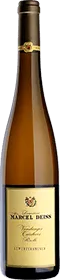
Domaine Marcel Deiss : Langenberg 2023
In-Stock
Let's talk about this product!
A pairing in mind? A question about the vintage? Comparison with another product? Find the answers here...
Description
Characteristics and Tasting Tips for Langenberg 2023 from Domaine Marcel Deiss
Tasting
Appearance
Clear, pale and highly brilliant, the wine displays a beautiful visual purity.
Nose
Lively and lace-like, the bouquet reveals aromas of white-fleshed fruit such as pear, mingled with invigorating citrus notes. Subtle hints of white flowers intertwine with a stony minerality and delicate peppery nuances.
Palate
The attack is energetic and wonderfully fresh. Resolutely dry and taut, the palate offers a fine texture that stretches out at length towards a striking finish, underscored by a persistent, mouth-watering salinity.
Food and Wine Pairing
This white wine pairs beautifully with asparagus, grilled fish or fresh goat's cheese.
Serving and Cellaring
This wine can be enjoyed now and will continue to develop gracefully until around 2031.
The Pure, Saline Expression of an Alsace White Wine Crafted by Domaine Marcel Deiss
The Estate
Founded in 1947 in Bergheim, Domaine Marcel Deiss is an iconic figure of terroir-driven winegrowing in Alsace. Covering some 32 hectares farmed biodynamically, the estate has become renowned for its philosophy of complantation, favouring the expression of place over that of the grape variety. Today, Mathieu Deiss heads the estate, supported by his father Jean-Michel. Together, they carry on this family legacy, producing wines of great precision that showcase the mosaic of Alsace's terroirs.
The Vineyard
Located in the village of Saint-Hippolyte, the Langenberg lieu-dit is a south-facing hillside cru. Its vines, planted in 1997 on steep terraced slopes, take root in a very poor, shallow soil of decomposed granite. This free-draining, biodynamically farmed Alsatian terroir naturally keeps yields low and gives the grapes a slow ripening process as well as a strong mineral identity.
Vinification and Ageing
The grapes are harvested by hand and pressed together, with no sorting by variety. Fermentation begins naturally with indigenous yeasts. The wine is then aged on its lees for around twelve months in large old foudres, a gentle method that refines its structure without imparting any oaky notes.
Grape Varieties
This wine comes from a field blend dominated by Riesling, alongside other varieties such as Pinot Gris, Pinot Beurot, Pinot Blanc, Pinot Auxerrois and Pinot Noir (vinified as a white wine), as well as Muscat à Petits Grains and both white and pink Muscat d'Alsace.