

 Guaranteed provenanceDirect from the estates
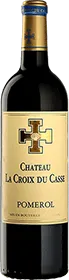
Château La Croix du Casse 2025
En Primeur Wines – delivery in early 2028
Description
Characteristics and tasting advice for Château La Croix du Casse 2025
Tasting
Appearance
The color charms with its depth.
Nose
The aromatic bouquet is particularly expressive, revealing superb fruity, spicy, and camphor notes.
Palate
On the palate, this wine stands out for its remarkable balance between density and freshness. The tannic structure, of great finesse, brings elegance and freshness to the whole. The tasting concludes with a persistent finish, offering excellent length.
The refinement and vibrancy of a Pomerol wine
The estate
Located in the prestigious Pomerol appellation, in the Bordeaux region, the Château La Croix du Casse was established in 1775, marking the first vine plantings on the estate. After a history rich in twists and turns, the property was acquired in 2005 by Philippe Castéja and his sister Chantal Preben Hansen, who integrated it into the BCAP group. Under the leadership of these current owners, significant modernization work has been undertaken. Today, the estate is renowned for wines that combine complexity and accessibility.
The vineyard
Covering around ten hectares to the south of the Pomerol plateau, the vineyard benefits from an exceptional terroir. The vines thrive on soils composed of sandy gravel and ancient sands. This terroir is particularly distinguished by its subsoil rich in iron scoria, locally known as “crasse de fer,” which gives the wines a unique minerality.
The vintage
A mild and dry winter encouraged early and even budbreak, followed by a spring whose mild and dry conditions limited disease pressure. At the end of May, flowering was early, as was véraison during a particularly hot and dry summer until mid-August, when significant temperature variations were ideal for refining grape ripeness. Harvesting began very early, in early September, under favorable conditions.
Winemaking and aging
The grapes were harvested under excellent conditions, from September 4 to 13 for the merlot, then from September 15 to 19 for the cabernet franc. In the cellar, fermentations take place in temperature-controlled stainless steel vats, allowing precise control of temperatures during a maceration period lasting four to six weeks. The wine is then aged with great care in French oak barrels (38% new) for approximately eighteen months, contributing to its complexity.
Grape varieties
Merlot (96%) and cabernet franc (4%).