

 Guaranteed provenanceDirect from the estates
 DeliveryFree for purchases over 3,315 SEK
- Secure PaymentVisa, American Express, Mastercard...
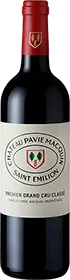
Château Pavie Macquin 1996
In-Stock
Description
Characteristics and Tasting Notes for Château Pavie Macquin 1996
Tasting Notes
Nose
The nose reveals an elegant bouquet blending dried cherry and blood orange aromas, subtly wrapped in noble notes of incense and sandalwood.
Palate
Charming and well-balanced, the palate gains in breadth with aeration. It is underpinned by a chalky, slightly firm structure that carries the wine towards a well-defined, mineral finish.
Food and Wine Pairing
This red wine pairs wonderfully with flavourful dishes such as aged beef, roast pigeon or a Tournedos Rossini.
The elegance and minerality of a great Saint-Emilion wine
The estate
Located on the right bank of Bordeaux, Château Pavie Macquin was founded in the 1880s by Albert Macquin, an agronomist renowned for having saved the local vineyards from phylloxera. Today, this 15-hectare estate belongs to his descendants: Benoît and Bruno Corre, along with Marie-Jacques Charpentier. Managed by Nicolas Thienpont, the estate is dedicated to revealing its terroir through a maieutic philosophy of winemaking. This growth was promoted to Premier Grand Cru Classé B in 2006.
The vineyard
Rising to an altitude of between 75 and 100 metres, the vineyard sits on the famous Saint-Emilion plateau. The vines thrive on clay-limestone soils resting on asteria limestone bedrock. Benefiting from a south-west exposure and a cooler microclimate that encourages slow ripening, the estate is farmed using a sustainable approach combining ploughing, natural cover crops and massale selection.
The vintage
1996 proved to be a particularly favourable vintage for late-ripening grape varieties. The climatic conditions offered an ideal environment for the development and full ripeness of the Cabernets, giving them a major structuring role.
Winemaking and ageing
To craft this wine, whole berries are gravity-fed into the vats. Plot-by-plot vinification takes place in wooden and concrete vats, favouring gentle extraction through punching down. Malolactic fermentation takes place in barrels. The wine is then aged on fine lees in a reductive style for 16 to 20 months in oak barrels, with a very limited number of rackings to preserve the brightness of the fruit.
Grape varieties
The vineyard is traditionally dominated by Merlot (84 to 85%), alongside Cabernet Franc (14 to 15%) and a touch of Cabernet Sauvignon (1 to 2%).