Assistant


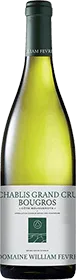
William Fèvre : Chablis 1er cru "Montmains" Domaine 2021
In-Stock
Let's talk about this product!
A pairing in mind? A question about the vintage? Comparison with another product? Find the answers here...
Description
Tasting characteristics and advice for the 2021 Chablis 1er Cru "Montmains" Domaine from William Fèvre
Tasting
Color
The color shows a pale to medium yellow hue, highlighted by green reflections.
Nose
The nose reveals aromas of green apple and white-fleshed fruits, accompanied by floral notes of white blossoms, acacia and lemon tree. Mineral, stony nuances characteristic of the Kimmeridgian terroir express themselves with intensity, enhanced by touches of ripe lemon oil, grapefruit and saline notes reminiscent of shellfish brine.
Palate
On the palate, the wine reveals a medium- to full-bodied structure for a premier cru, with a satin texture and bright, incisive acidity that forms the wine’s backbone. The palate offers balanced concentration, threaded through with a line of citrus-driven acidity, creating a mineral, razor-sharp profile with notes of tangy lemon on the finish. Hints of white peach bring richness to the mid-palate, counterbalanced by pronounced minerality and crisp acidity. The finish stands out for its brightness and salinity, with a precise, delicate character, extended by mineral and citrus impressions.
Food and wine pairings
This Chablis premier cru pairs ideally with fresh oysters, raw or lightly cooked seafood such as clams, mussels or scallops, as well as delicate white fish prepared baked, steamed or poached. Gruyère gougères, regional charcuterie such as jambon persillé, green-vegetable risottos, and poultry or fish served with creamy sauces also make excellent pairings.
Serving and cellaring
This Chablis 1er Cru "Montmains" 2021 can be enjoyed through around 2029. It is recommended to serve it at a temperature between 10 and 12°C.
A Chablis premier cru true to the minerality and tension of Montmains
The estate
Founded in 1959, Domaine William Fèvre took shape at a time when the Chablis appellation was going through a difficult period. Now owned by Domaines Barons de Rothschild Lafite since January 2024, the estate covers around seventy hectares spread across ninety parcels spanning all the Chablis appellations. With fifteen hectares of grands crus, the estate is the largest owner in this category in Chablis. Under the leadership of Saskia de Rothschild and the technical direction of Didier Séguier, director and winemaker since 1998, the estate stands out for its pioneering commitment to organic and biodynamic viticulture, as well as a minimalist winemaking philosophy that favors the expression of Burgundian terroirs.
The vineyard
The Chablis premier cru Montmains comes from 3.8 hectares spread across ten parcels located in the climat Montmains and its sub-climats Forêts and Butteaux, on the left bank of the Serein. These vines benefit from southeast and northeast exposures that give them a fresh, airy character. The soils are made up of Kimmeridgian marls rich in clay and limestone, with shallow top layers of clay resting on a deeper marly subsoil. These terroirs, farmed according to organic and biodynamic principles, produce wines of great mineral tension and remarkable aging potential.
The vintage
The 2021 vintage in Chablis proved particularly challenging. After an early spring and exceptionally warm March that led to premature budbreak, devastating frosts hit the vineyards in early April, with temperatures dropping as low as -8°C. These conditions destroyed around 75% of the estate’s average production. The growing season that followed, marked by moderate temperatures and significant summer rainfall, preserved the acidity and mineral character essential to Chablis’ identity. Harvest began around September twentieth, after the September rains had cleared, allowing the surviving grapes to reach remarkable concentration and purity.
Winemaking and aging
The grapes for the 2021 Chablis 1er Cru "Montmains" are gently pressed for a few hours using pneumatic equipment. Alcoholic and malolactic fermentations take place in stainless-steel tanks. The wine then rests on fine lees for eighteen to twenty months, with 30% of the production aged in three- to four-year-old oak barrels, while the remainder stays in stainless-steel tanks. The use of new oak is limited to around 5% and is mainly reserved for the grands crus. After blending, the wine returns to tank for additional aging before bottling, generally carried out in April or May.
Grape variety
100% Chardonnay