Assistant


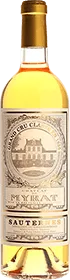
Château de Myrat 2025
En Primeur Wines – delivery in early 2028
Let's talk about this product!
A pairing in mind? A question about the vintage? Comparison with another product? Find the answers here...
Description
Tasting Notes and Recommendations for Château de Myrat 2025
Tasting
Color
This sweet wine reveals a beautiful hue ranging from pale to medium gold, reflecting the concentration of the botrytized berries.
Nose
The aromatic bouquet proves rich and honeyed. It unfolds superb notes of dried stone fruits, such as apricot, orange peel and dried mango, subtly complemented by hints of beeswax, ginger and toasted brioche imparted by the aging.
Palate
With a medium body, this wine offers a concentrated sweetness perfectly balanced by lively acidity and a mineral freshness typical of its terroir. The finish stretches out with great complexity.
Food and Wine Pairings
This sweet wine pairs wonderfully with flavorful dishes such as foie gras, spicy tapas, chicken curry or braised veal chop. It also enhances seafood such as shrimp and prawns, as well as characterful cheeses like Roquefort and Comté. For dessert, it will be the ideal companion to a mango mousse or a fresh fruit salad.
Serving and Cellaring
It is recommended to serve this wine at a temperature between 9 and 10°C to fully enjoy its freshness and aromas. No decanting is required. This vintage can be cellared for optimal aging until approximately 2037.
The Elegance of a Great Sauternes from Barsac
The Estate
Founded in the 17th century, Château de Myrat is a wine estate located in Barsac, in the Bordeaux region. Classified as a Second Growth in 1855, this 22-hectare vineyard has had a singular history, marked by the complete uprooting of its vines in 1976 before a bold replanting in 1988. Acquired in 1937 by Max de Pontac, a descendant of Jean de Pontac (founder of Haut-Brion), the estate is now run by Xavier de Pontac, Slanie de Pontac-Ricard and Elisabeth de Pontac-Chabot. The domain stands out for its philosophy centered on balance, respect for biodiversity and the production of elegant wines.
The Vineyard
The 22 hectares of vines flourish on the Haut-Barsac plateau, within the renowned Sauternes appellation. This exceptional terroir consists of clay-limestone soils resting on a bedrock of fractured limestone. This geological configuration ensures excellent natural drainage while giving the wines a distinctive mineral backbone. The local microclimate, influenced by the Ciron river, fosters the development of noble rot, essential for the crafting of these great sweet wines.
Winemaking and Aging
The harvest took place from September 18 to October 16, requiring three passes to meticulously select the berries. Carried out entirely by hand, this harvest yielded a vintage described as powerful, very floral and of great aromatic purity. It is a year highly representative of the Barsac style, offering a particularly fresh finish. To craft this wine, each day of harvest is vinified separately in order to preserve the identity of each lot. Fermentation takes place directly in oak barrels, and the final balance is determined with precision through regular analyses and tastings. The wine then benefits from 18 months of aging in oak barrels, of which 40% are new, allowing it to refine its structure and complexity. Alcohol: 13.5% vol.
Grape Varieties
This wine is made from a blend of 92% Sémillon, 5% Muscadelle and 3% Sauvignon.