Assistant


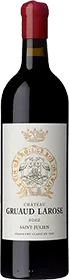
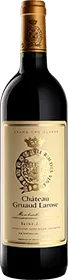
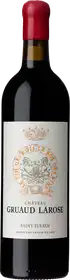
Château Gruaud Larose 1995
Stock currently at the producing estate – Will ship after October 14, 2026
Let's talk about this product!
A pairing in mind? A question about the vintage? Comparison with another product? Find the answers here...
Description
Characteristics and Tasting Notes for Château Gruaud Larose 1995
Tasting Notes
Color
A deep garnet red hue, the wine displays amber highlights that reflect its evolution.
Nose
The bouquet is complex and intense. Notes of ripe black fruit, particularly blackcurrant and blackberry, emerge first. With aeration, tertiary aromas gradually unfold: leather, tobacco, undergrowth, truffle, and sweet spices form a sophisticated aromatic palette. A characteristic gamey touch typical of the Gruaud Larose style completes the ensemble.
Palate
The attack is broad and full-bodied. The tannins, now well integrated, retain a fine structuring backbone. The balance between fruit richness and freshness is remarkable. The finish lingers on spicy, smoky notes.
Food and Wine Pairing
This wine pairs perfectly with roasted or grilled red meats, furred and feathered game, elaborate sauce-based dishes, and aged hard cheeses.
Serving and Cellaring
It is recommended to let Château Gruaud Larose 1995 breathe before serving, ideally decanting it for one to two hours. The optimal serving temperature is between 16 and 18°C (61–64°F). Currently at its peak, this wine can still be kept for a few more years under proper cellar conditions.
Other Characteristics
This vintage shows the well-integrated tannic structure characteristic of great age-worthy wines that have reached full maturity, while retaining a lovely freshness that ensures its balance.
A Saint-Julien Built to Age, Now at Its Peak
The Estate
Founded in 1725 by Joseph Stanislas Gruaud, Château Gruaud Larose is located in Saint-Julien, in the Bordeaux Médoc. The estate spans 82 hectares in a single stretch, situated on Garonne gravel mounds comparable to those of the properties classified in 1855. Ranked Second Grand Cru Classé in that famous classification, it has belonged since 1997 to the Merlaut family, of the Taillan Group, under the direction of Jean Merlaut. The vineyard, dominated by Cabernet Sauvignon, is farmed with great care, incorporating biodynamic practices and a conversion to organic farming.
The Vineyard
The vineyard of Château Gruaud Larose occupies a prime position in the southern part of the Saint-Julien appellation, on one of the highest points of the plateau. The plots rest on deep gravel soils, Garonne gravels deposited more than 600,000 years ago by the Gironde estuary and the rivers flowing down from the Pyrenees. These gravels overlay a complex subsoil made up of clay-limestone elements. This geological composition ensures optimal natural drainage and favorable thermal regulation for grape ripening. The vineyard is divided into 110 distinct plots, allowing for precise, plot-by-plot management that respects ecological balance.
The Vintage
The year 1995 was marked by a hot, dry summer, with high temperatures and a notable absence of rainfall during June and July. These conditions favored a concentration of sugars and phenolic compounds in the berries. September brought a shift in weather, with cooler temperatures and substantial rainfall. This autumn rain offset the summer drought, preventing excessive water stress on the vines. This alternation of climatic conditions allowed the grapes to reach exceptional ripeness, with an optimal accumulation of sugars combined with balanced acidity and ideal phenolic maturity.
Winemaking and Aging
The winemaking process for Château Gruaud Larose 1995 took place in temperature-controlled steel vats. Maceration lasted between 21 and 35 days with rigorous temperature control, allowing for a carefully managed extraction of tannins and color. Malolactic fermentation took place in oak barrels for 40% of the blend. Aging lasted between 16 and 18 months in medium-toast French oak barrels, with a moderate proportion of new wood. This approach added complexity to the wine while preserving the expression of the terroir and the purity of the fruit.
Grape Varieties
Cabernet Sauvignon (majority), Merlot, Cabernet Franc, Petit Verdot, Malbec