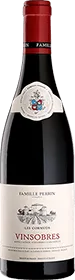


Famille Perrin : Les Hauts de Julien Vieilles Vignes 2019
In-Stock
Description
Tasting characteristics and advice for Famille Perrin’s Les Hauts de Julien Vieilles Vignes 2019
Tasting
Appearance
The wine displays a magnificent deep hue with ruby and black highlights, reflecting the concentration of these old vines and the significant presence of Syrah.
Nose
The nose reveals lovely complexity dominated by sweet spices such as licorice, accompanied by black fruits like blackcurrant and blackberry. Notes of smoky earth, meat, bouquet garni, and pepper complete this aromatic bouquet, while the oak integrates with subtlety.
Palate
On the palate, this wine charms with its superb balance of power and refinement. The attack reveals complex black-fruit notes, followed by a powerful structure that coats the palate. The tannins are firm and precise, perfectly integrated, creating a sensation that is both intense and elegant. Aromas of ripe, crunchy fruit unfold with freshness and tension. The finish, beautifully long, lingers on persistent spicy notes.
Food and wine pairings
This wine is an ideal match for a roasted leg of lamb with Herbes de Provence, a dry-aged rib steak with herbs, or a rack of lamb in a crust. It also pairs very well with a spicy Provençal ratatouille, game in sauce such as venison, as well as dishes featuring black olives and truffles. For cheese, opt for aged semi-hard varieties.
Serving and cellaring
Les Hauts de Julien Vieilles Vignes 2019 is best enjoyed at a temperature of 17°C. It is recommended to stand the bottle upright 48 hours before serving to allow the natural sediment to settle at the bottom, as the wine is not filtered. Decanting is advised to let the wine breathe and reveal its full aromatic complexity. This wine can be enjoyed now and will continue to evolve until around 2029.
A powerful, refined Vinsobres from Famille Perrin’s old vines
The estate
The story of Famille Perrin begins in 1909 with the acquisition of Château de Beaucastel in Châteauneuf-du-Pape. A visionary, Jacques Perrin adopted organic farming as early as 1956—well before the movement emerged—then biodynamics in 1974. Today, the family is led by Jean-Pierre and François Perrin, alongside the fifth generation. With vineyards spread across seven appellations in the Southern Rhône Valley, Famille Perrin stands as the region’s leader in organic viticulture. Their philosophy is rooted in absolute respect for the terroir and a non-interventionist approach in the cellar, allowing each wine to express its origin authentically.
The vineyard
The Les Hauts de Julien vineyard is located in the Vinsobres appellation, one of the highest in the Rhône Valley, at 300 meters above sea level. The vines, 90 years old, are traditionally co-planted with Grenache and Syrah on terraces composed of Quaternary alluvial stones. This altitude gives the vineyard a distinctive climate, benefiting from the cooling influence of the Alps and the Mistral, which bring cool nights that slow ripening and preserve beautiful freshness in the wines. The old vines, farmed organically since planting, have developed a deep root system that enables a complex expression of the terroir.
The vintage
The 2019 vintage in the Southern Rhône proved promising. After an early budbreak in early April, flowering proceeded successfully across the vineyards. Summer, hot from late June, could have stressed the vines, but they withstood it remarkably well, thanks in part to chamomile infusions sprayed on the canopy to help them cope with the heat. Harvest took place without particular earliness, allowing the grapes to reach optimal phenolic and sugar ripeness.
Winemaking and aging
The grapes for Les Hauts de Julien Vieilles Vignes 2019 are harvested by hand, with rigorous sorting carried out in the vineyard and then at the winery. After destemming, the berries are placed into large oak vats. Extraction is carried out through punch-downs and pump-overs, traditional methods that allow gentle, gradual extraction of tannins. Before the end of alcoholic fermentation, the juice is run off into French oak barrels, where fermentation and malolactic fermentation continue. Aging lasts for about a year and a half in barrels. The wine is bottled without filtration to preserve the full breadth of its aromatic complexity.
Grape varieties
Grenache and Syrah from 90-year-old vines planted in traditional co-planting.