Assistant



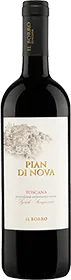
Il Borro : Pian di Nova 2023
In-Stock
Let's talk about this product!
A pairing in mind? A question about the vintage? Comparison with another product? Find the answers here...
Description
Characteristics and Tasting Tips for the Pian di Nova 2023 by Il Borro
Tasting notes
Colour
This Pian di Nova 2023 reveals a vivid, luminous ruby-red colour.
Nose
The nose opens with an intense bouquet of floral notes and nuances of red fruit, before giving way to a spicy finish contributed by the Syrah.
Palate
The palate is velvety and captivating, supported by present but never overpowering tannins. The freshness provided by the Sangiovese lends the whole a sense of vitality, resulting in a full-bodied wine whose elegance and silkiness never disappoint.
Food and wine pairings
This Pian di Nova 2023 is an ideal match for traditional Tuscan dishes based on grilled meats or rich sauces. It also pairs very well with flavourful, spiced cuisine with Eastern influences.
A vibrant Tuscan red balancing the spice of Syrah and the freshness of Sangiovese
The estate
Il Borro is a wine-growing, agricultural and hospitality estate located in Tuscany, in the Valdarno di Sopra. The site, whose history dates back to Roman times, was acquired in 1993 by Ferruccio Ferragamo, who turned it into the estate it is today. Today, it is run by his children, Salvatore (head of the wine division) and Vittoria (head of sustainability). This Italian estate stands out for its organic certification, its advanced environmental management and its membership of the Consorzio Valdarno di Sopra DOC.
The vineyard
The Pian di Nova vines are planted on the hills of the Valdarno di Sopra, in Tuscany, at an altitude of between 300 and 500 metres. The soils, composed of sand, silt and clay, bear the traces of ancient fossilised marine deposits, evidence of the retreat of the Pliocene lakes. This soil structure, combined with good ventilation from the Pratomagno relief, favours organic viticulture that respects the natural balance of the vineyard.
The vintage
2023 began with a relatively warm, dry winter, followed by a rainy spring with seasonal temperatures. The summer saw a few early heat spikes before a milder August, and then a warm autumn brought the growing cycle to a close. These conditions weighed on yields, but the phases of more moderate temperatures made it possible to achieve a particularly expressive aromatic profile.
Grape varieties
Syrah
Sangiovese