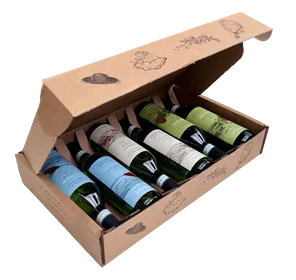
Cavaliere del Lavoro, the first Italian woman to appear on the cover of Wine Spectator, founder of a wine group spanning Valpolicella, Bolgheri, and Montalcino: Marilisa Allegrini has built her reputation over four decades of dedication to Italian wine. Her Veronese collection brings together five exceptional cuvées, from Valpolicella to Lugana via Soave, all guided by the same pursuit of precision and identity.
Terroir-driven wines at the heart of Verona, signed Marilisa Allegrini
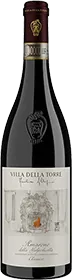
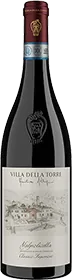
Valpolicella Classico Superiore and Amarone Classico: two expressions of Verona
Ten hectares of vineyards enclosed by ancient walls, nurtured by one of the coolest microclimates in Valpolicella: this exceptional setting shapes wines of rare subtlety.
The Valpolicella Classico Superiore, a blend of corvinone, corvina, and rondinella, immediately charms with its aromatic tension and elegance: a precise, vibrant terroir wine.
Amarone Classico reveals an entirely different facet of this estate. The appassimento process is carried out at controlled low temperatures to preserve the integrity and vitality of the fruit. Aging in large botti deliberately keeps the influence of wood in the background, allowing the fruit to shine. The result is a full-bodied, silky wine with remarkable lasting freshness.
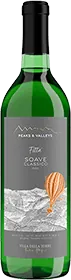
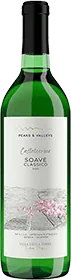
Soave Classico Fittà and Castelcerino: two interpretations of the same grape variety
A single grape variety, garganega, expressed across two vineyards with radically different geologies in the heart of Soave Classico. Born on the volcanic basalts of Fittà at 255 meters above sea level, the first delivers pronounced minerality, vibrant citrus notes, and immediate crystalline freshness. From the calcarenites and brown clay of Castelcerino at 347 meters, the second, produced from vines over thirty years old, displays marked salinity and remarkable persistence.
These two cuvées by Marilisa Allegrini reveal the geological contrasts of a rich appellation. Low-temperature fermentation, concrete tanks, no malolactic fermentation, and no oak : here, only the terroir speaks.
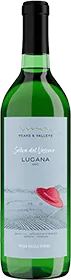
Selva del Vescovo: between lake and glacial moraine
Shaped by the retreat of the glaciers of Lake Garda, the morainic hills of Lugana offer soil of rare geological singularity. Selva del Vescovo, born in Pozzolengo on south-facing glacial alluvial soils, is a structured white with aromas of white flowers and aromatic herbs, driven by lively acidity and a pronounced sapidity that reveal the imprint of the terroir.
Marilisa Allegrini, an iconic figure of Italian wine
A symbol who rewrote the codes of Veronese wine
Four decades at the head of the family group Allegrini, a Wine Spectator cover, the title of Cavaliere del Lavoro awarded in 2020: Marilisa Allegrini’s journey is that of a pioneer whose influence has long extended beyond the borders of Veneto. At the end of 2023, after leaving the family business, she founded her own group and brought together three outstanding estates—Villa della Torre in Valpolicella, Poggio al Tesoro in Bolgheri, and San Polo in Montalcino—under a single signature.
Villa della Torre, a Renaissance jewel with a confidential microclimate
Acquired in 2008 to fulfill a childhood dream, Villa della Torre is a 16th-century residence located in the commune of Fumane, in the heart of Valpolicella Classico.
Its ten hectares of vineyards, enclosed within ancient walls, benefit from a singular microclimate (one of the coolest in the appellation), allowing the grapes to ripen slowly and develop a naturally intense concentration.
Technical rigor and respect for the fruit at the heart of her philosophy
Rigorous and demanding, Marilisa Allegrini uses optical sorting for the production of her Amarone. This technological precision is part of a perfectly coherent overall philosophy: controlled low-temperature appassimento, long macerations in the service of balance, aging in large botti and concrete tanks, and a deliberately restrained influence of oak.
This same level of exacting standards is reflected in the selection of each vineyard in Veneto: every plot is carefully chosen according to strict criteria of soil, exposure, and altitude, and planted with indigenous grape varieties.