Assistant



 Guaranteed provenanceDirect from the estates

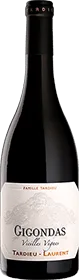
Tardieu Laurent : Rasteau "Vieilles Vignes" 2025
En Primeur Wines – delivery in early 2028
Let's talk about this product!
A pairing in mind? A question about the vintage? Comparison with another product? Find the answers here...
Description
Characteristics and Tasting Tips for the Rasteau "Vieilles Vignes" 2025 from Tardieu-Laurent
Food and wine pairing
This wine is an ideal match for slow-cooked dishes and robust meats, such as a lamb daube scented with herbes de Provence, beef braised in the Burgundy style, or smoked duck breast. More broadly, it proves an excellent companion to roasted or braised red meats and to the generous dishes of Provençal cuisine.
Serving and cellaring
The Rasteau "Vieilles Vignes" 2025 is offered en primeur, with bottling scheduled for summer 2027. As no official cellaring recommendation is available for this vintage at this stage, please refer to the additional information that will be provided when it is released for sale.
An old-vine Rasteau from Tardieu-Laurent, between sun-drenched terroir and Burgundian-style ageing
The estate
Founded in 1996 in Lourmarin, in the Luberon, by Michel Tardieu, Tardieu-Laurent has established itself as a distinctive négociant-éleveur in the Rhône Valley. Without any vineyards of its own, it works with numerous partner growers selected for their old vines, often between 40 and 120 years old. Today led by Michel Tardieu, surrounded by his family, including his son Bastien in charge of winemaking, the house perpetuates an ageing philosophy inspired by Burgundian methods, combining long periods in barriques and foudres.
The vineyard
The grapes for this Rasteau cuvée come from old plots of Grenache Noir and Syrah, planted on clay-limestone slopes and on blue and yellow clays on the Montagne de Rasteau, a terroir that encourages deep rooting and even ripening of the grapes.
Winemaking and ageing
The Rasteau "Vieilles Vignes" 2025, with an alcohol content of 13.5%, is vinified from fully destemmed grapes. Ageing lasts approximately twenty months in total, divided between ten months in barriques that have previously held one or two wines, followed by ten months in Stockinger foudres. Bottling, planned for summer 2027, is carried out without fining or filtration, in keeping with the house philosophy of preserving the substance of the wine.
Grape varieties
Grenache, Syrah and Mourvèdre