Assistant



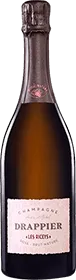
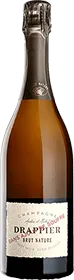
Drappier : Rosé de Saignée
In-Stock
Let's talk about this product!
A pairing in mind? A question about the vintage? Comparison with another product? Find the answers here...
Description
Characteristics and tasting advice for Drappier Rosé de Saignée
Tasting
Appearance
The color displays a deep, intense pink hue, reflecting the saignée method used in its production.
Nose
The nose reveals an expressive bouquet dominated by aromas of fresh red fruits, notably raspberry and cherry. Floral notes of violet add a delicate dimension, while spicy touches enrich the aromatic palette.
Palate
On the palate, this champagne stands out for its remarkable power and freshness. The structure is generous, driven by a fine concentration of red fruits that lingers throughout the tasting. The balance between vibrancy and breadth gives the whole a lovely harmony.
Food and wine pairings
This Rosé de Saignée pairs perfectly with seafood, notably shrimp and lobster. It also matches elegantly with oily fish such as salmon, whether smoked or prepared as ceviche. White meats, roast duck, and fine charcuterie also make excellent pairings. As an aperitif, it elevates gougères and other delicate cheese-based bites.
Serving and cellaring
This Rosé de Saignée is ideally enjoyed at a temperature between 8 and 10°C.
A powerful, authentic rosé champagne by Drappier
The estate
Founded in 1808 in Urville in the Aube, the Drappier House is now run by Michel Drappier, representing the family’s seventh generation, alongside his three children Charline, Hugo and Antoine, who embody the eighth generation. The estate covers around 60 hectares of owned vineyards and manages more than 110 hectares in total. Drappier made its mark by becoming, in 2016, the first Champagne House certified carbon neutral. The family grows Champagne’s seven historic grape varieties and favors a respectful approach to viticulture, with a gradual transition to organic farming.
The vineyard
This rosé cuvée comes from vineyards located in the Côte des Bar, south of Champagne, where Pinot Noir expresses itself with particular intensity. The Kimmeridgian soils, rich in Jurassic limestone, give the wines a distinctive minerality. The Drappier estate also owns parcels in the Montagne de Reims and the Côte des Blancs, allowing for a diversity of expressions. Vineyard management favors sustainable practices, with horse plowing, partial grass cover, and no synthetic chemical products.
Winemaking and aging
This Rosé de Saignée is the result of a multi-vintage blend, maintaining the consistency of the house style while expressing the typicity of Pinot Noir grown in the Aube. It is made using the saignée method, a rare technique in Champagne. The Pinot Noir grapes undergo three days of maceration at controlled temperature, enabling gentle extraction of pigments and aromas. The juice is then racked off by gravity without pressing. Vinification takes place without filtration, preserving the full aromatic richness. The wine benefits from aging on lees for 36 to 40 months, developing complexity and finesse. Malolactic fermentation occurs naturally. The minimal dosage reflects the house’s non-interventionist philosophy.
Grape variety
100% Pinot Noir